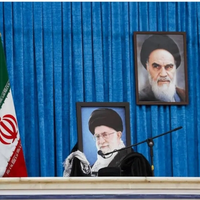
Several politicians and commentators in Iran have indicated that president Masoud Pezeshkian has received approval from Supreme Leader Ali Khamenei and the Supreme National Security Council to initiate negotiations with the United States.
However, none of these "supreme" authorities have officially confirmed that they have authorized negotiations with the United States regarding Iran's nuclear program or other contentious issues, such as Tehran's interventions in regional countries.
In recent days, Pezeshkian has conveyed Tehran's willingness to engage in talks with the U.S., but Khamenei’s hardline allies have strongly criticized both his remarks and those of other officials. This has raised an important question: Does the President have Khamenei’s approval to pursue negotiations with the Trump administration?
It is widely acknowledged in Iranian politics that Khamenei holds ultimate authority over military and foreign policy, meaning his full approval would be necessary for the President to initiate significant negotiations with major powers.
Foreign policy analyst Abdolreza Faraji-Rad told the Khabar Online website in Tehran, "When Iran's President or other senior officials express readiness to negotiate with the United States, it does not imply that they made that decision independently. Rather, it signals that the issue has already been discussed at the Supreme National Security Council," which is the country's highest-ranking decision-making body after Supreme Leader Khamenei.
Tehran-based analyst Abdolreza Faraji-Rad
Faraji-Rad noted that failing to negotiate with Trump would likely lead the United States to increase pressure on Iran and further sanctions would be imposed on Iran's oil exports. He argued that initiating negotiations would be the right course of action. He also suggested that the Iranian Foreign Ministry would likely be assigned the responsibility of advancing these talks.
Meanwhile, he criticized the government's political rivals for hindering its initiative. However, the Iranian government has yet to take any practical steps in this direction, even though hardliners in Iran remained largely silent on the issue during the first two days following Trump’s inauguration.
Former lawmaker Heshmatollah Falahatpisheh expressed pessimism on Tuesday, suggesting that Pezeshkian might not yet have the necessary approval. However, by Wednesday, Falahatpisheh appeared to soften his stance, writing about Europe’s potential role as a mediator in talks with Washington.
Meanwhile, while the ultraconservatives were generally silent during the past two days, some other elements such as Intelligence Minister Esmail Khatib fueled doubts about whether Pezeshkian has the go-ahead for negotiations. Khatib warned against yielding to calls for negotiations with the Trump administration, saying "it could leave Tehran at a disadvantage."
Iran's Intelligence Minister Esmail Khatib
Reformist politician and commentator Fayyaz Zahed also shared with the press in Tehran that, based on his assessment of the relationship between the President and the Supreme Leader, "Pezeshkian has received the green light to initiate negotiations." He added that "Pezeshkian is now seeking a dignified way to carry out this task."
Under growing regional and economic pressure over the past six months, the Islamic Republic has been mocked by opposition groups and many Iranians on social media for wasting decades and hundreds of billions of dollars on its controversial nuclear program and meddling in regional countries. These policies, they argue, have resulted in years of devastating sanctions. Now, with Donald Trump at the helm, critics highlight that the authorities are forced to appeal for talks with Washington.
Zahed added, "All politicians in Iran have reached the conclusion that the country's foreign policy strategy needs to be revised." He continued, "There is currently no obstacle to the decision to negotiate." Additionally, Zahed described Pezeshkian's ultraconservative political rivals as "cartoon characters inflated like balloons."
Former Labor Minister Mohammad Salamati told the press, "Pezeshkian has the backing of the entire political system in his call to start negotiations with America." Highlighting that Trump is also open to dialogue with Iran, Salamati added, "It is now up to us to take the initiative, start direct negotiations with Washington, and strive for favorable outcomes."
He also noted, "Pezeshkian's political rivals cannot prevent this as long as the President has the nation's support." Additionally, Salamati remarked, "Even the Vietnamese secured concessions through negotiations with the United States after the Vietnam War."
Pro-reform Arman Melli Daily suggested that Europe could play a key mediation role in the talks between Tehran and Washington, while the centrist Daily cautioned that Pezeshkian's domestic political rivals pose a greater threat than Trump. Meanwhile, Ham Mihan noted that with Trump’s return, Iran’s foreign policy has entered one of its most complex periods. The report emphasized, however, that Iran must engage in serious negotiations with the United States, as the country faces one of its most severe economic crises.
The Iranian flag waves in front of the International Atomic Energy Agency (IAEA) headquarters
Iranian Foreign Minister Abbas Araghchi has criticized the UN chief’s call for Iran to renounce nuclear weapons, calling it audacious and insisting that Tehran remains firmly committed to its obligations under global nonproliferation agreements.
Writing on X on Thursday, Araghchi pointed to Iran’s record, saying that it signed the Nuclear Nonproliferation Treaty (NPT) as a founding member in 1968, and that the country’s Supreme Leader has issued a religious edict banning all weapons of mass destruction.
He also highlighted the 2015 nuclear deal, known as the JCPOA, which subjected Iran to what he described as "the most intrusive inspection regime in IAEA history."
"This is a permanent and clear commitment which Iran has remained committed to—even after the US unilaterally withdrew from the deal in 2018," Araghchi said.
The comments come after UN Secretary-General Antonio Guterres urged Iran on Wednesday to mend ties with its neighbours and the United States by demonstrating a clear commitment to renounce nuclear weapons development.
Speaking at the World Economic Forum in Davos, Guterres emphasised the importance of relations between Iran, Israel, and the United States, describing them as a central challenge given the absence of diplomatic ties between Iran and its two longstanding adversaries.
Meanwhile, a senior Iranian official defended Tehran’s nuclear programme as critical for national security. Behrouz Kamalvandi, spokesman for the Atomic Energy Organization of Iran (AEOI), said on Monday that the programme serves as a deterrent against international threats.
"Over the years, adversaries have tried to weaken Iran’s progress in this field and entangle the country in international conflicts," Kamalvandi said during a military conference in Tehran.
The issue remains a flashpoint within Iranian political circles. Hardliners have previously advocated for pursuing nuclear weapons as a deterrent, particularly in response to external threats.
Following Israeli airstrikes on 26 October, Javan, a newspaper aligned with the Islamic Revolutionary Guard Corps (IRGC), called for Tehran to reconsider its position and explore the development of nuclear arms as a countermeasure.
After a cleric attributed the lack of rain to concerts, the Islamic Republic's local religious-ideological department canceled all music events in southwest Iran.
The Friday Prayer Imam of Abadan, a city known for housing the Middle East's oldest oil refinery, recently criticized the granting of concert permits, calling them sinful and claiming that music events anger God, leading to a lack of rain.
Following Abdolhossein Ghobishavi's statement, the provincial ideological department canceled several concert permits for February, according to local media reports.
This move contradicts an order from President Masoud Pezeshkian's administration, which has instructed all official bodies and ministries not to block music events.
Since the establishment of the Islamic Republic in 1979, most forms of music have been banned from state television and radio.
Artists and performers face lengthy processes to obtain permits for releasing songs or holding concerts, and female singers are typically prohibited from performing.
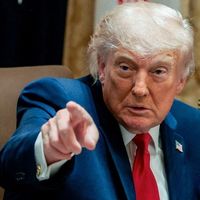
President Donald Trump returns to the Oval Office.
Following Donald Trump's inauguration, conservative and ultraconservative Iranian dailies notably refrained from covering the future of US-Iran relations, while reformist newspapers were actively considering various strategies to engage with Washington.
Despite the silence on future ties with the US, conservative outlets prominently featured the event, with headlines dominating the dailies.
Some hardliners, such as Deputy Foreign Minister Kazem Gharibabadi acknowledged that Trump’s presidency is likely to have profound implications for the future of the Islamic Republic.
Iran Daily, a known conduit for the Pezeshkian administration, emphasized in its detailed coverage there is still an opportunity for opening negotiations with Washington.
"Trump may choose a different policy regarding Iran, as the maximum pressure strategy failed under Biden," one of its reports read.
It omitted mention of critics' claims that US sanctions were not fully enforced during Joe Biden's presidency, which allowed Iran to boost oil exports to China and generate over $100 billion in revenue between 2021 and 2024.
President Pezeshkian with Russia's Vladimir Putin, after signing a strategic agreement this month.
In the reformist camp, both Etemad and centrist Kargozaran newspapers expressed caution about the changes in the US administration.
"The Trump administration's hardline stance on immigration is likely to create additional challenges for Iranians living in the United States," a report for Etemad noted, adding, "The new US administration will likely demand that Iran cease uranium enrichment and scale back its regional activities."
Kargozaran wrote that many attendees at the inauguration parties were "radical right-wing elements," noting that, "The entire world is watching Trump’s return with fear and concern."
Tehran's leading economic daily, Donyaye Eghtesad, presented three potential strategies for Iran in its dealings with the Trump administration: first, military confrontation, which would result in significant losses for Iran; second, rejecting negotiations, which would likely lead to maximum pressure and worsening economic hardship; and third, engaging in negotiations and direct cooperation, offering the possibility of tangible benefits for Iran.
One of the most hardline anti-US dailies, Kayhan, which had previously called for Pezeshkian to "try to kill Trump," remained silent on Tuesday.
It did, however, criticize the "tight security measures" at the inauguration ceremony.
Affiliated with the Islamic Revolutionary Guard Corps (IRGC), Javan newspaper refrained from commenting on the potential implications of the change in US leadership for Iran and instead provided a summary of Donald Trump's first term in office.
A newspaper stand in Tehran
Another conservative daily, Jam-e Jam, criticized "Trump's unilateralism" and his views about Canada, Greenland and the Panama Canal.
Jomhouri Eslami, a conservative newspaper founded in 1979 by Supreme Leader Ali Khamenei, was the only conservative outlet to suggest that "Iran should take a lesson from the past and change its behavior and the way it interacts with the world."
While the publication offered this perspective, Kayhan, rather than Jomhouri Eslami, more frequently reflects Khamenei's views.
When it came to online outlets, reformist site Rouydad24 noted that nearly all segments of Iranian politics—ranging from government officials to hardliners, and even radical figures—are signaling openness to negotiations with the United States. Rouydad24 highlighted former ultraconservative lawmaker Javad Karimi Qoddousi, a staunch anti-US politician, as one of the radicals who appears to have shifted his stance on negotiations.
"Mr. Khamenei said many years ago that cutting off ties with America should not continue forever," the article quoted him as saying.
Conservative Nameh News also quoted hardliner Hossein Naqavi-Hosseini, who said, "Our problems will not be solved if we ignore the United States." Naqavi-Hosseini suggested that continued tensions with the US are likely to lead to even greater economic challenges for Iran. He added, "Iran's President and other officials have a plan for negotiations with America."
Nameh News also noted that former conservative MP Ali Motahhari said this week that "Iran should start negotiations with Washington and even be prepared to resume relations with America."
Tehran-based websites reported that reformist commentator Ahmad Zeidabadi addressed Pezeshkian in an article on his Telegram channel, urging immediate negotiations.
"Mr. Pezeshkian! What are you waiting for? The solution for lifting the sanctions is clear," he wrote. Zeidabadi also took a sarcastic jab, recalling Pezeshkian's suggestion during his recent visit to Russia that Iran, Russia, and China should join forces to sanction the United States.
Iran's Vice-President for Strategic Affairs Javad Zarif speaks during the 55th annual World Economic Forum (WEF) meeting in Davos, Switzerland, January 22, 2025.
The Islamic Republic wants Donald Trump to be more rational and focused than he was in his first term, Iran's Vice-President for Strategic Affairs Mohammad Javad Zarif said in defiant remarks on Wednesday.
"There is always hope people will choose rationality, Zarif said at the World Economic Forum in Davos, Switzerland. “I hope that this time around, a 'Trump 2' will be more serious, more focused, more realistic."
On any potential pressure from the new administration on Iran to give up its nuclear program, Zarif told the World Economic Forum in Davos, Switzerland that Tehran would not be convinced by force.
“Nobody thinks of Iran as such an easy place to carry out their whims. So we can move forward, move forward based on opportunity rather than based on threats.”
Tehran has gained more nuclear capabilities since the United States withdrew from a 2015 nuclear deal, he added, but maintained Iran does not seek nuclear weapons and poses no threat to the world.
Starting in 2006, the UN Security Council implemented multiple rounds of sanctions targeting Iran's nuclear program.
In 2015, many of these economic sanctions were suspended under the Joint Comprehensive Plan of Action (JCPOA), commonly known as the Iran nuclear deal. After the US announced its withdrawal from the JCPOA in 2018, nuclear-related sanctions were reinstated.
Relaxed hijab enforcement
Zarif, a relative moderate, also addressed Tehran's new hijab law which UN experts have labeled a further "assault on women’s rights and freedoms.”
"If you go to the streets of Tehran, you see that there are women who are not covering their hair. It's against the law, but the government has decided not to put women under pressure," Zarif said. "And this was a promise that President Pezeshkian made. And the promise is being observed."
The controversial new law imposes harsher penalties on women and girls who defy the Islamic veiling requirements. In response to significant backlash from both the public and the international community, the Islamic Republic has officially postponed its implementation. The country's existing mandatory hijab law remains in effect, with other penalties still enforced.
At Davos, Zarif argued that President Pezeshkian is not personally enforcing the new hijab law but has the support of the country's leadership, which he defined as the head of parliament, the head of the judiciary, and other key figures, including the National Security Council.
"So, we're moving in the right direction," Zarif said.
According to several human rights groups, the crackdown on women over the hijab has continued since nationwide protests erupted in 2022, following the killing of Mahsa Jina Amini in the custody of the so-called morality police.
The new law was initially drafted in May 2023, less than a year after the Woman, Life, Freedom uprising.
In December 2024, Iran's Supreme National Security Council sent a letter to parliament requesting that the process of implementing the Hijab and Chastity law be halted. The letter proposed that the government submit an amended bill to parliament, according to a member of the Parliament's presiding board.
United Nations Secretary-General Antonio Guterres speaks during the 55th annual World Economic Forum (WEF) meeting in Davos, Switzerland, January 22, 2025.
Iran must mend ties with its neighbors and the US by showing a clear commitment to abandoning nuclear weapons development, the UN chief said Wednesday.
"The most relevant question is Iran and relations between Iran, Israel and the United States," Antonio Guterres said at the World Economic Forum in Davos, referring to Iran's two archenemies with which Iran has no diplomatic ties.
"Here my hope is that the Iranians understand that it is important to once and for all make it clear that they will renounce to have nuclear weapons, at the same time that they engage constructively with the other countries of the region."
His comments come as a top Iranian official said Monday that Tehran's nuclear program remains central to strengthening national security and deterring international threats.
“Over the years, adversaries have tried to weaken Iran’s progress in this field and entangle the country in international conflicts,” said Behrouz Kamalvandi, Iran's spokesman for the Atomic Energy Organization of Iran (AEOI), during a military conference in Tehran on Monday.
Iranian hardliners have previously advocated for developing nuclear weapons as a deterrent. After Israeli airstrikes on October 26, Javan, a newspaper linked to the Islamic Revolutionary Guard Corps (IRGC), called on Tehran to consider pursuing nuclear arms to counter external threats.
In October of the previous year, in the wake of the Gaza war sparked by Iran-backed Hamas, 39 Iranian lawmakers urged the Supreme National Security Council to reassess the nation's defense strategy and explore the potential adoption of nuclear weapons.
Meanwhile, newly sworn-in US Secretary of State Marco Rubio informed Congress that President Donald Trump intends to pursue the reinstatement of United Nations sanctions on Iran, which were lifted under the 2015 nuclear deal.
Tehran has voiced concerns that the Trump administration could embolden Israeli Prime Minister Benjamin Netanyahu to contemplate strikes on Iran’s nuclear facilities, exacerbating the already volatile security situation in the region.