US should be open to any Iran arrangement that fosters peace in Mideast, Rubio says
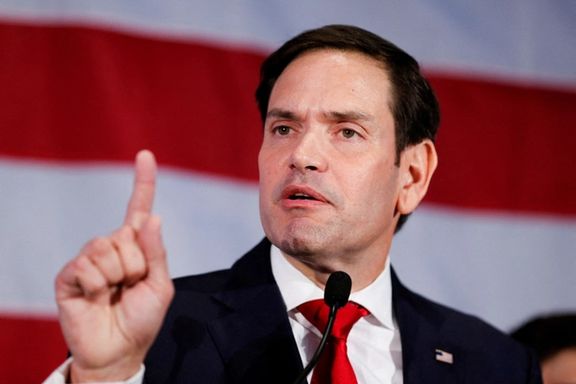
Senator Marco Rubio is set to become US Secretary of State under president Donald Trump
The United States should not rule out any arrangement with Iran that leads to peace and security in the Middle East, president-elect Donald Trump’s pick for state secretary Senator Marco Rubio said on Wednesday.
"My view of it (Iran) is that we should be open to any arrangement that allows us to have safety and stability in the region, but one in which we're clear-eyed," Rubio said during his confirmation hearing.
“Any concessions we make to the Iranian regime, we should anticipate that they will use ... to build their weapons systems and to try to restart their sponsorship of Hezbollah and other related entities.”
Rubio is considered a hawk on Iran and has been a vocal critic of president Joe Biden’s policy on the country.
His inclusion in Trump’s senior team alongside other Iran hawks has raised concerns in Tehran and ignited debate on potential talks with Washington.
"I don't know of any nation on earth in which there is a bigger difference between the people and those who govern them than what exists in Iran," Rubio continued. He characterized the Islamic Republic’s leadership as unrepresentative of the country's population and rich cultural history.
Rubio painted a picture of a ruling system in crisis, highlighting its struggling economy, rolling blackouts and weakening influence across the region. "Iran and that regime is at its weakest point in recent memory, maybe ever," he said, pointing to setbacks in Lebanon and Syria, as well as a crumbling domestic infrastructure.
The executive branch led by president Mohammad Pezeshkian and the more moderate camp appear to be cautiously exploring avenues for dialogue while hardliners in the parliament and the Islamic Revolutionary Guard Corps (IRGC) remain staunchly opposed.
“I imagine that within that regime…there are two schools of thought,” Rubio said.
“There's one group that's saying … we're really in trouble here. We need to find an off ramp and buy ourselves some time, he added. "And then there's another group…saying that now is the time to prove that we are a nuclear power," he said, "enrich from 60 to 90 (percent enriched uranium) and press go.”
Iran has begun a new round of nuclear negotiations with European powers, hoping to find an agreement that would avert a snapback of sanctions that were suspended in 2015 as part of an international nuclear agreement.
That deal has been all but dead since Trump withdrew the United States in 2018.
The president-elect has not ruled out another deal with Iran but emphasized Iran will not be permitted to acquire a nuclear weapon.
Rubio concurred and argued Iran poses a threat to American interests and leaders.
"Think about this for a moment,” he said, “when was the last time you heard that a foreign government is actively, openly and admittedly seeking to assassinate the former Secretary of State, the former and soon-to-be President of the United States, and others?"
The US Justice department alleged last year that an Afghan national was tasked by Iran's Islamic Revolutionary Guard Corps with assassinating Trump. Iranian officials, including President Masoud Pezeshkian, have denied such a plot.
Despite his sharp criticism of Iran’s leadership, Rubio expressed hope for a future that recognizes the Iranian people's aspirations. "Anything that we do with Iran needs to be clear-eyed about who that regime is, but also who those people of Iran really are, because they're not their leaders."
Iran's nuclear reactor in Bushehr, near the Persian Gulf
Decisions concerning Iran's nuclear doctrine are made exclusively by the nation’s highest authorities, the head of the Atomic Energy Organization of Iran (AEOI) said on Wednesday.
Iran's potential interest in nuclear weapons has come into focus days ahead of the return to the White House of Donald Trump, who has vowed to deny Tehran a bomb.
Responding to parliamentary discussions on nuclear weapons, Eslami said, "Parliament members express their own views, but decisions regarding the nuclear doctrine are made at the highest levels of the system and by the relevant authorities."
Eslami added that Iran’s nuclear program operates within its established framework, with the Atomic Energy Organization overseeing technical aspects and the Foreign Ministry handling diplomatic negotiations.
Despite Eslami’s assurance of continuity, calls for a more aggressive nuclear posture have grown among influential lawmakers.
Ahmad Bakhshayesh Ardestani, a member of the National Security and Foreign Policy Committee, proposed in November to escalate uranium enrichment and initiating nuclear weapon production in response to an International Atomic Energy Agency (IAEA) censure resolution.
“Under current circumstances, Iran should first move toward increasing uranium enrichment, potentially raising the enrichment level to 70% or 80%. In the second phase, Iran should pursue nuclear weapon production,” Ardestani told Didban News in November.
Iran is currently stockpiling 60-percent enriched uranium, which can be quickly refined to the 90% threshold required for nuclear weapons. Estimates suggest Iran could achieve this level within weeks, but producing an operational warhead involves additional technological and logistical challenges.
Centrifuges in Natanz, Iran
Former AEOI chief Fereydoun Abbasi also addressed the nuclear issue last week, saying that Iran has long surpassed the stage of constructing nuclear weapons.
“We can enrich uranium to any level we desire,” Abbasi said, advocating for stockpiling enriched uranium in secure locations to bolster deterrence. He justified this approach by citing perceived threats from nuclear-armed states, including the US and Israel.
Fatwa and international scrutiny
President Masoud Pezeshkian reaffirmed Iran’s adherence to a peaceful nuclear policy last week, citing Supreme Leader Ali Khamenei’s fatwa prohibiting nuclear weapons.
“The Islamic Republic has absolutely no intention of utilizing its nuclear capabilities for military purposes based on its ideological beliefs and a fatwa by Supreme Leader Ali Khamenei,” Pezeshkian said during a meeting with Britain’s ambassador to Tehran.
The fatwa has been a cornerstone of Iran’s nuclear doctrine for over two decades, though some experts note it could be revised. “The Leader’s opinion forbids this direction now, but opinions can change,” said nuclear engineer Mahmood-Reza Aghamiri.
A top foreign policy advisor to Khamenei said last year that Iran is capable of producing nuclear weapons and an existential threat could cause a rethink of the Supreme Leader's injunction against them.
"If the Islamic Republic of Iran faces an existential threat, we would have no choice but to adjust our military doctrine," former foreign minister Kamal Kharrazi said.
Meanwhile, concerns over Iran’s uranium enrichment activities have intensified. The International Atomic Energy Agency recently reported that Tehran is approaching weapons-grade enrichment levels, prompting European nations to question the absence of a credible civilian justification for its stockpiles.
Amid escalating domestic debates and mounting international scrutiny, Iran’s nuclear doctrine remains at a crossroads, with high-level decisions poised to determine its future trajectory and global implications.
Iran’s navy unveiled its first signals intelligence (SIGINT) vessel, Zagros, on Wednesday, said to be designed for electronic surveillance and cyber intelligence operations.
"The Zagros will serve as the watchful eye of Iran's navy in the depths of the seas and oceans," Navy Commander Shahram Irani said during the unveiling ceremony.
The launch coincides with extensive military exercises aimed at safeguarding the country's nuclear infrastructure, including key facilities in Natanz and Fordow.
The drills, involving both the Islamic Revolutionary Guard Corps (IRGC) and the Iranian army, are expected to continue until mid-March.
The head of the Atomic Energy Organization, Mohammad Eslami, announced on Wednesday that two additional exercises will be conducted in the coming days, focusing on passive defense to demonstrate maximum operational readiness.
The unveiling of the Zagros comes amid intensified and ongoing international scrutiny of Iran's nuclear program.
Tehran maintains its nuclear activities are solely for peaceful purposes, a claim increasingly challenged due to its elevated uranium enrichment levels.
The International Atomic Energy Agency (IAEA) has confirmed that Iran holds uranium enriched to 60%, approaching weapons-grade levels.
Tensions between Iran and the United States have escalated in recent years, especially after the US withdrew from the 2015 nuclear deal during Donald Trump's presidency and reimposed sanctions. Relations were further strained by the killing of General Qassem Soleimani in 2020, as well as Tehran's support for regional proxy groups, and alleged attacks on commercial shipping in the Persian Gulf.
Iran’s investment in the Zagros and other military technologies underscores its focus on strengthening surveillance and defensive capabilities in response to regional and international challenges.
Admiral Shahram Irani asserted that the ship is domestically constructed and will play a key role in securing maritime domains, including the Indian and Pacific Oceans.
"The Iranian navy has successfully addressed the nation’s defensive demands through local expertise and advanced intelligence capabilities," Admiral Irani said.
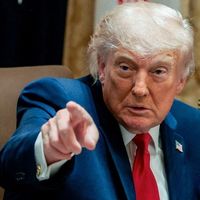
US President-elect Donald Trump makes remarks at Mar-a-Lago in Palm Beach, Florida, US January 7, 2025.
US President-elect Donald Trump needs to show he will keep his word before Iran will consider talks with his administration, Iranian President Masoud Pezeshkian told reporters on Wednesday.
"If Trump proves he follows through on his words, we will engage in talks with him," President Pezeshkian said during a cabinet meeting.
His comment followed the foreign minister's statement on state television the previous day, saying that Tehran would not engage in talks with the US unless Washington first rejoined the 2015 nuclear deal, the Joint Comprehensive Plan of Action (JCPOA).
“We will not negotiate with the United States until it returns to the JCPOA. We will also continue consultations with China and Russia, considering them two key members of the JCPOA,” Foreign Minister Abbas Araghchi stated.
This is not the first occasion on which the Islamic Republic has insisted on evidence of US intentions prior to entering into negotiations.
Since the Trump administration withdrew from the JCPOA in 2018 and imposed severe economic sanctions, Tehran has repeatedly called for the easing of these sanctions as a sign of Washington's goodwill.
Iranian and international media, along with analysts, however, anticipate Trump to intensify sanction enforcement to compel Tehran into make concessions.
NBC is scheduled to air an interview with President Pezeshkian on Wednesday, where, according to his aide, he will convey Tehran’s willingness to engage in talks with the Trump administration.
This apparent divergence in messaging has drawn attention and criticism inside Iran.
In a short version of the interview NBC released on Tuesday, Pezeshkian also denied that the Islamic Republic had any plans to assassinate Donald Trump for the 2020 killing of Qassem Soleimani, a pivotal figure who led Tehran's military operations across the Middle East.
Efforts by the Biden administration to restore the 2015 nuclear deal included extensive indirect talks with Tehran in 2021–2022, which stalled after Russia's invasion of Ukraine. Russia, a key JCPOA signatory, played a significant role in those negotiations.
Iran's government is under increasing pressure from a worsening economic crisis and regional military setbacks in the Middle East over the past year.
Inside Iran, Trump’s return to the White House has led many officials, analysts, and state media to advocate for preemptive talks with the incoming administration to prevent further strain in relations with the US.
Araghchi's comments elicited strong criticism from Hamid Abutalebi, a political advisor to former President Hassan Rouhani. In a post on X, Abutalebi charged the Pezeshkian administration with inconsistency and a lack of clarity in its foreign policy approach.
“It seems that the esteemed government is engaging in ‘political self-deception,’” Abutalebi wrote. “On one hand, the President sends a message signaling a willingness to negotiate, while on the other, his Foreign Minister, in tonight's interview, takes a stance against the President's position, effectively neutralizing it.”
Iran's foreign minister ruled out direct talks with the United States about its disputed nuclear program but emphasized Tehran’s readiness for what he called dignified discussions.
Abbas Araghchi addressed Iran’s stance on nuclear talks in an interview with state TV, saying discussions with Washington are not on the table because it withdrew from an international deal on the issue.
“We are not negotiating with the US government on nuclear issues until they return to the JCPOA or, in any case, announce their policy on this matter,” he said, referring to the 2015 Joint Comprehensive Plan of Action.
"The new US administration has not yet taken office. We will only participate in honorable negotiations based on mutual respect, not under pressure and sanctions, and for our own interests," he added.
"The JCPOA formula remains valid and in place."
Negotiators from Iran and the European E3 countries—France, Britain, and Germany—held a third round of talks on Iran's nuclear program in Geneva on Monday, according to an Iranian deputy foreign minister.
"We discussed ideas involving certain details in the sanctions-lifting and nuclear fields that are needed for a deal," Kazem Gharibabadi said in a post on X. Describing the talks as "serious, frank, and constructive," he noted that both sides agreed to continue their dialogue.
"Sides concurred that negotiations should be resumed and to reach a deal, all parties should create and maintain the appropriate atmosphere," he added.
The JCPOA, signed in 2015, aimed to ensure the peaceful nature of Iran’s nuclear activities in exchange for sanctions relief.
The US withdrawal from the deal in 2018 under the first Trump administration led to renewed sanctions and escalated tensions. Efforts under the Biden administration to revive the deal have been marked by significant challenges, including disputes over sanctions and verification mechanisms.
Araghchi said that in Geneva, Iran will engage with representatives from the EU and three European countries in a bid to revive the nuclear agreement.
“The main goal of the two-day talks in Geneva with representatives from the three European countries and the European Union is to find a way to restart nuclear negotiations and resolve this issue,” Araghchi explained.
“Regarding the nuclear issue, Iran has never left the negotiation table nor said to oppose negotiations, as it is confident in the peaceful nature of its nuclear program. If there is an honorable and dignified negotiation, we will join it,” he said.
Talks on arms supplies to Russia
Araghchi signaled Iran’s readiness to negotiate with Europe on Ukraine, provided the talks address mutual concerns.
“If Europe complains about Iranian weapons being in Russian hands, it must also answer for its military cooperation in our region and with the Zionist regime. We are ready for dialogue with Europe, but it must be based on mutual concerns,” he added.
Iran has significantly increased its military support to Russia, supplying hundreds of Shahed-136 drones, which have been extensively used in Ukraine to target infrastructure and civilian areas.
Municipal workers and a police officer inspect remains of a residential building destroyed during a Russian missile and drone strike, amid Russia's attack on Ukraine, in the city of Kamianske, Dnipropetrovsk region, Ukraine March 29, 2024.
In addition to direct deliveries, Iran has collaborated with Russia to establish a drone manufacturing facility in the Alabuga Special Economic Zone, which became operational in July 2023.
The factory aims to produce thousands of drones annually, bolstering Russia's self-sufficiency in drone production.
Beyond drones, Iran has supplied Russia with short-range ballistic missiles, with satellite imagery revealing shipments of 220 missiles in 2024.
Iran did not plot President-elect Donald Trump's assassination, President Masoud Pezeshkian told NBC, denying allegations by the US Justice Department.
"All the assassinations and acts of terror we see happening in Europe and elsewhere, can we see the footsteps of Iranian nationals or other nationals?" Pezeshkian was quoted as saying in translated remarks in a video preview of the NBC News interview.
"Have there been any links between those terrorist assassinations and Iran? Iran has never been in pursuit of assassination and acts of terror," he added.
Asked by anchor Lester Holt in the interview in Tehran whether Iran had plotted to kill Trump, Pezeshkian replied: "Never by no means."
Holt persisted, asking Pezeshkian if he would promise never to seek to kill Trump.
"Ever since the beginning, we never intended to do that," Pezeshkian said.
The US Justice Department in November unsealed murder-for-hire charges against an Afghan national it said was tasked by Iran’s Islamic Revolutionary Guard Corps with assassinating Trump.
Farhad Shakeri, 51, who is believed to be in Iran, was asked by an IRGC official "to put aside his other efforts on behalf of the IRGC and focus on surveilling, and, ultimately, assassinating (Trump)", the department said.
"Shakeri indicated to IRGC Official-I that this would cost a 'huge' amount of money. In response, IRGC Official-I said that 'we have already spent a lot of money ... [s]o the money's not an issue'."
Iranian officials have repeatedly denied any plot to kill Trump. However, that contradicts several statements by high-ranking officials who have threatened the former US president in the past few years.
Following Khamenei’s proclamation of a “harsh revenge” against the US killing of Soleimani, his official account on X (then Twitter) published an image of Trump on a golf course under the shadow of a drone, hinting at his targeting. That post has since been deleted.
Khamenei’s official website also released an animation with the same theme, showing IRGC forces killing Trump using a robot.
Screenshot of Khamenei's website where on the left side there a screengrab of the video showing Trump on crosshairs
Message of peace
In his interview with NBC News, Pezeshkian added that Tehran is committed to peace and de-escalation, in a dovish message likely aimed at the incoming US administration
"The Islamic Republic of Iran is committed to peace and de-escalation in the region and globally, condemns the Zionist regime's war-mongering, aggression, and genocide, and stands ready for honorable and equal negotiations," Masoud Pezeshkian added.
The Washington-based Abdorrahman Boroumand Foundation for Human Rights in Iran reported last year that the Islamic Republic had kidnapped, disappeared or extrajudicially 452 people beyond Iran's borders in its nearly half-century existence.