Tehran must move forward with a nuclear test, Iranian MP says

Tehran must proceed with a nuclear test at the earliest opportunity, an Iranian lawmaker said on Saturday, amid reports in Tehran media of an intercontinental ballistic missile test.

Tehran must proceed with a nuclear test at the earliest opportunity, an Iranian lawmaker said on Saturday, amid reports in Tehran media of an intercontinental ballistic missile test.
“A nuclear test, along with its formal announcement, must not be delayed,” member of parliament Ahmad Naderi posted on X.
His comment comes alongside a video widely circulated on social media, which some believe shows an intercontinental ballistic missile test in Shahroud, northern Iran. Naderi, the only political figure speaking about the matter, refrained from confirming specifics, simply saying this development was “nothing unexpected.”
Iran has an array of medium-range ballistic missiles capable of reaching Israel, but extending their range could put European countries within striking distance.
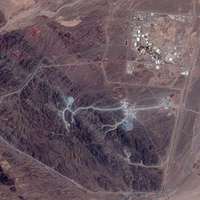
Last month, an Israeli airstrike targeted multiple sites, including a key IRGC missile facility in Shahroud in north-central Iran, where satellite imagery from Planet Labs later showed significant damage to a ballistic missile and space rocket launch site.
Earlier this month, Kamal Kharrazi, former foreign minister and top foreign policy advisor to Supreme Leader Ali Khamenei, warned that Iran might consider lifting its self-imposed 2,500-kilometer missile range limit in response to Israeli threats, signaling potential plans to test an intercontinental missile.
Kharrazi further indicated that Iran possesses the capability to produce nuclear weapons and suggested that, under existential threats, Tehran might reconsider the Supreme Leader’s ruling against weapons of mass destruction.
“If the Islamic Republic of Iran faces an existential threat, we may have no choice but to adjust our military doctrine,” Kharrazi said.
Iran has consistently held that it would not pursue nuclear weapons, citing a 2010 fatwa banning all forms of weapons of mass destruction, including nuclear arms. However, this decree is sometimes seen as advisory in nature and could be reinterpreted by Iranian decision-makers if the security landscape changes.
Israel launched airstrikes on military targets in Iran in response to a missile attack Iran had directed at Israel on October 1. The strikes damaged missile facilities and air defense systems, resulting in the deaths of four Iranian soldiers and one civilian.
Since then, Iranian officials’ rhetoric has fluctuated, at times suggesting an intent for a retaliatory response.
Iran, facing a tougher US stance in Donald Trump’s second term, warns that the conflict in West Asia could trigger wider instability, with repercussions that may extend beyond the region's borders.
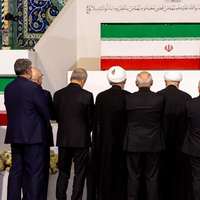
"The world should know that if the war expands, its detrimental effects will not be confined to West Asia," Foreign Minister Abbas Araghchi said Saturday at a ceremony in Tehran honoring the late Hezbollah leader Hassan Nasrallah.
Araghchi’s remarks came amid a recent series of intensified confrontations involving Iran and Israel, and the Trump's victory in US elections. The ceremony was held to commemorate Nasrallah after his death in an Israeli airstrike on September 27. The Israeli military conducted a large-scale operation, codenamed New Order, in which over 80 bombs were used to target Hezbollah’s fortified underground headquarters in Beirut’s Haret Hreik district, approximately 60 feet below ground.
In response to the assassination, Iran launched an unprecedented missile strike on October 1, targeting Israeli military facilities in what marked the largest direct missile attack on Israel by Tehran. Israel’s advanced air defense systems intercepted many of the incoming missiles. Israel responded on October 26 with a large air strike deep inside Iran, targeting air defense systems and missile production facilities.
Following that attack, Iranian officials issued angry statements for a week before the US elections, threatening a harsh response to Israel.
However, Araghchi and other officials who spoke at the event on Saturday did not mention any retaliation or attack against Israel, a sign of caution after Trump's election.
Mohammad Javad Zarif, former foreign minister and the Iranian president's deputy on strategic affairs, also spoke at the event, emphasizing Iran’s commitment to supporting what Tehran calls "the resistance movement" symbolized by Hezbollah. Zarif said, “Hezbollah is alive, and Israel will not see a single day of peace until the complete liberation of Palestinian lands.”
He further warned that peace would remain elusive unless Palestinian rights were fully acknowledged and respected, adding, “The Zionist regime and the United States must accept that as long as the rights of the Palestinian people are not respected...they will not see peace.”
Many Iranian activists and analysts believe Trump's second presidency may lead to renewed tensions between the United States and Iran. Trump’s 2024 campaign included indications of a return to his maximum pressure policy on Iran between 2018-2020, aimed at curbing Tehran's regional influence and nuclear ambitions.
Following the US election, Zarif cautiously expressed hope that the incoming administration might prioritize stability over confrontation, saying that Iran would remain standing firm against aggression.
Also addressing the Tehran audience, Iranian Parliament Speaker Mohammad Bagher Ghalibaf praised Hezbollah as a force in the region. Ghalibaf said, “It was Hezbollah that, through the sacrifice of its sons, contained the international threat and established stability and security in the world.” He added that "Europe owes its security to Nasrallah's leadership" but did not elaborate on how Nasrallah contributed to Europe's security.

An official in Jake Sullivan's office leaked information about Saudi Israeli peace talks just before the Hamas attack on Israel in October 2023, a US academic who assisted Jared Kushner in the Abraham Accords, told Iran International.
Jeff Sonnenfeld, appearing on the Eye for Iran podcast, said a deputy on National Security Advisor Jake Sullivan’s team may have leaked information about the Biden administrations discussion with Saudi Arabia and Israel on expanding the Abraham Accords, just prior to Hamas launching the Oct 7 attacks.
A spokesperson from the National Security Advisor told Iran International that this claim is false.
Sonnenfeld did not expose the individual's identity and said that person, who he described as a man, did not have malicious intent, but allegedly bragged too much and that gave Hamas wind of what was to come.
“Jake Sullivan, who I think is fantastic, he had a deputy who apparently can't stop talking and stuck a finger in the eye of Hamas on October 5th or 6th, just days before the next critical conclusory stage of the Abraham Accords was to be signed with Saudi Arabia and even Mahmoud Abbas from the Palestinian Authority signing on,” said Sonnenfeld.
“It would have been amazing but by tempting fate like that Hamas realized this was their last moment to strike,” he added.
There have been several analysts who speculated that the Iran-backed proxy launched Oct 7 to counter a formal alliance between Israel and Iran’s Sunni adversary Saudi Arabia, thereby shifting the balance of power in the Middle East.
While Saudi normalization with Israel was within reach, the Oct 7 attack and new revelations about the alleged leak killed any chance of a peace deal between the two nations.
The historic Arab-Israeli normalization agreements of 2020 have been touted as a triumph of US diplomacy. Under the Trump administration, the US brokered four deals in five months that built diplomatic, social, economic and peaceful relations between Israel, the United Arab Emirates, Bahrain and Morocco. Direct flights between Israel and some of the Arab countries started and embassies opened for the first time.
It was a massive rupture from the rhetoric in which Arab nations would not negotiate with Israel until Palestinians received an independent state of their own
Just days before Saudi Arabia was set to sign on, Hamas launched its attack, sparking a war with Israel that derailed the process amid intense violence in Gaza.
The Biden administration inherited the Abraham Accords—one of the few policies the outgoing president chose to carry forward from his predecessor, Donald Trump.
It appears a certain member of the Biden administration had a knack for revealing too much at a critical time, according to Sonnenfeld who attended the 2019 Peace through Prosperity conference in Bahrain, which outlined the Abraham Accords.
"There is one deputy in there that you name the crisis from the Middle East to Central Europe, this guy can't stop talking."
Sonnenfeld had a lot of praise for President Joe Biden and National Security Advisor Jake Sullivan but said the individual who allegedly leaked the information did a lot of harm.
"He's beyond naive. It is his negligence and malpractice in office, but he's rather full of himself and quite a dandy on top of that," Sonnenfeld described the man he didn't name for legality purposes.
Sonnenfeld said the leaks that would come out what he called the ill-timed bragging was detrimental to progress.
When asked on the Eye for Iran podcast whether this individual may have inadvertently influenced the timing of the Iran-backed Hamas attack on Israel, Sonnenfeld responded, “It didn’t help.”
"That was an ill-timed irritant. As President Biden had acknowledged months later, they were just days away from that formal signing that as this reckless individual, I don't think he had any personal gain out of it. It was just pure arrogance and self-importance."
You can watch the full episode of Eye for Iran featuring Jeff Sonnenfeld on YouTube, or listen on Spotify, Castbox, Apple or Amazon.

Donald Trump won. Some Iranians are thrilled, seeing him as a catalyst for the collapse of the Islamic Republic. Others are gutted, thinking Kamala Harris would have meant less sanctions and some relief from unbearable economic pressure.
Then there are those, a significant number it seems, who are indifferent. They have lost hope of any change for the better.
“It makes no difference to me who’s in the White House, cause I see the problem here at home,” says Mahmoud, a well-educated pensioner who has “seen it all”.
“We are where we are, barely living, because of our rulers’ incompetence and bigotry. They don’t care if sanctions have broken our backs. They can end this if they want to. They could back down and reach an agreement with either Harris or Trump,” Mahmoud added.
US presidential elections are normally followed by many in Iran. But this time there was not so much appetite, perhaps because people are struggling more than ever, but also because many have come to believe that things go only downhill in Iran, whoever sits in the Oval Office.
The markets were less indifferent though. Iran’s currency dropped further as soon as Trump was declared winner, breaking its record low of the week prior.
“Trump will definitely impose more sanctions on Iran and back Israel in any attack against us,” says Hossein, 45, working in advertisement. “All we had has been wiped off by skyrocketing inflation, partly due to sanctions and partly due to corruption and incompetence at home. How much more we can take, how far lower we can go, I’m not sure.”
Recent official data suggests 30 percent of Iran’s population live below the poverty line. This is double the figure from two decades ago. The impact of sanctions is impossible to deny. But on the streets and at family gatherings, most appear to blame the Islamic Republic for it, not the United States.

Expletives are common when people talk about Iran’s foreign policy and support for armed groups across the region. The government announced last month that the military budget would be almost tripled in the upcoming Iranian calendar year. ‘Why spend so much elsewhere when so many are in need at home,’ is something you hear every day.
Hessam, a 29-year old photographer, is keen to see the back of this “wasteful policy” that he believes is at the heart of Iranians’ misery. “I hope Trump’s arrival ends the Islamic Republic’s game,” he says, “I don’t expect the regime to fall, and I fear war, but I think a Harris victory would have encouraged the regime to continue with its policies. Now they have to think twice.”
Some media reports suggest that president Masoud Pezeshkian was hoping for another Democratic administration. Hardliners have warned him against any talks with Trump, who has “blood on his hand”, that of IRGC top general, Qasem Soleimani.
The reactions to Trump’s win are not just political. Many of those who aspire to move to the US are disheartened. The memory of the 2017 travel ban is still fresh.
Samin, a computer science graduate, is one of many thousands who are at various stages of a long process to make a home in Europe or North America. “I was hoping to move to the US. I have submitted several applications and am waiting,” Samin says. “But with Trump’s return and the immigration policy that we all know well, I’m not so sure. I don’t know what future awaits me.”
It’s not clear if a Trump administration would make Samin’s move any harder. But that’s the general perception. So is the idea—rightly or wrongly—that the president-elect can play a significant role in determining the fate of the Islamic Republic one way or another.

A female teenage student in southern Iran died by suicide after facing violence and threats from her school principal, a teacher's union said, marking the second such incident in a week.
Aynaz Karimi was under intense pressure for "failing to observe decorum" for wearing nail polish and dyeing her hair, according to the Coordination Council of Iranian Educators' Trade Associations, leading to her eventual expulsion.
"Kazeroon’s Education Department and its officials, instead of defending students' rights, have remained silent, choosing to protect their own positions and status," the teacher's union said in a statement, referring to the town in Fars province.
"Ideological and repressive actions in schools not only rob students of their futures but also lead to the loss of their lives and motivation," the council wrote on their Telegram channel. "We demand an end to ideological policies, the elimination of disparaging attitudes toward students, and respect for their individual freedoms and human rights."
Just last week, a 16-year-old Afghan-Iranian girl in Tehran took her own life following a confrontation with a school principal for wearing jeans instead of the required uniform on a field trip, according to her father.
In an interview with Tehran-based Rokna News, the father in that case said he was told by the school that his daughter, Arezou, departed without permission. Later, he learned she had jumped from the sixth floor of a friend’s residential building.
The father held the school responsible for the tragedy, adding that the family has filed a formal complaint against the principal. He mentioned that this incident was not isolated, as the school had previously questioned her adherence to the hijab.
Some social media users have drawn comparisons between the experiences of Afghan and Iranian girls, noting that Arezou escaped the Taliban’s compulsory hijab and ban on girls’ education only to face similar restrictions in Iran.
The strict enforcement of hijab rules in Iran pressures Iranian women, and sparked months-long protests in 2022 after the death of a 22-year-old woman in police custody for allegedly wearing her hijab improperly.
In a recent incident, an Iranian university student’s protest in which she stripped down to her underwear drew international attention from figures like billionaire Richard Branson and Nobel Peace laureates, bringing renewed focus to the “Woman, Life, Freedom” movement which fueled the 2022 protests.

US President-elect Trump must realize that killing is in the DNA of the Islamic Republic when weighing any deal with Tehran, an outspoken Iranian dissident warned after US authorities released details of a murder-for-hire plot targeting them both.
"I have a message for President Trump now, because he said that he wants to negotiate with the regime. This is the regime. Assassinating and killing is in the DNA of the Islamic Republic," Masih Alinejad told Fox News in an interview.
"I want to fight against this regime, and I want the President of the United States to support my cause and the women of Iran who are facing the same killers every single day," she added.
Earlier on Friday the US Justice Department unsealed murder-for-hire charges against an Afghan national it said was tasked by the Islamic Revolutionary Guard Corps with assassinating both Alinejad and Trump.
Alinejad is one of the most visible critics of Iran's theocratic rulers and lives in an undisclosed location in Brooklyn since US law enforcement first uncovered the alleged Iranian plot on her life.
A champion of the Woman, Life, Freedom movement for female empowerment against Islamic headscarf enforcement in Iran, Alinejad has called for the downfall of the ruling system.
In his ultimately triumphant presidential campaign, Trump took a different tack by appearing to rule out seeking regime change despite taking a hard line on Iran as president, killing top military commander Qassem Soleimani and tightening sanctions,
Trump has said he wants to make a deal with Iran and wishes it success but that the United States would not tolerate Tehran acquiring nuclear weapons.