Faezeh Hashemi at an anti-government rally. Undated
Former presidential daughter turned dissident, Faezeh Hashemi, has sparked controversy with her recent letter from Evin Prison. She accused "leftist and monarchist" prisoners of creating "an atmosphere of fear" and labeled their actions as "tyranny."
Many in Iran's "reformist" camp have welcomed Hashemi’s letter but she has come under attack from other political groups who believe she is now advocating reformism despite her past statements that the Islamic Republic is incorrigible.
The debate between regime change and reformism is a key divide in Iranian politics. A shrinking group of loyal politicians and influential figures argue that the Islamic regime, under Ali Khamenei, can still be reformed. In contrast, a growing number of dissidents and younger people in Iran and abroad are calling for regime change.
Hashemi’s father who for decades was the second most powerful man in the Islamic Republic, and helped bring Ali Khamenei to power in 1989, allowed the Revolutionary Guard (IRGC) to become an economic player in the country. Still, his daughter Faezeh is known for her critical remarks about Khamenei and the IRGC.
The prominent reformist politician, journalist, and former political prisoner Abbas Abdi is among those who have praised Hashemi in a Telegram post for “courage” to speak up about the problems she has described in her letter. Ahmad Zeidabadi, another reformist politician and journalist who sympathized with Hashemi, dubbed her “the voice of the really voiceless”.
Critics including photojournalist and former political prisoner Alieh Motalebzadeh have blasted Hashemi not only for the allegations she has made in her letter against her fellow political prisoners but also for the timing of the publication of her letter, days before the second anniversary of the Woman, Life, Freedom protests.
Motalebzadeh alleged in a tweetthat Hashemi has intentionally portrayed other prisoners as “jailers” when “female political prisoners have risen against death sentences and double oppression of women and are paying its costs.”
“Ideological and cultural differences make life in prison difficult for everyone. Various factors are involved in creating tensions many of which are beyond the control of the prisoner and result from the pressures of prison and security bodies. We cannot ignore the main causes and accuse other prisoners in a one-sided manner,” she wrote in another post.
Hashemi released her letter earlier this week from the Women’s Ward of Tehran’s Evin Prison where political prisoners are usually held.
The former lawmaker turned activist who was arrested during the 2022 Woman, Life, Freedom protests is currently serving a three-year and seven-month sentence for propaganda against the regime and blasphemy with tens of other female political prisoners and activists including Nobel Peace Laureate Narges Mohammadi.
Hashemi has accused two groups, “leftists and monarchists”, of forming “pressure groups” and forcing their opinions on others. She has not named anyone in her letter, but many claim that her allegations are directed at Mohammadi and her supporters.
Neither Hashemi nor Mohammadi have yet commented on these speculations.
Hashemi has also drawn a parallel between the attitude and behavior of these fellow prisoners and the government in general throughout her long letter and accused them of exaggerating the difficulties of prison life.
Hashemi was among those who boycotted the recent presidential elections but claims that the “pressure groups” impeded eight others who were not boycotters from voting by blocking access to the ballot box taken to their ward.
In another letter from prison a year ago, Hashemi said Iranians had long moved past the reformists and voting for them in the March parliamentary elections. She also criticized the “absolute power of [the Supreme Leader] and dominance of the Revolutionary Guards (IRGC) in all areas” among other things.
In March the US State Department’s Persian-language Instagram page had to restrict comments to a post that featured a photo of Faezeh Hashemi as part of its Women’s History Month tributes when an overwhelming number of negative comments were made to the post.
Hashemi has served nearly two years of her three-year and 7-month of her sentence and could be released from prison according to law. Her lawyer, Mohammad-Hossein Aghassi, told the Iranian Labour News Agency (ILNA) Wednesday that the prosecutor has, nevertheless, refused to grant his client conditional release from prison.
Aghassi also said he and Hashemi’s brother, Mohsen Hashemi, will contact the authorities about the threat to her life in prison which she appears to be suggesting in her letter.
Taliban leaders attend the first-anniversary ceremony of the takeover of Kabul by the Taliban in Kabul, Afghanistan, August 15, 2022.
Afghanistan International, a news television channel, has issued a strong condemnation of the Taliban's satellite jamming activities, describing them as a direct assault on press freedom and the public's right to access information.
According to the station's statement, the Taliban's action, which began on September 5, is a blatant attempt to silence independent media and is a violation of international regulations.
The channel, a sister network of Iran International, called on the international community, human rights organizations, and media advocacy groups to condemn this violation of International Telecommunication Union (ITU) regulations and to hold the Taliban accountable for their unlawful actions.
Harun Najafizada, the Executive Editor of Afghanistan International, described the jamming as a desperate attempt to silence the voice of the Afghan people.
"The Taliban's jamming of our satellite signal is a desperate attempt to silence the voice of the Afghan people. It is a continuation of their systematic campaign to suppress independent media and deny Afghans access to vital information. The group fears a well-informed populace and seeks to maintain its grip on power through censorship, misinformation, and propaganda," Najafizada said.
Afghanistan International, headquartered in London and accessible via satellite, cable, and social media, has been a vital source of reliable, unbiased news for the Afghan public, particularly since the Taliban’s takeover.
In an interview with Iran International, Najafizada expanded on the Taliban's approach, explaining that "The Taliban, through censorship, misinformation, and threats to journalists, seeks to maintain its grip on power in Afghanistan, much like the Islamic Republic of Iran."
Emphasizing the severe consequences of the Taliban's pressure tactics, the news channel's executive noted a significant decline in press freedom in Afghanistan.
More than 10,000 Afghan journalists have reportedly fled or abandoned their positions, over half of the country's media outlets have been shut down, and those that remain are under Taliban control with strict content regulation. Consequently, Najafizada stated that any independent media striving to provide accurate information faces constant threats and intimidation.
The Islamist militant movement regained power in Afghanistan in 2021 following the chaotic withdrawal of US-led foreign forces, after a 20-year conflict.
Sources informed Afghanistan International that the orbital jamming is executed by sending disruptive signals from a ground station in Afghanistan back to the satellite, thus interfering with its broadcast.
This action marks the first instance of satellite jamming, specifically targeting the distribution of a TV channel in Afghanistan. “Such actions violate international regulations established by the ITU, which govern the fair and open use of communication satellites,” the statement added.
The station emphasized that the Taliban’s jamming also breaches international standards, reflecting the regime's increasing efforts to dismantle free expression and restrict Afghan citizens' access to accurate information.
The outlet stressed the need for concerted pressure to uphold the fundamental rights of freedom of expression and access to information in Afghanistan.
This incident follows a history of the Taliban's attempts to curb independent media. In May 2024, the Taliban warned journalists and experts against collaborating with Afghanistan International TV, marking the first instance they explicitly targeted a specific outlet.
A spokesman for the Taliban-controlled Ministry of Information and Culture accused the station of committing professional violations and crossing moral and legal boundaries. Furthermore, in April, the Taliban suspended two TV stations for allegedly failing to "consider national and Islamic values."
Iran has expanded its tactics of silencing critics by turning to criminal organizations like the Hells Angels to avoid detection of security services monitoring Iranian intelligence and security operatives, a report by The Washington Post says.
The revelations were reported by the Post on Thursday. One particular case involved Pouria Zeraati, an exiled Iranian journalist working for Iran International, a London-based satellite news channel that broadcasts to millions in Iran, wrote the Washington Post. In March 2023, Zeraati was ambushed and stabbed outside his home in Wimbledon by attackers who were not Iranian nationals and had no apparent ties to Iran’s intelligence services.
Instead, British investigators revealed that the assailants were Eastern European criminals hired by Tehran, underscoring how Iran has started outsourcing its plots to foreign criminals in order to avoid Western scrutiny.
Iran International journalist Pouria Zeraati after the attack on on March 29
“We’re not dealing with the usual suspects,” said Matt Jukes, head of counterterrorism policing in the UK. “What we’ve got is a hostile state actor that sees the battlefield as being without borders, and individuals in London are as legitimate as targets as if they were in Iran.” The attack on Zeraati, which he survived after being stabbed four times, was a warning to critics of the Iranian government that its reach is global, and its threats deadly.
According to the article, for years, Iran has been one of the world’s most determined practitioners of “transnational repression,” a term used to describe the actions of governments that use violence, intimidation, and surveillance against their own citizens abroad.
However, its reliance on criminal proxies, gangs, mafia organizations, and narco-traffickers, marks a shift in how it carries out these missions. By outsourcing assassination attempts and abductions, the Islamic Republic shields itself from direct blame and makes it harder for Western intelligence agencies to connect the dots.
The use of criminal syndicates has allowed Iran to carry out operations with relative ease. Zeraati’s attackers, for example, passed through security at Heathrow Airport, tracked him for days, and fled the country hours after the attack. Tehran’s outsourcing model has included groups such as the Russian mob network “Thieves in Law,” and the Hells Angels, known for their involvement in drug trafficking and organized crime across North America and Europe, added the report.
In some cases, these hired hands have been instructed to carry out grotesque acts of violence, such as a failed plot in Maryland where Hells Angels members were contracted to assassinate a former Iranian military officer living in the United States.
In July 2022, a gunman appeared at the Brooklyn home of Iranian American journalist Masih Alinejad, later identified as Khalid Mehdiyev, a member of the sprawling criminal network known as "Thieves in Law." This organization operates under a mafia-style code of honor to which its members are strictly bound.
Mehdiyev was arrested after being stopped for a traffic violation near Alinejad’s residence. Upon searching his vehicle, police discovered an AK-47, 66 rounds of ammunition, and a ski mask, according to a US indictment.
Iran’s partnership with the Hells Angels and other criminal gangs is partly born out of necessity. According to Western officials, the government’s own operatives face increasing scrutiny and surveillance from intelligence services, limiting their ability to conduct missions abroad. By turning to these criminal groups, the Islamic Republic circumvents the obstacles while tapping into networks that are already embedded in the West.
In 2021, US officials uncovered a plot involving two Hells Angels members hired to kill an Iranian defector and his wife in Maryland. Their orders, originating from an Iranian heroin kingpin named Naji Sharifi Zindashti, included instructions to make the killing especially brutal. One hitman was told to “erase his head from his torso.” While this plot failed after the assassins were caught, it highlights how far Iran is willing to go to silence those it sees as traitors.
Zindashti, a central figure in Iran’s outsourcing of assassinations, has been described as a “Pablo Escobar-type” drug trafficker. His operations span continents, and his criminal empire has become deeply intertwined with Iran’s Ministry of Intelligence (MOIS). He is believed to have orchestrated multiple killings and kidnappings on behalf of Tehran, including the 2020 abduction and execution of Habib Chaab, an Iranian-Swedish political activist.
According to the Washington Post, these outsourced plots have extended far beyond Iranian exiles. Iran has also been implicated in attacks and threats against US and Israeli officials, Jewish communities in Europe, and LGBTQ+ activists. In 2022, a Pakistani man with ties to Iran attempted to hire a hitman to assassinate American political figures, possibly including former President Donald Trump. The US Justice Department has repeatedly warned that Iran is the most dangerous state sponsor of transnational repression, with its lethal tactics being carried out at unprecedented levels.
Despite Iran’s denials, Western intelligence services have compiled extensive evidence linking the Islamic Republic to these attacks. Since the 1979 revolution, Iran has used violence to suppress dissent, but the scale of its current campaign is without precedent. “We’re seeing a major escalation in lethal plotting from a government that has used this tactic from the outset,” said Matthew Levitt, a counterterrorism expert at the Washington Institute.
Iranian filmmakers Behtash Sanaeeha and Maryam Moghadam
Iranian filmmaker Maryam Moghadam has criticized Iran's President Masoud Pezeshkian, accusing him of leading society into a “swamp of hypocrisy” rather than towards growth and reform.
She and her husband, fellow filmmaker Behtash Sanaeeha, were once again banned from leaving Iran, with their passports confiscated at the airport.
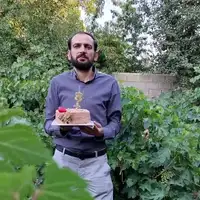
The couple had previously been barred from attending their film's premiere at the Berlin Film Festival in February. They were set to attend the Swedish premiere of their latest film, My Favourite Cake, on Friday, when they found out that they cannot leave.
Moghadam shared on Instagram, "Yesterday, just when I had set off to the airport to leave the country intending to pay a visit to my family in Sweden and attend our film’s premiere, my passport was confiscated at Tehran’s airport and I was informed that we (me and Behtash Sanaeeha) are barred from leaving the country again."
She highlighted that they had received their passports back only a week earlier, only to have them confiscated once more. Expressing her frustration, Moghadam questioned the authorities' motives: "It was only a week ago after our passports were given back to us. All this happened only after I had got tickets, paid the exit fees, and a lot of more expenses which had obviously gone in vain. I have really hard time to figure out why we were given back our passports when it was their intention not to let us leave. Is it because of a hidden agenda to mentally and psychologically abuse us?"
The couple co-wrote and directed the 2024 drama film My Favourite Cake, which has received international acclaim. The movie tells the story of a woman striving to live out her desires in a country where women's rights are heavily restricted.
The renewed travel ban on the two filmmakers coincided with Iran’s Cinema Day on Wednesday.
As the anniversary of the Woman, Life, Freedom movement approaches—a movement sparked by the 2022 death in custody of 22-year-old Mahsa Amini—the Independent Filmmakers Association issued a statement noting that legal cases have been filed against 300 filmmakers. The statement emphasized that in a climate where the fundamental civil rights of cinema professionals are under threat, “praising national cinema feels like a farce, turning the new presidency into a dark, bitter, and absurd black comedy.”
The association further expressed its support for those impacted, stating, "We extend congratulations not only on Cinema Day but also on the Day of Humanity to those filmmakers who have steadfastly upheld the principles of the ‘Woman, Life, Freedom’ movement, and continue to bear the consequences of their stance."
On Monday, Rasoul Sadr-Ameli, spokesperson for the House of Cinema, announced that this year's festival for Cinema Day would not be held, attributing the decision to the absence of these artists.
In a press conference, Sadr-Ameli remarked, "Every year, a festival was held as part of the House of Cinema celebrations, with works judged and awards presented to the best. However, we concluded that, given the absence of several filmmakers, such judging would not be fair."
Iranian actress Sahar Dolatshahi in Dariush series
Iranian judicial authorities have taken legal action against actress Sahar Dolatshahi for allegedly “dancing” in a scene from a drama series, Dariush, as the government continues its crackdown on personal freedoms.
The judiciary labeled her actions “contrary to Islamic principles,” sparking outrage among Iranians who see the move as yet another sign of the government's control over cultural expression.
The Mizan website, a mouthpiece for Iran’s judiciary, announced on Tuesday that Dolatshahi, the production company of the series, and the streaming platform Filimo, have all been subjected to judicial proceedings. The authorities provided no details on the specific charges or punishments.
The scene in question, featured in the seventh episode of Dariush, shows Dolatshahi and veteran actor Atash Taghipour engaging in what could barely be described as dance-like movements.
Dancing has been officially banned in Iran since the 1979 revolution, with clerics branding it a "sinful act" and "an act of lust." In the eyes of the system, even the most innocent forms of self-expression are to be policed, particularly when they involve prominent public figures like Dolatshahi. Despite these laws, the Iranian people continue to engage in cultural traditions such as ethnic dance which the government refers to as "rhythmic movements" in an attempt to avoid the word "dance."
While Iranian officials claim that content is vetted and approved before release, Dolatshahi’s case is yet another example of Iran's unpredictable enforcement of its laws. The series was released with the necessary permissions from Satra, the censorship body under the state TV regulator, IRIB.
The silence from those involved including Satra, the series producer, and Filimo, reflects the fear of the severe repercussions which could result.
Since the revolution, Iran’s cultural sector has been controlled by the government, and artists have faced constant censorship, harassment, and even imprisonment.
Observers believe that in a society where the economy is crumbling, unemployment is rampant, and basic freedoms are denied, these attacks on artists are nothing more than distractions meant to appease hardliners.
The action has ignited a wave of backlash on social media, with many Iranians mocking the absurdity of the charges. One user sarcastically noted, “Soon, they’ll start punishing people for smiling in public. What’s next, a ban on laughter?” Others have pointed out the system’s “hypocrisy” in its claim to support "cultural development" while simultaneously stifling creativity and entertainment.
As the Islamic Republic continues its authoritarian rule, artists, women, and free-thinkers remain among its primary targets. But the people of Iran, particularly the younger generation, show no signs of giving up their fight for freedom, defying the efforts to control every aspect of their lives, from politics to culture and dress.
In their first presidential debate, former President Donald Trump and Vice President Kamala Harris not only traded barbs but also revealed their sharply contrasting approaches to handling Iran and Middle Eastern conflicts.
Though each candidate only briefly touched on Iran, it was enough to reveal their contrasting strategies. Their differing approaches offered a stark choice: a return to Trump’s hardline tactics from his first term, centered on maximum pressure and sanctions, or a continuation of Biden’s strategy, which seeks to balance pressure with diplomatic engagement in managing Tehran.
In the debate, Vice President Harris stressed the importance of remaining vigilant against Iran's destabilizing activities in the region, although she did not clarify her specific position on sanctions against Iran. She reaffirmed her commitment to Israel's security, stating, “I will always give Israel the ability to defend itself, in particular as it relates to Iran and any threat that Iran and its proxies pose to Israel,” when addressing the ongoing Israel-Hamas conflict.
Trump, on the other hand, directly linked the improvement in Iran's financial situation and its support for regional terrorism to the Biden administration's decision to be lax about enforcing sanctions. While he did not mention Biden by name, Trump made it clear that he holds the current administration's actions responsible for Iran’s financial comeback. He argued, "Iran was broke under Donald Trump. Now Iran has $300 billion because they took off all the sanctions that I had..."
Though experts largely agree that Trump’s “maximum pressure” strategy significantly weakened Iran's economy and curtailed its ability to fund terrorist groups, his claim that Iran now has $300 billion is widely viewed as a substantial overstatement.
In 2023, the Foundation for Defense of Democracies estimated that Iran’s increase in oil exports since President Biden took office has netted the country an additional $32 billion to $35 billion.
Nonetheless, Trump placed the blame squarely on the Biden administration—and by extension, Harris as Vice President—for the chaos in the region and Iran's renewed ability to fund its proxy militias. He argued that the Biden administration's policies have directly fueled this resurgence. “Iran had no money for Hamas or Hezbollah or any of the 28 different spheres of terror... Now they're a rich nation. And now what they're doing is spreading that money around. Look at what's happening with the Houthis in Yemen. Look at what's going on in the Middle East. This would have never happened,” Trump stated during the debate on Tuesday night.
During Biden's presidency, Iran boosted oil exports to China from a low of 250,000 barrels per day to as high as 1.5 barrels by 2024.
While Trump recently claimedhe does not seek outright hostility with Iran, he has made it clear that he will not permit the country to develop nuclear weapons. In an interview with Fox News, Trump warned, "If Iran acquires nuclear weapons, Israel is gone. It will be gone," underscoring the high stakes he attaches to preventing Iran from becoming a nuclear power.
Trump and other Republicans have criticized the Biden administration for being too lenient on Iran, allowing it to circumvent US economic sanctions. They argue that this leniency enabled Tehran to arm Hamas, facilitating the October 7 attack on Israel.
During the debate, Trump went – characteristically – on the offensive, accusing Harris of being anti-Israel and pointing to incidents like her alleged refusal to meet with Israeli Prime Minister Benjamin Netanyahu. He painted a dire picture of her leadership, claiming it would spell disaster for Israel and potentially lead to its destruction. Positioning himself as Israel’s unwavering ally, Trump framed Harris and the Biden administration as threats to the nation's security and survival.
In response, Harris firmly rejected Trump’s claims, in turn claiming that she has been a long-standing support for Israel throughout her career and dismissing his accusations as baseless smears designed to deflect from his own foreign policy blunders. She sharply criticized Trump as “weak and wrong on national security and foreign policy,” calling out his admiration for dictators and his inconsistent strategies. "It is very well known that Donald Trump is weak and wrong on national security and foreign policy... And that is why we understand that we have to have a president who is not consistently weak and wrong on national security," Harris asserted.
Harris reinforced her stance by affirming Israel’s right to self-defense while advocating for a more comprehensive peace strategy—one that also recognizes Palestinian security and self-determination through a two-state solution.