Iran’s fuel distribution system hit by similar cyberattacks twice, VP admits
A general view of a gas station during a gas station disruption in Tehran, Iran, December 18, 2023.
Mohammad Reza Aref, Iran’s First Vice President, revealed that the country's fuel distribution system was hit by two identical cyberattacks within a year, both targeting critical infrastructure without any preventive measures taken.
Speaking at a ceremony on Sunday to introduce new Oil Minister Mohsen Paknejad, Aref referenced the cyberattacks carried out by the hacking group Predatory Sparrow in 2023, which crippled Iran’s fuel supply system.
Aref’s comments highlighted the government's ongoing failure to secure key infrastructure. "It is said once bitten twice shy, but two identical attacks happened within a year," Aref said, directly criticizing the lack of security improvements. He urged Paknejad to prioritize cybersecurity across the oil industry, a sector that continues to face threats under the system's mismanagement.
The remarks come as gas stations in multiple Iranian cities are facing major shortages. Citizens report being stranded as fuel is only available with government-issued ration cards, with no access to gas at market prices, which are double the subsidized rate.
A gas station in Iran
The December 18, 2023, attack affected around 70% of Iran’s gas stations. With the fuel distribution system offline, subsidized gasoline purchases were blocked, and fuel was only available at market rates in certain areas.
Following the attack, Gholamreza Jalali, head of the Passive Defense Organization, admitted that a "vulnerability in the payment and receiving network" allowed hackers to breach the system. The Passive Defense Organization later confirmed that malware had caused widespread disruption, warning the Oil Ministry in 2020 about insecure connections in the fuel system—warnings that were ignored.
However, Aref did not specify the exact timing of the second attack within the year, as the only one publicly reported occurred on December 18.
This was not the first time Iran’s fuel network was targeted. In November 2021, just before the second anniversary of the Islamic Republic’s crackdown on the November 2019 protests, hackers once again paralyzed the country’s fuel stations, leaving many without access to fuel for weeks. At the time, 4,300 stations were disrupted, and hackers managed to hijack billboards in Isfahan with slogans like “Khamenei! Where’s our gasoline?” mocking the government's inability to provide basic services.
Congestion at an Iranian gas station (file photo)
Despite claims from officials that the Islamic Republic’s national internet, or "intranet," would bolster cybersecurity, the country’s critical systems remain vulnerable. Hadi Beigi-Nejad, a member of the parliament, stated in December that "the enemy" had infiltrated Iran’s infrastructure, signaling internal vulnerabilities.
The Passive Defense Organization reported in December that it had identified and thwarted 10 major attacks on national infrastructure in 2022. However, the organization warned that Iran’s fuel system remains at risk, confirming the ongoing inadequacies in the ach to cybersecurity.
Sara Deldar, a former political prisoner, has died due to multiple infections caused by pellet wounds sustained during the 2022 nationwide protests after being shot by Iranian security forces.
After her arrest, Deldar was sentenced to more than one year in Rasht’s Lakan Prison, among thousands arrested in a mass roundup of opponents to the government. She was released on parole after serving more than six months, but her health was already deteriorating.
In her final Instagram post in July, Deldar described her severe ill health after her release citing infections, anemia, and the enlargement of her spleen, kidneys, and ovaries. The ailments were likely exacerbated by the bad treatment and conditions of her imprisonment where prisoners are often denied access to adequate healthcare.
Deldar also revealed that other prisoners released from Lakan Prison were suffering from similar illnesses.
Sara Deldar’s death is not an isolated incident. For over four decades, Iran’s prisons have become a graveyard for political prisoners and those who dare to defy the regime.
Among the many others suffering a similar fate is Mosayeb Yeganeh, who was returned to Tehran’s notorious Evin Prison from a hospital before his treatment was complete, and ultimately died due to his lack of medical care. Another Kurdish prisoner, Hasan Omarpour, was so desperate that he self-immolated at the same prison.
Many others have committed suicide either in detention or shortly after their release, often as a result of the brutal physical and psychological abuse they endure behind bars. In the last few months alone, several political prisoners have taken their own lives, unable to cope with the trauma inflicted by the state’s torturers.
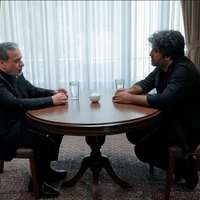
Actress Taraneh Alidoosti and filmmaker Mostafa Al-Ahmad have been diagnosed with diseases after serving time in Iranian prisons
Suspicious deaths have been reported in prisons across the country, including Lakan Prison, where Deldar was held, the Central Prison of Tabriz in East Azarbaijan Province, and Ilam Prison in Ilam Province.
The 2022 Woman, Life, Freedom protests, sparked by the killing of Mahsa Amini in the custody of the morality police, led to the deaths of over 500 protesters in the hands of Iran's security forces. Many more protesters died suspiciously in detention or shortly after their release, adding to an already mounting death toll.
After the decisive defeat of ultraconservative candidate Saeed Jalili in Iran’s July presidential election, his political allies have become increasingly isolated in both the political arena and the Iranian parliament (Majles).
Adding to this, a former aide to ex-President Mahmoud Ahmadinejad revealed that Ahmadinejad, who had Jalili as his nuclear negotiator from 2007 to 2013, had almost fired him during his tenure. This internal criticism further highlights Jalili’s diminishing influence.
In an interview with Khabar Online, hardline cleric Abbas Amirifar claimed that Saeed Jalili has never secured more than four million votes in any election. In the most recent presidential race, Jalili reportedly received around 3.5 million votes out of the nearly 30 million ballots the government claims were cast.
He also argued that Jalili could not be an effective president, although he was Masoud Pezeshkian’s main rival in the election, because he lacks executive experience. "He has never been even a deputy minister or the head of a small organization,” Amirifar said.
Former president Mahmoud Ahmadinejad (left) and Abbas Amirifard
The cleric also alluded to the transformation of the political balance in recent months with the election of conservative Mohammad Bagher Ghalibaf as parliament speaker and Masoud Pezeshkian as president. This has weakened the ultraconservatives, he said and quoted Ghalibaf as saying that "some individuals do not want the government to be successful," he clear reference to Jalili and his allies.
Amirifar pointed out that some hardliners entered parliament with as little as 3 percent of the vote in their constituencies. He also claimed that Jalili's 3.5 million votes in the recent presidential election were partly due to the influence of hardline local officials. Furthermore, Amirifar suggested that hardliners harbor resentment toward Speaker Ghalibaf for steering the parliament in a way that ensured all of Pezeshkian's cabinet ministers received a vote of confidence, undermining their political influence.
The cleric further accused hardliners in the Majles of opposing Supreme Leader Ali Khamenei, despite his call for full support of Pezeshkian’s administration. He pointed out that some of these hardliners have been convicted of various offenses and should not even be in parliament. Amirifar emphasized that their resistance to Khamenei’s directive and their questionable backgrounds raise concerns about their credibility and commitment to national interests.
Meanwhile, conservative activist Hossein Naqavi Hosseini has also told reporters that the hardliners in the Majles are the same individuals who were nicknamed as the "deviant group" during Ahmadinejad's presidency. He said the hardliners, particularly the members of the ultraconservative Paydari Party are the only group in parliament who do not believe in Pezeshkian's "national accord" policy.
He stated that Iran's conservatives have already warned hardliners they are on the wrong path. They have told them that fair criticism of the government is not the same as outright confrontation. Conservatives cautioned the ultraconservatives that they risk isolation if they refuse to join the unity call by Pezeshkian.
In another development, former conservative lawmaker Mostafa Mirsalim claimed that unlike the hardliners in the ultraconservative groups, the main body of the Iranian conservatives are quite transparent in their political behavior. He said the radicals among ultraconservatives will soon vanish from Iran's political scene.
Prominent conservative commentator Nasser Imani told reporters that Iranian conservatives have a responsibility to confront the radicals among ultraconservatives. He added: "We are facing a group of radical politicians who should not be allowed to expand their influence."
Like Amirifar, Imani accused radicals in the Majles of ignoring Khamenei's advice to maintain parliamentary calm. However, he noted that by overwhelmingly endorsing Pezeshkian's administration, the main body of the Majles has demonstrated its independence from radical influence. This overwhelming vote of confidence, he suggested, shows that the radicals do not have the control they claim, and the broader parliament is committed to supporting the new government rather than aligning with extreme factions.
After a period of relative calm in Iran's aggressive rhetoric toward Israel, IRGC Chief Commander Hossein Salami stated on Sunday that Iran's revenge against Israel would be “different,” though he did not provide further details.
"The Israelis will taste the bitter revenge for their wickedness,” Salami threatened.
For more than a month since the killing of Hamas leader Ismail Haniyeh in Tehran on July 31, Iranian officials, who blame Israel for the attack, have been issuing threats of a severe response. However, no direct Iranian retaliation has occurred, unlike the large missile and drone strike in April, which followed an Israeli attack on Iran’s consular compound in Damascus.
In the meantime, Iranian officials have softened their rhetoric, signaling that Tehran's response may not involve a large-scale, direct attack. However, Salami's statement on Sunday served as both a renewed threat and an indication that Tehran is likely avoiding a major escalation. His remarks suggest a more calculated, possibly asymmetric response, rather than an immediate, overt military operation.
According to Tasnim News Agency, which is affiliated with the IRGC, Hossein Salami, when asked about "when, where, and how" Iran’s revenge on Israel will be carried out, stated: "It will certainly be different, and this mystery will be solved in time for everyone."
In a gathering in Yasuj Sunday evening, Hossein Salami stated that Israel is "surrounded by Muslims" and, referring to Iran’s anticipated revenge, added that the "nightmare of inevitable action" shakes Israel day and night. He also commented on protests over Israeli Prime Minister Benjamin Netanyahu's failure to secure the release of hostages held by Hamas, saying, "They cannot continue their political life like this, and we are witnessing signs of their political downfall."
The IRGC chief previously responded to a reporter's question about revenge for the killing of Ismail Haniyeh in Tehran, stating, "You will hear good news." On Tuesday, September 3, Mostafa Rostami, head of Khamenei's representative office in universities, added, "We await revenge for the blood of the martyrs, especially the martyr who was our guest. This revenge is delayed due to considerations, but it is certain."
Although Iran quickly vowed revenge after Haniyeh's killing, it faced a dilemma. A direct attack risked triggering a major military escalation, potentially exposing key targets within Iran to retaliation. On the other hand, failing to act would damage its credibility in the region, particularly among its allies and proxy forces. This put Tehran in a challenging position, balancing the need to maintain its reputation with the danger of escalating the conflict further.
Iran reportedly delivers Fath-360 short range missiles to Russia
A member of the Iranian Parliament's National Security and Foreign Policy Commission claims that the Islamic Republic is bartering its missiles and drones in exchange for Russian soy and wheat.
These remarks come amid recent denials by Iranian officials and the Ministry of Foreign Affairs regarding reports about the delivery of ballistic missiles to Russia.
The lawmaker, Ahmad Bakhshaei Ardestani, has stated clearly, "We provide missiles to Hezbollah, Hamas, and Iraqi Hashd al-Shaabi, so why shouldn't we provide them to Russia?"
According to this parliamentarian, in order to meet its needs, including importing soy and wheat, Iran must engage in bartering; one part of this barter involves sending missiles, while the other part includes sending drones to Russia.
Bakhshaei Ardestani's claim about bartering drones and missiles for Russian wheat and soy comes despite official customs statistics and the Iranian Chamber of Commerce indicating that Iran does not import soy from Russia.
Paying higher prices
Statistics from the Iranian Chamber of Commerce reveal that last year Iran imported nearly $2 billion worth of soy, sourced from the Netherlands, the United Kingdom, Switzerland, Turkey, the UAE, and Oman, with no soy shipments coming from Russia.
However, Iran did purchase $595 million worth of wheat, along with $260 million worth of corn and $150 million worth of barley from Russia last year.
Details from the Chamber of Commerce show that Russia actually exports agricultural products to Iran at prices significantly higher than regional market rates. For example, last year Iran bought ordinary wheat for human consumption from Kazakhstan and Turkey at prices ranging from 31 to 37 cents per kilogram, while similar wheat imported from Russia cost between 43 and 47 cents per kilogram.
This higher price for Russian wheat is notable, considering that the Iranian government purchases domestic wheat for less than 30 cents per kilogram and delays payments to local farmers.
Previously, Ahmad Maroufkhani, the head of the Iranian Oil Exporters Association, stated that Russia sells gasoline to Iran at 20% higher than global prices. He announced last year that Iran pays $150 per ton of gasoline imported from Russia, which is 20% above the international price.
The high cost of Russian gasoline for Iran violates the European Union and seven industrialized nations’ price caps on Russian gasoline and diesel, forcing Russia to sell its oil products at lower prices in global markets.
This Iranian behavior of paying more for Russian commodities remains a mystery, unless one can argue that they might be hidden military and security deals between the two.
Trade Turnover
Iranian customs statistics show that last year Iran had $1.7 billion in imports from Russia, which is unchanged from 2021, prior to Russia's military invasion of Ukraine. However, compared to the period of U.S. sanctions against Iran in 2018, this figure represents a 60% increase. Iranian exports to Russia have seen little growth from the execution of U.S. sanctions until 2021, but since 2022, they it nearly doubled, reaching $950 million last year. These statistics do not include trade in petroleum products and weapons.
A significant portion of Iran's exports to Russia consists of fruits and vegetables, while a considerable part of its imports includes grains, industrial machinery, wood, and cooking oil.
Since 2022, following Western sanctions on Russia for its invasion of Ukraine, Russian customs have ceased publishing details of trade with foreign countries. However, both Iranian and Russian officials report bilateral trade totaling $5 billion. If accurate, this figure suggests that either half of the trade between the two countries is not recorded by customs or involves items such as oil products and weapons not covered by Iranian customs statistics.
The number of deaths from road accidents has reached a 12-year high in Iran, according to recent data from the Iranian Legal Medicine Organization (ILMO).
After a decade of steady decline, traffic fatalities began to rise again in the Iranian year 2021, with over 20,000 deaths reported in the last Iranian calendar year 2023 (March 21, 2023 – March 19, 2024).
Citing data from the ILMO, Etemad newspaper reported that around 20 years ago, the annual death toll from road accidents approached 28,000. Due to various interventions, this number was reduced to approximately 16,000 by 2020. However, the report noted that since 2021, traffic fatalities have been rising once more, now surpassing 20,000, a figure not seen since 2011, breaking a 12-year record.
Despite existing laws aimed at reducing traffic deaths, Etemad noted that the Iranian government had committed to reducing road fatalities by 10% annually. This goal, had it been met, would have brought the number of deaths down to fewer than 10,000 per year. However, the rising numbers have shown that this target has not been achieved.
On Saturday, Taymour Hosseini, the Chief of Iran’s Traffic Police, reported that last week, there were 264 fatal accidents in the country, resulting in 314 deaths at the scene. In addition, 8,156 injury-related accidents were recorded, with speeding, driver inattention, and loss of vehicle control identified as the primary causes.
Hosseini did not mention other widely referenced factors such as the poor quality of domestically manufactured vehicles and inadequate road conditions, which many experts cite as key contributors to Iran's high rate of road fatalities.
In 2022, Kamal Hadianfar, the former Chief of Traffic Police, acknowledged that there were 5,200 high-risk accident spots across the country, with 877 of them considered especially dangerous and in need of urgent improvement.
A substantial portion of Iran's road fatalities has been attributed to the quality of vehicles and the state of the country's roads. Around 90% of motorcycles and 40% of passenger cars are considered outdated, while parts of the public transportation fleet also suffer from wear and tear.
The ongoing rise in fatalities has raised concerns over the effectiveness of safety measures and road infrastructure improvements. Official estimates suggest that the economic impact of road accidents accounts for between 2% and 7% of Iran's GDP.
Experts warn that given the current upward trend in fatalities, the figure could increase further if urgent action is not taken.