Ghalibaf: The Bigger the Threats, the Bigger the Opportunities
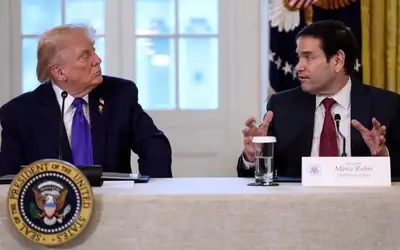
Parliament speaker Mohammad-Bagher Ghalibaf described the international pressure on Iran as “opportunities,” referring to remarks by former commander of IRGC Quds force Qasem Soleimani, who was killed in a US targeted killing.
His intention is to pursue regime's plans and priorities. However, the Islamic Republic has many "open files" that need to be addressed and closed. This can refer to Iran's "nuclear file".
Ghalibaf raised the issue of the December 2021 nuclear bill, which increased uranium enrichment and reduced international inspections. He said that Iran needs to stick to Khamenei's guidelines. "The Supreme Leader stressed that this law will be our strategy," Ghalibaf said.
Ghalibaf said he will "definitely negotiate" with the West if elected, and he will "certainly clinch a deal within the framework of the Islamic Republic's macro policies."
"Any agreement that has economic benefits for Iran will be pursued step by step and action by action," he said.
He also dismissed his pro-reform rival Masoud Pezeshkian's advisor Javad Zarif's claim that the parliament obstructed the revival of the 2015 nuclear deal by passing the Strategic Action Plan to Lift Sanctions and Protect Iranian Nation's Interest, saying "the Strategic Action Plan is no obstacle to the removal of sanctions."
Israeli Prime Minister Benjamin Netanyahu says the Islamic Republic is working on all front to destroy Israel, but the Jewish state will thwart its intentions "at any cost".
Netanyahu said on Monday that Tehran is actively working on multiple fronts to destroy Israel, highlighting the ongoing threat posed by Iranian proxy groups such as Hamas, Hezbollah, and the Houthis.
“At any cost and in any way, we will thwart Iran's intentions to destroy us,” the Israeli prime minister told the Knesset.
He described the situation as an "existential war on seven fronts," asserting that Iran is openly attempting to annihilate Israel.
Iran has long been a key supporter of both Hamas in Gaza and Hezbollah in Lebanon, providing financial aid, weapons, and training to these groups.
Since October 7, Israel has been engaged on two primary fronts: Gaza and Lebanon. Following a series of escalations, the Israel Defense Forces (IDF) have intensified their operations against Hamas in Gaza, aiming to dismantle its infrastructure and halt rocket attacks on Israeli territory. Concurrently, tensions with Hezbollah have flared along Israel's northern border with Lebanon.
In his Monday speech, Netanyahu said as the IDF advances deeper into Gaza, more evidence of Iran's anti-Israel activities has come to light.
He argued that Iran has underestimated both Israeli resilience and the country's determination to protect itself, stating that Israel is prepared to impose a significant toll on its aggressors.
His remarks come one day after the top US general warned that any Israeli offensive in Lebanon would risk a broader conflict that draws in Iran and its proxies, particularly if Hezbollah's existence is threatened.
"From our perspective, based on where our forces are, the short range between Lebanon and Israel, it's harder for us to be able to support them in the same way we did back in April," Brown said.
He was referring to a massive Iranian missile and drone attack against Israel from Iranian territory on April 13 that failed to inflict any serious damage as Israeli and allied forces downed almost all projectiles.
In their fourth debate, the candidates for Iran’s presidency will discuss issues related to foreign policy.
The candidates had been informed about the subjects so that they could be prepared for the debates in advance. Unlike the previous rounds, the candidates have five-minute segments to speak. The first chunk is to express their ideas about questions posed by a panel of officials and experts. The second four-minute is for dialogue among each other.
The Islamic Republic has had tumultuous relations with the West and its regional neighbors since its inception 45 years ago, largely driven by its Islamic-Shia ideology of upsetting the geopolitical status quo.
The clerical regime's relentless adversarial stance toward Israel, the United States, and their allies has significantly shaped the contemporary history of the Levant and West Asia.
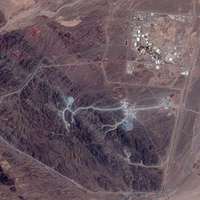
Over the past 20 years, the revelation of Iran's pursuit of a nuclear program with uranium enrichment has further heightened tensions in its foreign relations. Additionally, it has invested enormous resources and energy in building a military and ideological network of militant proxies throughout the Middle East.
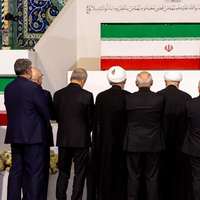
The presidential candidates have established a tradition of gathering for a group prayer ahead of their debates.
A giant electoral banner featuring portraits of Iran's early presidential elections candidates that is hanging on a governmental building in downtown Tehran (June 2024)
As Iran approaches its next presidential election on Friday, the mood among a significant segment of the electorate is one of deep skepticism and disillusionment.
A recent poll by Gamaan reveals that only 22% of respondents intend to vote, while 65% plan to abstain, and 12% remain undecided. This significant potential drop in voter participation underscores a growing recognition among Iranians that elections under the Islamic Republic are neither free nor fair.
Since establishing the Islamic Republic in 1979, the Guardian Council has exercised significant control over who can run for office. This body, comprising clerics and jurists loyal to the Supreme Leader, routinely disqualifies candidates deemed insufficiently loyal to the regime.
Notably, even former presidents like Akbar Hashemi Rafsanjani, Mahmoud Ahmadinejad, Hassan Rouhani, and prominent figures such as former parliament speaker Ali Larijani have been disqualified.
This pattern illustrates the Council's stringent criteria that exclude not only dissidents but also high-ranking insiders who fall out of favor. Moreover, the Council's exclusion extends to women and non-Shi'a men, who are categorically barred from running for president. These practices ensure that only those who unequivocally support the regime's ideological and political goals can compete, transforming elections into formalities designed to maintain the status quo rather than reflect the people's will.
Over the years, voter turnout in Iran has steadily declined. The 2021 presidential electionsaw the lowest turnout in the country's history, officially with only 48.8% of eligible voters participating. This trend was seen as a clear indicator of public disillusionment with the electoral process, as many Iranians increasingly view elections as futile exercises in legitimizing authoritarian rule.
William J. Dobson, in his book, “The Dictator’s Learning Curve: Inside the Global Battle for Democracy,” argues that modern dictators have learned to adapt and refine their methods of control and repression, using less overtly violent methods. Instead, they employ tactics like censorship, legal manipulation, co-optation of opposition, and economic control. While the 20th-century dictators imprisoned, tortured, and executed their opponents, the 21st-century dictators prefer the voting system and the ballot box to achieve their goals.
A street vendor looking at people watching a presidential debate in Shiraz (June 2024)
A common tactic the regime uses is creating a strawman candidate to manipulate public perception. Candidate Saeed Jalili, a hardliner close to Supreme Leader Ali Khamenei, is presented as the Supreme Leader's favorite. Figures like Mohammad Javad Zarif, former foreign minister, then speak against Jalili, warning the public of the dangers of his potential win and urging them to vote for Masoud Pezeshkian, who is portrayed as a moderate alternative. However, this facade hides the reality that all significant decisions are made by Khamenei, and the president holds no real power. Pezeshkian does not identify as a reformist and repeatedly affirms his loyalty to Khamenei. This strategy aims to convince disgruntled voters that there is an acceptable alternative (Pezeshkian) to the imminent danger (Jalili).
Javad Zarif has worked in the Islamic Republic's foreign ministry since 1981 and has been a key architect of the failed JCPOA. Throughout his career, he has consistently justified and covered up the regime's atrocities on the world stage through lies, deception, and fallacy. Zarif attacked women's rights activist Masih Alinejad, calling her a traitor, and has shown no respect for women's rights, akin to the Taliban but dressed in suits. He uses "cultural relativism" to justifycrushing dissent and human rights violations by the gender-apartheid Islamic regime. The bloodiest crackdown in Iran took place under so-called “reformist” President Hassan Rouhani and his chief propagandist Javad Zarif when 1,500 civilians were killed in just a few days in November 2019. Zarif's role in dismissing and ridiculing the slaughter of innocent Iranians highlights his complicity in the regime's crimes.
Additionally, candidate Mostafa Pour Mohammadi, a member of the “death commission” involved in the massacre of thousands of political prisoners in 1988, exemplifies the regime's brutal history. On August 28, 2016, referring to media reports about the mass prisoner killings and his involvement in them, Mostafa Pour Mohammadi said: “We are proud to have carried out God’s commandment concerning the [MEK]… I am at peace and have not lost any sleep all these years because I acted in accordance with law and Islam.”
Conversely, opposition groups, including secular democracy advocates, human rights activists, and political pundits, argue that meaningful change can only come through the complete overhaul of the current system. The regime's brutal crackdown on dissent, exemplified by the November 2019 protestswhere 1,500 civilians were killed, and the 2022 uprising of Woman-Life-Freedom has only strengthened this resolve (The Times of Israel).
The opposition's fight is not just against the regime's repressive tactics but also against the narrative that participating in the elections can bring about change. This perspective is echoed by many Iranians who have taken to the streets in protest, demanding an end to the Islamic Republic. The regime's oppressive actions, such as the imprisonment and torture of political dissidents, suppression of women's rights, and extensive censorship, have further alienated the populace.
Iranian citizens are increasingly aware that their participation in elections is being used to legitimize a system that oppresses them. The declining voter turnout reflects a broader disillusionment with the regime's promises of reform. As one protester aptly put it, voting is ignoring others' suffering and pain. This sentiment captures the frustration and anger of a populace that feels betrayed by a government that uses elections to perpetuate its rule rather than to reflect the people's will.
Drawing from Dobson’s insights, the international community must listen to the voices of the Iranian people and support their struggle for true democracy and human rights. The importance of international solidarity and support for democratic movements cannot be overstated. Like before, the upcoming election is neither free nor fair. Instead, it serves as a reminder of Iran's ongoing fight for justice and freedom.
The opinions expressed by the author are not necessarily the views of Iran International.
Masoud Pezeshkian, the only reform-leaning presidential candidate in the upcoming presidential elections, has revealed mass mismanagement and corruption plaguing the nation.
Speaking Monday, Pezeshkian revealed, "Money disappears in the country in amounts as significant as 70 trillion, and it is unclear where it goes, while our people have to search through garbage bins for a piece of bread to survive."
He did not specify whether the figure was in rials or tomans. If in rials, this equals around $116 million; if in tomans, approximately $1.16 billion. The revelation comes as Iran’s annual budget for the current year is over $100 billion and the six presidential candidates vie for the top seat.
Iran is currently grappling with gross embezzlement issues and widespread poverty, which have eroded public trust in governmental institutions and exacerbated social inequalities.
Numerous high-profile embezzlement cases have been uncovered, involving senior officials and businesspeople who exploit loopholes and weak oversight to siphon off public funds.
The systemic corruption drains crucial resources from public services and development projects, impacting the everyday lives of ordinary Iranians. Despite Iran's vast oil reserves and natural resources, a significant portion of the population struggles with poverty, high unemployment rates, and inflation.
At least one third of Iranians are now below the poverty line, forcing many to scavenge for food and essentials.
Iran's snap elections on June 28 follow the sudden death of Ebrahim Raisi last month in a freak helicopter crash.
A gas flare on an oil production platform is seen alongside an Iranian flag in the Persian Gulf July 25, 2005.
Hossein Selahvarzi, the former head of Iran's Chamber of Commerce, says sanctions have inflicted approximately $1.2 trillion in damages on the country between 2011 and 2023.
In comments published on Monday in Tehran's Shargh daily, Selahvarzi discussed the economic opportunities lost in Iran due to the sanctions. His remarks came just days before Iran's presidential election, where a victory for a hardline candidate could potentially prolong the stalemate in Iran's nuclear negotiations with global powers.
Saying that the issue of sanctions has not received much attention during the election campaign, Selahvarzi estimated that the lost per capita income for each Iranian due to sanctions over the 12-year period is around $14,000. In other words, each Iranian has lost an average of $1,202 annually due to the sanctions.
Selahvarzi did not specify the official sources of these figures. He explained that the estimates were based on comparisons with "several countries similar to Iran." He likely compared Iran's GDP and real per capita income with the averages of these countries, attributing the differences to the impact of the sanctions.
Masoud Pezeshkian, the reformist-backed candidate, has criticized the current situation, but the overarching policies are controlled by the Supreme Leader of the Islamic Republic, meaning that no matter who assumes the office of the president, little may change in policies that can help lift sanctions.
On Sunday, former Iranian President Hassan Rouhani said Iran incurred an annual loss of some $100 billionover the past three years due to sanctions that forced the country to sell limited amounts of oil and petrochemicals at discounted rates.Rouhani accused former president Ebrahim Raisi's government of "betraying" the Iranian people by causing $300 billion in damages over the course of three years.
Selahvarzi also commented on Iran's non-oil exports, saying: "The non-oil trade balance turned negative last year, and exports declined." He added that “both exports and imports were significantly impacted by sanctions."
Sanctions have not only hurt Iran's oil revenues and non-oil exports but also contributed to inflation and unemployment. The World Bank predicts Iran's GDP growth to continue its decline in 2024, falling below 2%. Presidential candidates are adamant that Iran's GDP growth can reach 8%, although none of them proposed any tangible plans to reach the long-sought goal.
Despite multiple rounds of negotiations between Tehran and world powers in 2021-2022, no agreement was reached to revive the JCPOA (Iran's 2015 nuclear deal). Lifting sanctions could improve Iran's economic situation, but this hinges on reaching an agreement with global powers.
Multilateral nuclear talks with Iran in Vienna, 2021
On Monday evening, Iranian presidential runners will hold their fourth debate, which will focus on foreign policy. No candidate has so far presented any comprehensive and clear plan to resolve strategic foreign relations issues.
Alireza Soltani, political economist told conservative Khabar Online website Monday that the main challenges the next president faces in foreign policy include Tehran-Washington relations, Iran’s nuclear program, and relations with international institutions and regulatory mechanisms, particularly the International Financial Task Force (FATF) and the World Trade Organization.
“Any incoming administration must strive to address the challenges in US-Iran relations. Resolving this conflict can pave the way for improved relations with Europe and many regional countries. Iran has lost numerous regional and international opportunities, both political and economic, due to its strained relations with the US. This includes economic cooperation with neighboring countries and relations with major powers like China and Russia, which have resulted in imbalanced and often unfavorable arrangements for Iran. Reducing tensions with Israel also hinges on resolving this issue,” he said.
According to Soltani, Iran's nuclear program has imposed "heavy economic and security costs on the country." He added that the next president should address the country's "weak economic, monetary, and trade relations," exacerbated by US sanctions, are further strained by international pressures and restrictions. These challenges particularly affect money transfers, attracting foreign investment, and international trade.