• العربية
  • فارسی
Brand
  • Iran Insight
  • Politics
  • Economy
  • Analysis
  • Special Report
  • Opinion
  • Podcast
  • Iran Insight
  • Politics
  • Economy
  • Analysis
  • Special Report
  • Opinion
  • Podcast
  • Theme
  • Language
    • العربية
    • فارسی
  • Iran Insight
  • Politics
  • Economy
  • Analysis
  • Special Report
  • Opinion
  • Podcast
All rights reserved for Volant Media UK Limited
volant media logo

Kurdish Citizen in Iran Hangs Himself After State Intimidation

Jun 10, 2024, 11:56 GMT+1
Farhad Beigi Garousi, a Kurdish citizen and political prisoner

Farhad Beigi Garousi, a Kurdish citizen and a detainee from the 2022 nationwide protests in Kermanshah Province, committed suicide after continuous intimidation from Iran's security agencies.

The Hengaw Human Rights Organization reported on Saturday that Garousi, 21, who had been detained for over a year during the Woman, Life, Freedom movement sparked by the death in morality-police custody of Mahsa Amini, and was temporarily released on bail, hanged himself at his family home in the city of Sahneh.

Garousi had been under constant pressure from Iranian security agencies over the past four months, recently informed that he must present himself to Dieselabad Prison in Kermanshah, from where he would be transferred to Evin Prison in Tehran.

Garousi, along with 34-year-old Gholamreza Rasaei, had been tortured to confess to the killing of an intelligence official in Sahneh, Kermanshah Province, on November 18. Locals report that the officer, Nader Beyrami, was killed in a clash with mourners when he and his forces raided a funeral ceremony for a local poet and musician to prevent it from turning into an anti-government protest.

The Supreme Court of Iran confirmed the death sentence of Reza Rasaei in December.

Both Garousi and Rasaei belong to the Yarsan religion, which has many followers among the Kurdish population of the region. Due to fear of persecution, many Yarsanis hide their religious beliefs, with only the Abrahamic religions legal in Iran.


Most Viewed

Iran diplomacy wobbles as factions compete to avoid looking soft on US
1
INSIGHT

Iran diplomacy wobbles as factions compete to avoid looking soft on US

2
VOICES FROM IRAN

Bread shortages, soaring prices strain households in Iran, residents say

3
ANALYSIS

The politics of pink: how Iran uses cuteness to rebrand violence

4

Scam messages seek crypto for ships’ safe passage through Hormuz, firm warns

5
EXCLUSIVE

Family told missing teen was alive, then received his body 60 days later

Banner
Banner

Spotlight

  • Diplomacy tolls at Hormuz as conflict returns to its doorstep
    OPINION

    Diplomacy tolls at Hormuz as conflict returns to its doorstep

  • Opposition to US talks grows in Tehran as ceasefire deadline nears
    INSIGHT

    Opposition to US talks grows in Tehran as ceasefire deadline nears

  • Tehran moderates see ‘no deal–no war’ limbo as worst outcome
    INSIGHT

    Tehran moderates see ‘no deal–no war’ limbo as worst outcome

  • The future has been switched off here
    TEHRAN INSIDER

    The future has been switched off here

  • Lights out, then gunfire: Witnesses recount Mashhad protest crackdown
    VOICES FROM IRAN

    Lights out, then gunfire: Witnesses recount Mashhad protest crackdown

  • Is Iran entering its Gorbachev moment?
    INSIGHT

    Is Iran entering its Gorbachev moment?

•
•
•

More Stories

Iran’s ‘Pseudo-Election’ Campaign Begins Amid Calls for Boycott

Jun 10, 2024, 11:08 GMT+1
•
Majid Mohammadi

As the election campaign of six hand-picked candidates started in Iran on Monday, opposition groups in the diaspora condemned the process as “pseudo-elections,” calling for a boycott.

Opponents from both constitutional monarchy and republican spectrums condemned the Islamic Republic’s highly engineered vote to pick a successor for the late President Ebrahim Raisi, who was killed in a helicopter crash last month.

The political coalition "Coordination for a Secular Democratic Republic in Iran" released a statement emphasizing that boycotting the “pseudo-elections” signifies a renewed commitment to the "Woman, Life, Freedom" movement. The coalition stated, "The ultimate outcome of the continued existence of this regime is the spread of extremism both within and beyond Iran's borders."

The 12-member unelected Guardian Council, which vets candidates, approved only six out of more than 80 who registered to run. Key figures, including former parliament speaker Ali Larijani and former president Mahmoud Ahmadinejad, were disqualified.

The Tehran-based website Khabaronline asked readers to identify whose absence they felt most keenly among the list of qualified candidates. The most frequently mentioned names were Ahmadinejad, Larijani, and other ‘reformists’.

Ghalibaf vs. Pezeshkian

Mohammad Ali Abtahi, former ‘reformist’ President Mohammad Khatami's chief of staff, advanced the view that the only ‘reform’ candidate, Massoud Pezeshkian, can become one of the two top choices. "If the society intends to participate in the elections, there is a possibility of serious competition between Pezeshkian and Ghalibaf."

Parliament Speaker Mohammad Bagher Ghalibaf appears to be the top candidate for the core of the ruling regime, including perhaps a large stratum of the Revolutionary Guard. Pezeshkian can become a threat to Ghalibaf only if the “gray strata” of voters, who have stayed away from the ballot boxes in the last three elections, decide to turn out to vote this time.

In an online survey by Tabnak news website in Tehran, out of more than 2,500 participants, 66% voted for Pezeshkian and only 14% for Qalibaf, which is close to Abtahi's opinion. Even when the number of respondents increased to more than 6000, the ratio was almost the same. Although this is not a reliable survey, it presents a sense of how domestic users reacted to the news. The question is if the general public, who has lost trust in the political system, will once again turn out to vote for a ‘reformist.’

Over the past 28 years, 'reformists' or 'moderates' held the presidency for 16 years, yet had no significant impact on the core policies pursued by Supreme Leader Ali Khamenei. Iran's nuclear dispute with the West, its malign activities in the region, and its centralized and inefficient economic system all remained unchanged.

Nevertheless, Gholamhossein Karbaschi, the former mayor of Tehran and one of the reformists, also pitched for Pezeshkian: "There should be a bipolarity between Pezeshkian and Ghalibaf. Mr. Pezeshkian is in a better position than Ghalibaf," whose name has been tarnished by negative news about corruption, he insisted.

The reformists vying for executive positions

The 'reformists' were largely barred from having significant candidates in the parliamentary elections in March and couldn't compete effectively. However, the approval of Pezeshkian as a presidential candidate has given them renewed hope. As a result, they are now rallying behind him both collectively and individually.

Mohammad Reza Aref, who was the leader of the reformist minority faction in the parliament (2016-2020), referring to the special importance of the upcoming elections, considered the presence of Pezeshkian a valuable opportunity for the people and the regime and announced his support for him. Karbaschi's support is also key because he is one of the most important donors of the reformist camp. Marginalized reformists want to return to the executive management field with Pezeshkian in charge of the executive branch.

Election campaigns that failed

Immediately after the qualification results were announced, political campaigns began on government outlets. On Monday, the lottery ceremony for radio and television campaigns for the six candidates was broadcast live on state TV's Channel 1, following the evening news, to generate excitement for the elections.

Among the disqualified candidates, Ali Larijani was active on social media. A few hours before the news of his disqualification, he announced that he had received more than one million messages through domestic and foreign social networks. This message did not have much effect on the statement of the Guardian Council. Most users reacted to Larijani's tweet with skepticism.

Ahmadinejad's frequent presence in gatherings in his Narmak neighborhood and Tehran's old bazaar also did not help him gain the Guardian Council's approval for his candidacy. The Guardian Council seeks a subdued and quiet election, and his actions contributed to his disqualification. The selection of qualified candidates is reminiscent of the non-competitive, low-participation presidential elections of 2021.

Controversy Erupts as Tehran Mayor Appoints Campaign Head

Jun 10, 2024, 10:00 GMT+1

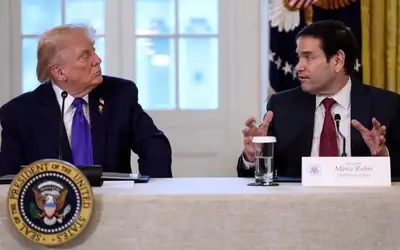
Alireza Zakani, the mayor of Tehran, who has begun his presidential election campaign, has sparked controversy by appointing his deputy for financial affairs, Lotfollah Forouzandeh, as the head of his campaign team. 

The move has raised concerns about the misuse of municipal resources for personal political gain. Zakani had previously informed the city council that he saw no need to appoint a successor for himself in the municipality during the election campaign period, with the decision widely criticized as an attempt to maintain his control over municipal resources while campaigning.

Forouzandeh relayed an "official directive" from Zakani on Monday stating that "under no circumstances should the resources of Tehran Municipality be used in the election campaigns of any candidates, including himself." 

Zakani's political career has been marred by aggressive tactics, particularly against reformists, and his tenure as mayor has been fraught with controversy. Disputes over urban policies, such as mosque constructions in parks and enforcing hijab on public transport, have sparked internal conflicts within the conservative camp and the city council. 

Financial and familial scandals, including nepotism involving his son-in-law and questionable financial dealings by his daughter, have further tainted his administration.


Iranian Dissident Hossein Ronaghi Again Detained by Authorities

Jun 10, 2024, 08:57 GMT+1

Political activist Hossein Ronaghi was detained by Iranian security forces during his Sunday night trip from Tabriz to Tehran, interrogated for several hours at Tabriz airport. 

"The initial reason given was carrying the emblem of Woman, Life, Freedom and the Lion and Sun. Then, unlawfully and without a warrant, they stated that the deputy prosecutor of Tabriz had ordered the confiscation of my mobile phone, laptop, electronic devices, and identity documents," he said. 

Ronaghi, an Iranian blogger, human rights activist, and political dissident, was arrested in September 2022 amid the uprising sparked by the death in morality police custody of Mahsa Amini. He was arrested along with his lawyers in front of the Evin Prison prosecutor's office and subsequently tortured. In protest, he went on a hunger strike.

Ronaghi, 37, has lost one kidney due to previous torture inflicted, with his second kidney now functioning at only 60 percent, according to human rights sources. Iranian authorities released Ronaghi on bail in November 2023, but he has been subjected to consistent harassment from the authorities since then. 

He has been arrested and jailed multiple times over the past 13 years, first detained in 2009 for his involvement in the post-election protests. 


Contract Oil Workers Protest Over Wage Discrimination in Iran

Jun 10, 2024, 07:38 GMT+1

Contract workers from key Iranian oil and gas companies in the south continue to protest against wage discrimination and dismal working conditions at their respective enterprises.

Workers from Gachsaran Oil and Gas Producing Company and the National Iranian Drilling Company last week demanded an end to the “unjust wage system discrimination” and are calling for “equitable treatment for all”. Sporadic strikes and protests continue.

“Oil Ministry officials, who are full-time employees with permanent contracts, are clearly prioritizing their own interests and showing complete indifference towards contract employees. This stark disparity in treatment raises the question, is this fair?” reported the Iranian Labour News Agency (ILNA) on Friday.

In recent years, Iran's oil and gas sector has replaced thousands of regular employees with contract workers who endure harsh conditions and low pay.

"The Ministry of Oil officials should be held accountable. How is it that official employees are paid promptly, but contract employees, who constitute the majority of this industry, remain unpaid?" a protesting worker told ILNA.

In February, workers were given assurances that the Job Classification Act (JCA) would be implemented and that they would receive their salaries based on it by May. However, this promise has not been fulfilled. The absence of job classifications means that workers can be trapped in precarious temporary positions for years, with varying pay rates, even for the same work.

The JCA does not cover the majority of wage earners in Iran, leaving their jobs unclassified, which has become the status quo.

The protesters seek amendments to the productivity bonus calculation formula to match that of fixed-term employees and revisions to the overtime calculation formula based on the Labor Law.

Not only tens of thousands of workers are hired on temporary and ad-hoc contracts, many segments of the oil industry have been handed to "private" contractors with government connections, who often simply ignore the law.

In March, there were calls for the impeachment of Iran’s Labor Minister due to concerns over the country’s minimum wage, which was set at approximately 110 million rials per month (about $175 US), falling far short of covering 60% of household living costs.

These protests underscore the increasing frequency of workers' demonstrations in Iran, signaling growing discontent within the labor force. Over the past three decades, there have been thousands of spontaneous protests, strikes, sit-ins, and work stoppages across various economic sectors.

Iran has experienced no economic growth for more than a decade. The US withdrawal from the JCPOA nuclear deal in 2018 and reimposition of economic sanctions, further aggravated the situation. Over the past six years, Iran's national currency, the rial, has fallen 15-fold, resulting in inflation and poverty for millions of Iranians.

Two Iranian Investigative Journalists Arrested

Jun 9, 2024, 21:55 GMT+1

Yashar Soltani and Saba Azarpeik, two prominent Iranian journalists known for their reporting on corruption, have been arrested to serve their sentences, according to Shargh newspaper.

Both journalists have been vocal critics of the Iranian government, exposing financial wrongdoing within its ranks.

Soltani faces a 13-month sentence for “spreading lies to disturb the public's mind."

Azarpeik is facing charges in two separate cases, with a total of 15 private accusers. She has been convicted in one case and sentenced to two years in prison and a fine for “defamation and publishing false information.” The legal process of the other case with eight private accusers is also under review and the final verdict has not been issued.

Soltani served jail time in 2016 for uncovering financial corruption within the Tehran Municipality during the leadership of current parliament speaker Mohammad Bagher Ghalibaf.

In an interview in October, Soltani lamented the persistence of corruption, highlighting how corrupt individuals remain unscathed despite exposure. He further criticized the Iranian justice system's alleged bias towards those close to the regime's core, including Supreme Leader Ali Khamenei's inner circle.

Azarpeik 's investigative work brought to light various corruption cases, including corruption within the Tehran Municipality under Ghalibaf and corruption within the Ministry of Industry, Mines and Trade under both Hassan Rouhani and Ebrahim Raisi's administrations.

Her commitment to exposing wrongdoing has come at a cost. She faced legal repercussions in 2009 for reporting on police brutality and has been arrested on multiple occasions. 

Detained in June 2014 on vague national security charges, she was held in solitary confinement for 40 days before release on bail in August 2014.

The arrests of Soltani and Azarpeik highlight the challenges faced by journalists who dare to challenge the status quo in Iran.