Iran Alleges That Nukes Not Part Of Its Doctrine

The Iranian foreign ministry claimed on Monday that nuclear weapons have no place in its nuclear doctrine.

The Iranian foreign ministry claimed on Monday that nuclear weapons have no place in its nuclear doctrine.
The statement came in response to heightened tensions with Israel and recent remarks by a Revolutionary Guards commander that suggested potential changes to Iran's nuclear policy under external threats.
"Nuclear weapons have no place in our nuclear doctrine," said ministry spokesperson Nasser Kanaani during a press briefing in Tehran. He once again claimed that Iran's nuclear program is “strictly for peaceful purposes,” a position consistently maintained by Tehran despite international scrutiny.
Ahmad Haghtalab, a Revolutionary Guards commander, last week indicated that Israeli threats could compel Iran to "review its nuclear doctrine and deviate from its previous considerations."
Iran's Supreme Leader, Ayatollah Ali Khamenei, had previously issued a fatwa banning the development of nuclear weapons.
However, nuclear experts are almost unanimous in their assessment that enrichment to the levels and in the amounts that Iran has been doing since 2021 cannot be justified in the absence of a weapons program.
Despite Kanaani's reassurance of peaceful intentions, he addressed recent regional escalations, particularly the Iranian missile and drone attack on Israel earlier this month, which Tehran says was a retaliatory act for the attack on its consulate in Damascus.
He described a subsequent Friday attack on Isfahan, attributed to Israel, as a "provocative act" and warned, "We will respond decisively and more strongly to any aggressive action from any source."
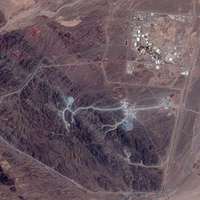
The incident at Isfahan has further strained relations, with reports from The New York Times indicating significant damage to a defense radar near Natanz, Iran’s principal nuclear site, after the attack on 8th Shekari Air Base.
Iran’s Judiciary has mandated provincial justice departments to cease registering legal complaints against state officials, a move widely seen as a way to further shield government and military officials from facing accountability.
The latest directive instructs that instead of allowing individuals to file legal complaints directly, they are now told to go to the administrative offices or public relations departments of the relevant government organization.
While the Iranian judiciary lacks independence, individuals file legal complaints, akin to those in the West, before initiating lawsuits to assert their rights.
Prominent journalist and political analyst Abbas Abdi criticized the directive, saying the move is not lawful.
“This resolution is not legal because neither 'government officials and state leaders' have been defined, nor has any legal article been mentioned. These are futile patches sewn onto regulations to block the paths of protest," Abdi said.
In Iran, numerous high-ranking officials and military organizations – including members of the Islamic Revolutionary Guards (IRGC) – possess legal immunity, shielding them from prosecution.
In one prominent case, when the IRGC shot down Ukraine International Airlines Flight PS752, resulting in the deaths of all 176 people onboard – families were told by the Tehran Military Prosecutor’s Office that several government and military organizations and several high-ranking officials cannot be legally prosecuted.
Critics have long argued that it is one more indication of the regime’s culture of impunity – where corruption, abuse of power, and human rights violations by officials are not confronted with legal consequences.

Over a dozen Iranian Baha'i women were summoned to the Islamic Revolutionary Court, over arbitrary charges of propaganda against the Islamic Republic and participating in activities contrary to Islamic law.
The 15 women, who reside in Baharestan, in the central province of Isfahan, were specifically accused by the Prosecutor’s Office for "propaganda against the Islamic Republic system" and "participation in promotional and educational activities contrary to the sacred Sharia of Islam."
According to US-based NGO, Human Rights Activists News Agency (HRANA), Iranian security agents searched the homes of some of the women.
The women were summoned for their first court appearance on May 1.
The regime in Iran has long persecuted the Baha'i community in Iran, denying them the freedom to worship.
Some of the women were reportedly targeted by the judiciary in 2021, when they were arrested and subsequently released on bail.
The event, HRANA said, illustrates the constant and systematic violation of Bahai religious freedoms by comparison with norms maintained by international human rights.
There are over 300,000 Baha'is living in Iran, making them the largest non-Muslim religious minority, systematically targeted since the 1979 revolution.
The current constitution only recognizes four religions: Islam, Christianity, Judaism, and Zoroastrianism.

He is an attention seeker, always trying to grab attention, sometimes by making too much noise and at other times by keeping silent. Former populist Iranian President Mahmoud Ahmadinejad is currently in the latter mode.
Even when he is silent, his political rivals want to make him say something, hoping that he might shoot himself in the foot by making an odd or controversial comment that would put an end to his turbulent political career.
Conservative journalist Afifeh Abedi in an April 17 tweet quoted Ahmadinejad as having said on social media that "Any country which illegally attacks another should be responded to. That is a right for the country whose territory has been violated." This was clearly a reference to Iran’s April 13 massive missile and drone attack on Israel in response to an airstrike earlier in the month that destroyed a building within the compound of Tehran’s embassy in Damascus.
Abedi charged that "Ahmadinejad's remark reflected his ambitions in Iran's domestic politics rather than being aimed at foreign audiences." Nonetheless, Abdi criticized Ahmadinejad for acknowledging that Israel is a state.
This is one of those controversial comments that everyone in Iran can interpret to serve their political interests. Some, like Ms. Abedi, might believe Ahmadinejad was referring to Iran's unlawful attack on Israel, while others might take it as support for Iran after Israel attacked the Iranian Consulate in Damascus on April 1, and Iran's attack was a retaliation for that.
Even Ahmadinejad's former aide Abdolreza Davari was not quite clear about what Ahmadinejad meant. He asked in a tweet: "Did he condemn Iran or Israel?" On the other hand, conservative journalist Amir Seyediin said in a tweet that "No President anywhere in the world has served Israel’s interests the way Ahmadinejad has done."
Some hardliner social media users lashed out at the former President for failing to condemn Israel for attacking Iran's Consulate in Damascus in the first place and charged that Ahmadinejad had created big problems for Iranians for denying the holocaust during his presidency.
However, some foreign-based media quoted Ahmadinejad as having said in his Telegram channel that "attacking Israel was a right for Iran," possibly to avoid Khamenei’s wrath.
In a tweet on April 16 reformist cleric Rahmatollah Bigdeli called for Ahmadinejad's dismissal from the Expediency Council, a sort of higher parliamentary chamber with members appointed by the Supreme Leader, who intervene in Iran's domestic political and economic issues where the parliament and the government cannot reach a final agreement on an issue.
Bigdeli wrote: "It is essential to remove Ahmadinejad from the Expediency Council as there is an open case against him at the court about oil swap with other countries," that allegedly happened during his presidency. Bigdeli further questioned the way he was elected President in 2005 and 2009 and charged that his slogan about wiping Israel off the map created too many problems for Iran.
Bigdeli further charged that Ahmadinejad has not condemned the Israeli attack on the Iranian Consulate that killed seven top IRGC officers, and has refused to support Iran's attack on Israel. "How can such a creature be a member of the Expediency Council?" Bigdeli asked. He also called on Judiciary Chief Gholamhossein Mohseni Ejei to start Ahmadinejad's trial as he has repeatedly promised in the past.
Many other Iranian politicians have been calling for Ahmadinejad’s trial and his removal from the Expediency Council after he openly criticized Khamenei in 2018. Nonetheless, he somehow managed to keep his seat at the influential council.
However, Twitter users posted a photo that showed Ahmadinejad at the Expediency Council meeting on April 17.

Criticism of Iran’s Central Bank is continuing as one lawmaker takes aim at its failure to provide necessary foreign currency for raw material imports, exacerbating the country’s currency crisis.
"The Central Bank tells producers that it has no currency," Sodeif Badri, a conservative politician and former Mayor of Ardabil said shedding some light on shortages impacting the nation's industrial sectors.
Commenting on the Iranian currency’s continued depreciation, Badri said "the currency market is currently in complete disarray."
The lawmakers’ concerns highlight the broader issues stemming from the country's economic policies amid decades-long internal mismanagement and the weight of international sanctions.
On the surface, the Iranian government has attempted to manage the devaluation of its currency by providing foreign currency at cheaper exchange rates to importers of essential goods.
Last month, the country’s Expediency Discernment Council gave authorization for the state and its management apparatuses, including the Central Bank, to spend 13.6 billion euros at a preferential exchange rate.
In an effort to mitigate the severe economic pressures facing the country, this allocation is earmarked for the import of basic items such as agricultural products, medicine and its raw materials as well as medical equipment.
The policy appears to be aimed at protecting Iranian consumers from potential spikes in prices due to currency fluctuation.
But, the disparity between the official exchange rate of 285,000 rials per US dollar and the open market rate of approximately 650,000 rials per dollar underlines the deepening economic disparity.
Recent scandals, notably the case involving Debsh Tea company, have further fueled existing distrust in the system.
The Debsh company reportedly misappropriated a significant portion of subsidized currency meant for tea and machinery imports.
The embezzlement, estimated at $3.5 billion, involves officials from both the current and the previous presidential administrations -- including ministers of agriculture, industry as well as the governors of the Central Bank of Iran and the chiefs of Iranian Customs Administration.
"It is unclear what the Central Bank is doing; the Central Bank must answer to the people," Badri remarked, further demanding actions from the nation's financial regulators.

The chairman of Iran's Medical Council has warned about the state of healthcare in the country as significant gaps in critical residency positions threaten the already battered sector.
Mohammad Rais-Zadeh said on Sunday that the gaps are mostly seen within some of the most vital medical specializations like pediatrics, anesthesiologists, and emergency medicine.
The problem has been deepening since 2022 with a growing shortage of doctors, specialists, and dentists across Iran. A huge migration trend has seen medical practitioners looking for jobs abroad seeking better economic conditions amid Iran's worst economic crisis since the establishment of the Islamic Republic. The 2022 uprising has also led many to seek a life outside of Iran's increasingly oppressive social conditions.
So bad has the exodus become, that in December, there were calls by officials to ban doctors from migrating abroad. A report released by Iran Open Data (IOD) revealed that the number of doctors who leave Iran to work in more prosperous countries outweighs the number of new doctors by 30 percent on an annual basis.
The exodus of physicians has been seen with midwives and nurses leaving the sector massively under staffed. In May 2022, Iraj Fazel, the president of the Iranian Society of Surgeons, warned that specialties like children's surgery and heart surgery do not have even a single candidate.
Complicating matters, in March 2023, the Medical Council reported that the exodus of many specialists in pediatric cardiology had left hundreds of children vulnerable, waiting for years to get necessary surgeries. Most healthcare practitioners in Iran live on petty monthly incomes ranging from $200 to $300, which prohibits them from even the most basic requirements, including housing and education for children.
Further, the medical community in Iran is undergoing grave mental health issues. Reports are suggesting an increasing trend in suicide rates, especially among medical residents, as working conditions continue to decline.
In February, the head of the Iranian Psychiatric Association reported 16 suicides in the past year alone, with research indicating that suicide rates in the medical community have risen by 3.1 to 5 times over recent years, leading to the announcement of an investigation into the trend last month.