Despite a persistent and alarming deficit in its natural gas production, Iran recently chose to renew gas export contracts with Iraq – a decision that can have severe consequences for its own energy needs.
While Iran boasts having the second largest natural gas reserves in the world, its production capacity has consistently fallen short of meeting escalating demand in recent years, especially during peak periods such as winter.
Historically, Iran has played a pivotal role in providing vital natural gas to fulfill Iraq's energy requirements, particularly for powering electricity generation.
Yet, a notable decrease in the supply of natural gas from Iran has exacerbated Iraq’s own energy crisis – with the country’s electricity output significantly lagging behind its increasing demand currently at 35 gigawatts.
While several multibillion-dollar contracts were signed with power giants by Iraq since 2008, efforts to address the crisis have largely failed, with corruption, mismanagement, and political interference leading to significant losses in investment.
Siemens and American General Electric (GE) are positioned to dominate the sector, leveraging partnerships with Iraqi interests.
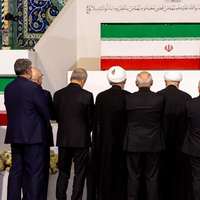
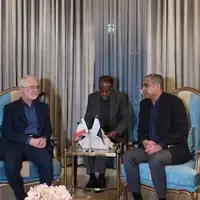
Heads of states and governments at the 7th Gas Exporting Countries Forum (GECF) Summit in Algiers, Algeria March 2, 2024
South Pars field and Iran’s underperformance
The South Pars field – the world's largest natural gas field – is crucial for Iran's economy as it provides a substantial portion of the country's natural gas production.
The field, located in the Persian Gulf between Iran and Qatar, is also exposing Iranian officials’ underperformance in developing it in contrast to Qatar Petroleum.
Meanwhile, based on its own estimates, Iran is expected to elevate its numbers over the next five years – from 1.07 billion cubic meters per day to 1.3 billion cubic meters (bcm). However, such official claims often remain unrealized due to financial and technological constraints.
Iran is currently under a myriad of US and Western sanctions over its contentious nuclear program and confrontational foreign policy. Western energy giants are the only ones with the technology and resources to help boost Iran’s gas and oil production.
Officials, under pressure to increase production, claim that projects like the Kish gas field development, Farzad-B gas field cooperation, and ongoing development in the North Pars and Bilal gas fields are aimed to significantly increase Iran's daily gas output.
The head of Pars Oil and Gas Company, Mohammad Hossein Motejalli, has stated that initial development efforts aimed at enhancing gas production in Iran will result in an output equivalent to five standard phases of the South Pars gas field by 2027.
But, the South Pars field is reaching the latter stages of its productive lifespan. And, as the pressure in the field decreases, it becomes more challenging for Iran to maintain its capacity to supply natural gas for its domestic needs and to Iraq over the long term.
Unless Iran takes action to address the production and pressure issues within the South Pars field, its ability to sustain natural gas shipments to Iraq will be compromised.
Iraq, however, is not the only neighbor to influence the regional energy landscape.
Turkmenistan's capability and willingness to provide natural gas to Iraq through a swap agreement with Tehran introduce an additional dimension to the competition within the energy market of the region.
Sanctions exacerbate Tehran's underperformance
Iran’s existing challenges in its relationship with Iraq are further complicated due to payment methods restricted by US sanctions.
These sanctions have made it difficult for Iran to receive payments from Iraq for its oil exports, prompting discussions about alternative payment arrangements.
The recent agreement to exchange Iranian natural gas for Iraqi crude oil and fuel oil represents a strategic shift to bypass these financial constraints, ensuring the continuous flow of energy supplies between the two countries and strengthening their economic ties.
Despite Iran’s own technological challenges, underperformance, regional tensions and sanctions, Tehran hopes to grasp and hold on to its efforts to sustain energy cooperation with Iraq.
Far from flawless, Iran's gas promise to Iraq serves Tehran’s strategic aims beyond mere revenue generation: attempting to secure its regional influence by desperately trying to remain competitive by influencing energy dynamics.
The Standard newspaper, citing an eyewitness, reported on Saturday that two young men stabbed the journalist four times before fleeing the scene while laughing.
London's Metropolitan Police have initiated an investigation into the incident, noting the victim's profession as a reporter for a Persian-language media outlet based in Britain.
The attack is being treated with utmost seriousness, especially considering the multiple threats against the channel’s journalists in recent times, with specialist counter-terrorism officers leading the inquiry.
In response to the attack, numerous political figures and civil activists, including Masih Alinejad, Shirin Ebadi, and Alireza Akhondi, condemned the assault on Zeraati.
Meanwhile, Mehdi Hosseini Matin, an official at the Iranian embassy in London, denied any involvement of the country’s agents in the attack, in spite of the UK’s security services revealing that multiple attacks on UK-based dissident journalists have been foiled in the last two years.
Last year the channel’s offices had to temporarily relocate to the US after threats reached such a level that the UK’s domestic security services could no longer guarantee the staff’s safety.
Iranian and Chinese flags in front of Beijing’s Palace Museum (file photo)
Beijing's Palace Museum is showcasing a display of rare Iranian artefacts as part of a new cultural diplomacy initiative spearheaded by the Chinese president.
The exhibition, also housing rare Saudi pieces,is housed within the historic Meridian Gate, the primary entrance to the centuries-old Beijing palace, and emblematic of China's Global Civilisation Initiative (GCI).
The GCI was introduced last March with the goal of “[injecting] strong impetus into advancing humanity’s modernization process and building a community with a shared future for mankind”.
The showcased relics, ranging from Al-Ula's sandstone altars to intricately crafted Persian ceramics adorned with Quranic motifs, showcase the historical interplay between Islam and ancient China along the Silk Road. Many of the artefacts have remained unseen due to stringent sanctions imposed by Washington on both nations.
The display is also a nod to the thaw in relations between Iran and Saudi Arabia, culminating in a historic peace accord brokered by parties including China in March 2023.
In 2016, Saudi Arabia cut diplomatic relations with Iran in the aftermath of the storming of its embassy in Tehran. The incident occurred amidst a disagreement over Riyadh's execution of a Shiite Muslim cleric. Tensions escalated with subsequent conflicts, marked by missile and drone assaults on Saudi oil facilities and tankers in the Persian Gulf, carried out by Iran's Houthi militia.
William Figueroa, an assistant professor of history and international relations at the University of Groningen, said the exhibition serves to boost China’s “modern ties” with the Middle East, particularly Iran, and bears “tremendous educational value”.
Iranian women walking on a street in Tehran without the mandatory hijab
Iran's contentious hijab legislation has been shuffling back and forth between the parliament and the Guardian Council behind closed doors for months, despite hardliners stressing its urgency.
The spokesman for the Guardian Council, the constitutional body tasked with vetting legislation for compliance with Sharia or the Constitution, announced on Thursday that the Council has once again sent the bill back to the parliament for amendments — marking the fourth time. As in previous instances, Hadi Tahan-Nazif provided scant details regarding the specific changes required by the Council.
The bill generally referred to as the Hijab and Chastity bill, passed the parliament in September. Originally drawn up by the government of President Ebrahim Raisi in July 2023, it has undergone many changes by ultra-hardliner lawmakers who took advantage of the provisions of Article 85 of the Constitution to delegate the power of legislation to the Judicial Committee to avoid debates on the floor.
Analysts suggest that the ultra-hardline Council's reluctance to swiftly approve the legislation, contrary to the expectations of their political allies in the parliament, is not driven by public objections to its provisions. Instead, it likely arises from concerns about the potential political and security ramifications of enacting the legislation, among the highest levels of power.
Hijab enforcers harassing women at a beach in Babolsar, northern Iran
Tahan-Nazif also denied the recent claims by a hardline lawmaker, who said earlier this week that all state bodies involved in the matter of hijab legislation and enforcement, including the Guardian Council, had jointly decided to use cash fines as the primary means of forcing defiant women to comply with compulsory hijab.
The parliamentary committee in charge of the matter is under the sway of the Paydari (Steadfastness) Party. The party has its tentacles in all government institutions including the parliament where their members form an influential minority that often takes a leading role amid the weak presence of established conservative and reformist parties.
The legislation proposes various penalties including heavy cash fines for women who do not abide by the prescribed dress code.
Previously, lawmaker Mojtaba Karbasi had announced that first-time offenders would face a fine of 30 million rials (approximately $50), which would be deducted directly from their bank accounts without requiring their consent. Repeat offenders would face a fine of 240 million rials (around $400).
These are substantial amounts given the fact that ordinary monthly salaries hover around $200-250.
On Thursday the media reported that Seyed Mohammad Sadr, a member of the Expediency Council, has warned about the consequences of enacting the hijab legislation.
Women dancing at the very busy Tajrish Square in northern Tehran on New Year’s day
"The dissatisfaction of the people, especially women who constitute half of our society and the majority of whom adhere to Islam and the Islamic Revolution, will escalate if this bill is implemented. They will turn against the system (regime), leading to serious hazards," warned Sadr, who previously served as an advisor to reformist President Mohammad Khatami.
Sadr also criticized lawmakers’ plans to levy cash fines on women for unveiling or inadequate observance of hijab and to deduct it directly from their bank accounts without requiring their consent.
"This proposal will compel everyone to withdraw their deposits from banks and lose trust in the banking system. It will not only result in cultural harm and erode trust but also cause economic damage and lead to the bankruptcy of banks," he warned, seemingly alluding to social media calls urging people not to trust banks if they allow the government to infringe upon individuals' control over their bank accounts.
Since March 2023, hardliners have attempted to end women's increasing defiance of compulsory hijab and reclaim lost ground through various instructions to government bodies, but their efforts seem to have hugely backfired as the number of women who refuse to abide by the current rules has very noticeably increased since then.
The increase in the number of women appearing in public without veils, compared to the previous practice of partially covering their hair, was evident during this year's New Year (Norouz) holidays.
Celebration of the ancient festival, dancing in public, and unveiling, all despite the fasting month of Ramadan, went hand in hand in many places as a form of civil disobedience this year.
Videos shared on social media depict women in markets, beaches, and streets, including many traditional and conservative areas, with their hair openly displayed. Some videos also capture instances where men and women in black veils, protesting against the defiance of hijab, receive unabashed criticism from passersby and members of the public.
CORRECTION - Mahnaz Khazaei, a former political prisoner, denied her death in a video message released on Monday Iran time, after media had reported her passing on Saturday.
Mahnaz Khazaei, a former political prisoner, denied her death in a video message released on Monday, the 12th of Farvardin.
IranWire had first reported on Saturday, that Khazaei had passed away due to a heart attack after being released from prison.
IranWire wrote that according to information received from Khazaei's relatives, intelligence agents took all of Khazaei's medical records and her family's mobile phones when they went to the hospital.
In her message to refute her death, Khazaei said that her mobile phone had been stolen in the past few days, and she did not know who had spread this news.
Photo of Pouria Zeraati (left), Masih Alinejad and Fardad Farahzad (right). Alinejad and Farahzad were both targets of assassination plots by Iran’s regime in 2022. Zeraati was also wounded in a knife attack on March 29, 2024.
Last Friday, my friend and journalist for Iran International TV, Pouria Zeraati, was brutally stabbed in London as he was leaving for work.
The Iranian regime denies any involvement, but I, along with millions of Iranians, hold the clerical regime squarely responsible. Ali Khamenei and his Revolutionary Guards bear full responsibility for this crime.
This attack on Zeraati was a sinister message from the Islamic Republic: If you are a dissident, then you are not safe, no matter how far from Iran's borders you may be. It was a blatant attempt to silence those who dare to expose the regime's atrocities, corruption, economic incompetence, and nefarious activities abroad.
The Islamic Republic's strategy is clear: to terrorize activists and journalists, eroding their sense of security and forcing them into isolation. But such terrorism goes beyond physical harm; it aims to sow fear and disrupt their activism, compelling survivors to retreat from public life. This will lead to self censorship.
Another tactic is to sow fear among organizations keen to learn more from Iranian dissidents. I speak from experience, having been thetarget of an assassination plot by the Islamic Republic. I have remained resolute in continuing my fight but, I've noticed a chilling effect: some NGOs are hesitant to engage with me, fearing for the safety of their events.
In Europe, despite the greater levels of Islamic Republic terrorism, it is difficult for law enforcement agencies to take the threats seriously. Zeraati, for example, had informed the London Metropolitan Police of the threats against him, including some that contained photos of his home. There was no mistaking the message: the harassers knew where he lived.
It is shocking that the Met didn't take the warnings seriously, especially after last November's revelations by ITV news that two other Iran International journalists,Sima Sabet and Fardad Farahzad were targeted for assassination by the Islamic Revolutionary Guard (IRGC). Sabet and Farahzad learned of plots against them not from UK's law enforcement officials but from the ITV broadcast. It is as if the Met has buried its head in the sand, hoping that Islamic Republic terrorism will go away. Their negligence is alarming and contrasts starkly with the protection I receive in the US, where threats are taken with utmost seriousness.
The attack in London must serve as a wake-up call to the international community. The Islamic Republic is not bluffing when it threatens dissidents abroad. It is concerning that Islamic Republic can send agents to the West and recruit criminals to do its dirty deeds with relative ease.
US Secretary of State Antony Blinken and White House National Security Adviser Jake Sullivan arranged urgent meetings with me right after the kidnapping plot against me was discovered. UK top officials should urgently meet with Pouria and other targets to send a clear signal to the Islamic Republic’s officials that such aggression is not tolerated.
Of course, the Islamic Republic has denied any involvement in terror attacks beyond its borders. That denial should be taken with a huge grain of salt. The regime has often boasted of its capabilities to capture and eliminate dissidents, gloating over the kidnapping of journalist Ruhollah Zam, who was executed in December 2020, and the abduction of Iranian-German dual national Jamshid Sharmahd from Dubai. Another dissident, Habib Chaab was lured to Turkey from Sweden and then abducted to Tehran where he was executed in May 2023. According to the Boroumand Foundation, a human rights organization, more than 500 dissidents have been killed abroad.
For now, the identity of Pouria's attackers remains unknown, but it's crucial to recognize that the Islamic Republic has a history of employing international criminal gangs for such operations. In my case, they hired hitmen from Azerbaijan. In another famous case, Islamic Republic agents recruited a Mexican drug gang in a failed plot in 2011 to kill the Saudi Arabian ambassador Adel Al-Jubeir.
I am convinced that these terrorist operations are orchestrated by organs of the shadow government that report directly to Ali Khamenei and are overseen by the IRGC.
This brazen defiance challenges Western governments on their own turf. Eliminating troublesome journalists, human rights activists or journalists is all part of the same playbook employed by autocrats in Russia, China, and even Venezuela. Totalitarian regimes are employing the same tactics to silence dissent beyond their borders. It's sad to say but the UK government and its law enforcement agencies have not been up to the task of stopping Russian or Islamic Republic agents from operating freely on the streets of London or in fact any city in the UK.
Transnational repression threatens the very foundations of democracy and free speech. We need to be resolute and confront such terrorism. The first step involves capturing the perpetrators of the heinous attack on Pouria Zeraati. But we should not limit ourselves to taking actions against mere henchmen. We should make the paymasters of terror to pay for their crimes.
Opinions expressed by the author are not necessarily the views of Iran International