Israel-Hamas War: Iranian Minister Praises Gaza ‘Resistance Front’
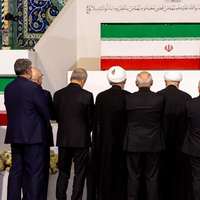
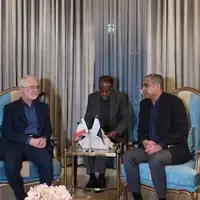
Mohammad Mehdi Esmaili, the Iranian regime’s Minister of Culture and Islamic Guidance
Amid Israel’s war with Hamas, the Iranian regime’s Minister of Culture and Islamic Guidance praised what he called the “youth of the resistance front in Palestine, Lebanon, Iraq and Yemen”.
"After six months of resistance, the youth of Gaza have shown to the Islamic world that the attachment of the people of Gaza to the Quran is steadfast. The Muslim people of Gaza have demonstrated to the world that adherence to the Quran is a fundamental and vital condition for the advancement of the Islamic society," Mohammad Mehdi Esmaili said at a Quranic session in Tehran on Friday.
The Minister’s praise of the “resistance front” is understood to be in support of militant terrorist Palestinian groups, such as Hamas and Islamic Jihad – and other Iran-backed proxies operating along Israel's borders.
His comments come amid escalating tensions in the Middle East – after Hamas and Palestinian armed groups attacked Israel on October 7, 2023.
The attack, described as the deadliest for Jews since the Holocaust, resulted in the deaths of 1,200 individuals and left many others wounded. Additionally, 240 individuals were taken hostage during the incident.
In line with the clerical regime in Tehran, the Minister echoed an anti-Semitic trope by labeling Israel as "the Zionist regime."
“The heroic resistance of the Palestinians thwarted all the equations sought by the occupying Zionist regime and the United States to normalize the presence of this cancerous gland in the heart of the Islamic world," he said.
Model of petrol pump is seen in front of US and Iran flag colors in this illustration taken March 25, 2022.
Iran’s illicit oil sales to China and its expanding alliance with Beijing and Moscow took center stage at a US House Armed Services Committee hearing on Thursday.
“I’m very concerned about this new relationship between Russia, China and Iran. What we see is, Iran is relying on China and Russia is relying on Iran,” the head of the US military's Central Command (CENTCOM) told lawmakers.
“Iran is now increasingly working with Russia, Russia is working with China…there is this consortium that has formed in a way that we haven’t seen…,” Democratic leader of the House Armed Services Committee, Adam Smith said in seeming agreement with the General.
General Michael Kurilla specifically highlighted Tehran's sale of 90% of its oil, which is subject to US sanctions, to China.
“So in effect China is funding Iran’s subversive and malign behavior in the region,” General Kurilla said.
When queried about Tehran's ability to sell oil to China, the General explained that the country circumvents sanctions by employing an extensive network of ships known as a "ghost fleet" or "dark fleet" for ship-to-ship transfers.
Lieutenant General Michael Kurilla testifies before the Senate Armed Services Committee on his nomination to become Commander of Central Command during a hearing on Capitol Hill in Washington, US, February 8, 2022.
“All roads go back to Iran but really it’s Chinese money that is fuelling Iran, that is fuelling terrorism…and yet, all of our policy is focused on the symptoms of the disease,” Waltz said.
In this context, Waltz queried Celeste Wallander, Assistant Secretary of Defense for International Security Affairs, about her support for a House-passed bill imposing secondary sanctions on China for accepting Iranian oil shipments at ports.
However, Wallander deferred the matter to the Treasury Department.
Both Iran and China have not publicly disclosed exact figures of their recent oil transactions. Despite reports suggesting Iran sells oil at significant discounts, the precise revenue generated from its oil sales in recent years remains unclear.
General Kurilla also cautioned about the strengthening alliance between Tehran and Moscow, citing an increase in the provision of suicide drones to Russia.
“Iran went from 100s to now 1000s of one-way attack unmanned aerial systems – suicide drones – that they’re providing to Russia,” he said referring to Moscow’s continued war in Ukraine.
Notably, the General did not get into specifics about what Moscow is providing Tehran.
“What I can talk about in a classified setting, is what Russia can provide in return back to Iran which is concerning,” he said.
Deterring Tehran’s ‘Malign’ Behavior
Warning that the Middle East is at its “most volatile” in the past 50 years, General Kurilla pointed to Iran as the region’s “single biggest malign actor”.
Over the past 6 months, he said, every proxy in the Iranian threat network operationalized. In Iraq, Syria, Lebanon, Gaza, The West Bank and Yemen.
“The ramifications of this partnership have global implications,” the top US general warned.
While he admitted that there had been a period of calm in Iraq and Syria, after the US carried out dozens of air strikes on Iranian proxies – he admitted that “all deterrence is temporal”
“I do believe there has to be cost imposition on Iran for them to be able to cease their malign behavior,” he told lawmakers.
The top General made similar comments in in front of the Senate Armed Services Committee earlier this month.
Amid ample criticism from fellow lawmakers regarding the Biden administration's handling of Iran, Democratic Rep. Smith argued that reestablishing a peace agreement between Saudi Arabia and Israel, alongside a bolstered partnership involving the US, would contribute to stabilizing the region.
In response, Wallander emphasized that the initial step toward this goal is to find a long-term solution to the plight facing the Palestinian people and to revive discussions for a two-state solution.
Mumtaz Zahra Baloch, the spokesperson for Pakistan's Foreign Ministry
Pakistan said on Thursday that it will continue with the construction of its segment of a long-planned pipeline to import natural gas from Iran despite US sanctions.
Mumtaz Zahra Baloch, the spokesperson for Pakistan's Foreign Ministry said, "It is a segment of the pipeline which is being built inside Pakistani territory. So, we do not believe that at this point there is room for any discussion or waiver from a third party."
The statement comes in response to remarks made by Donald Lu, the US assistant secretary of state for South and Central Asia, during a hearing of the House Foreign Affairs Committee on Wednesday. Lu indicated that the US was monitoring the planned pipeline and highlighted that Pakistan had not requested a sanctions waiver for engaging in gas trade with Iran. "We have also not heard from the government of Pakistan [on a] desire for any waiver for American sanctions that would certainly result from such a project," Lu remarked.
Pakistan's outgoing caretaker government recently granted approval to initiate construction on an 80-kilometer section of the pipeline. The decision was largely motivated by the desire to circumvent substantial penalties owed to Iran due to delays in the $7 billion project, which has been in discussions since the mid-1990s.
The Gas Sales and Purchase Agreement, signed between Pakistan and Iran in June 2009, aimed to address Pakistan's energy shortages by supplying gas from Iran's South Pars Field. However, the project faced numerous suspensions amid fears of incurring US sanctions for energy imports from Iran, which is subjected to US banking sanctions due to its nuclear program.
With Tehran repeatedly warning of international arbitration and imposing hefty penalties nearing $18 billion for breach of contract, Pakistan was under pressure to meet Tehran's deadline of commencing construction by March 2024. It is not clear how Tehran is planning to export more gas while its own consumers suffer from shortages. Lack of technology and investments steadily reduce Iran's gas production.
Acclaimed Iranian director Bahram Beyzai has rejected an invitation to return to Iran and create a film, citing opposition to government censorship.
Beyzai's refusal came in response to a claim by Mohammad Khazaei, Director of the Cinema Organization of Iran who said this week that artists can return to the country "within the framework of the law." The organization is a government-controlled entity and its reference to framework of the law denotes the regime strict censorship practices.
Responding Khazaei's remarks, Beyzai took to Instagram, declaring, "It is due to my and other filmmakers’ existence that you are occupying that seat... You treat us like slaves and expect us to obey orders.”
He further noted that he will not allow Iranian officials to censor him, or force him to self-censor.
The invitation extended to Beyzai comes amidst ongoing cultural restrictions and a tightening of creative freedoms in Iran. Over the years, the Iranian government's censorship policies have led to the exodus of numerous talented people, including renowned artists and filmmakers, seeking greater creative liberty abroad.
Filmmakers, in particular, face challenges navigating the confines of government-approved content, often resorting to self-censorship to avoid repercussions.
The cultural crackdown extends beyond censorship to include harassment, intimidation, and imprisonment of dissenting voices. Notably, director Jafar Panahi's imprisonment in July 2022 following his inquiry about the whereabouts of other detained filmmakers illustrated the risks faced by those who challenge the status quo.
Panahi, a recipient of numerous international awards, including the Golden Bear at the 2015 Berlin Film Festival, was sentenced to a six-year prison term and a 20-year filmmaking and travel ban for his involvement in documenting the 2009 Green Movement protests.
Thousands of car accidents happen during the two-week Norouz holiday in Iran. Panj-e Azar Hospital in Gorgan, northern Iran (March 2024)
Iranian Traffic Police announced Friday that 321 people have lost their lives in car accidents during the ongoing Norouz holidays so far.
Norouz, also known as the Persian New Year, is one of the most significant holidays in Iran. It marks the beginning of spring and is celebrated on the day of the vernal equinox, which typically falls on March 20th or 21.
Despite plans by the country's Traffic Police to reduce fatalities during the season, the death toll continues to rise, reaffirming Iran's status as one of the countries with the highest death tolls from road traffic accidents globally.
Every year, the Norouz holidays (Mid-March to early April) witness hundreds of deaths on Iran's roads as the country's population embarks on journeys for the festive season. A combination of factors, including poor road conditions, inadequate vehicle domestically made vehicle quality and maintenance, as well as dangerous driving practices, contribute to making the period the most fatal of the year for Iranian citizens.
According to ISNA website in Tehran, over the past decade, statistics reveal that 9,815 individuals have lost their lives in New Year accidents, highlighting the magnitude of the issue.
While poor road conditions and poor vehicle quality are significant factors contributing to road accidents, Iranian authorities often attribute the majority of incidents to "human factors," placing blame on drivers. However, concerns persist regarding the need for comprehensive measures to address the underlying causes of road accidents and enhance road safety across the country.
A Houthi policeman during a protest against recent US-led strikes on Houthi targets, near Sanaa, Yemen January 14, 2024
Iran's regime dubs its regional armed groups "resistance forces," while opponents label them mercenaries. Many ordinary Iranians view them as terrorists who exploit their country's resources.
However, the term "proxies" employed by Western media and think tanks fails to accurately depict the diverse relationships these forces maintain with the regime. No section of Iranian society refers to them as na’eb or niabati (proxies).
The exact relationship with the regime
What truly defines the relationship between the Iranian regime and these entities often termed "proxies"? Are they allies, foreign terrorists fully integrated into Iran's operations, collaborators, mercenaries, or something else?
Allies: These are partners with whom Iran cooperates based on specific objectives, aiming for mutual benefits. This alliance may be strategic or tactical, subject to change over time with the evolution of agreements.
Assimilated Forces: This designation refers to groups fully integrated into the Iranian regime, demonstrating organizational ties, funding sources, ideological alignment, and shared political goals within their operational territories.
Recruited forces: These individuals are recruited by the Iranian government for short-term projects, lacking the comprehensive affiliation of assimilated forces. Their nationality or origin holds minimal significance in this context.
The forces employed by the Islamic Republic extend beyond mere mercenaries driven solely by financial incentives. For instance, groups like the Fatemiyoun (Afghan Shias) and Zainabiyoun (Pakistani Shias) harbor their own political agendas and aspirations. Notably, the Quds Force doesn't recruit non-Muslim or Western groups, instead favoring Shia or Sunni Islamists motivated by goals beyond financial gain. Many Afghan fighters, for example, seek Iranian citizenship while serving in Syria.
Labeling these groups as "proxies" fails to capture the nuanced relationship between the regime and its affiliated entities, a crucial distinction for policy-making. Should an assimilated Islamist organization, for instance, attack US forces, Iran's regime may be held accountable for retaliatory actions, unlike in the case of an allied group. To sidestep potential repercussions, Western governments often opt to categorize these groups as proxies.
Iran’s ruler Ali Khamenei during a meeting with a Houthi delegation in Tehran (August 2019)
Allies: Hamas and the Houthis
According to the outlined criteria, Hamas and the Houthis align with the Islamist regime as allies, given they are not religiously affiliated nor directly founded by the regime. Additionally, the Islamic Republic does not fully finance Hamas and the Houthis, who can partially sustain themselves. However, organizations like Islamic Jihad differ in this aspect. Established by the regime, Islamic Jihad operates within a limited territory in Gaza.
Recruited Forces: Fatemiyoun and Zeinabiyoun
While established and fully funded by the Islamic Republic, these military brigades lack territorial dominance and are more dependent on Tehran than those categorized as allies. Despite sharing religious affinity, they primarily serve as collaborators with the regime for a defined period. The Zeinabiyoun predominantly operate in Pakistan, while a significant portion of the Fatemiyoun forces remains stationed in Syria. There is no indication that they will be fully assimilated into the regime's structure.
Assimilated: Hezbollah and Hashd al-Sha`bi
Hezbollah, established by the regime, shares religious and ideological alignment and receives full financial support; its military branch is practically a Quds Force’s brigade. Similarly, while Iraqi Hashd al-Sha`bi's expenses are partially covered by the Iraqi government, their ideological alignment and coordination with the IRGC indicate domestication by the regime.
Iran’s Supreme Leader Ali Khamenei (left), Hezbollah Secretary-General Hassan Nasrallah (center) and former IRGC Quds force commander Qasem Soleimani
The military branches of these groups operate under the complete command of the Islamic Republic, even in micro decision-makings. The regime's influence over them was evident when the US threatened direct attacks on regime’s facilities in response to attacks on American personnel; the attacks ceased upon the regime's signal. None of these groups’ brigades operate independently, consistently aligning with official regime policies.
Hashd al-Sha`bi, initially established by the Quds Force and Iraqi military groups, maintains loyalty to the Islamist regime despite receiving funding from the Iraqi government. Their close ties to Iran and loyalty to the Guardian Jurist and IRGC commanders are evidenced by familial connections and frequent travel between Iran and Iraq.
Lebanon's Hezbollah fighters, one of the largest divisions of the IRGC, receives comprehensive support from Iran, including financial, logistical, and welfare assistance. Even the cost of rebuilding their destroyed houses in Israeli attacks is compensated. The intermarriage between Hezbollah fighters and regime officials' families underscores their symbiotic relationship, blurring the lines between Iranian and Lebanese identities. Hezbollah leaders likely possess Iranian documents, and Hezbollah members have been employed to suppress Iranian protests.
The political branches of Hezbullah and Hashd al-Sha`bi have their own agenda in Lebanon and Iraq as IRGC sections in Khorasan and Fars provinces have theirs. Any unit that works for IRGC, domestic or foreign, has its political and economic agenda and specific mission. The whole system is structured like a fiefdom: units are vassals and the Guardian Jurist (vali-ye faqih) is the lord.