Tehran Court Hands Down Total Of 95 Years To 11 Political Prisoners
A collage of the photos of some of the political prisoners
A Revolutionary Court in Tehran has sentenced 11 political prisoners to a total of 95 years behind bars as well as lashes, exiles and financial and social penalties.
According to the US-based Human Rights Activists News Agency (HRANA), most of the sentences ranged from four to 16 years for different charges, including “propaganda against the system,” “blasphemy,” and “conspiracy against national security.”
All of them have also been banned from residing in the capital, Tehran, for two years, along with various other social restrictions, including a prohibition on participating in political activities.
Although they are not famous dissidents, almost half of them had previously been detained and sentenced due to their civil and political activism. The ten men and one woman were arrested in a three-month time span from August to November. The sentences were issued during a joint court session in December.
Some of the prisoners, such as Payam Bastani Parizi, were first arrested in the peak of 2022 nationwide protests against the Islamic Republic, ignited by the death of 22-year-old Mahsa Amini in police custody. Some of them, such as Ali-Asghar Hasanirad, were already in prison when the protests engulfed Iran.
Some had been pardoned through the Supreme Leader's amnesty last year. In February 2023, Ali Khamenei granted amnesty to tens of thousands of prisoners, including many who had been detained during the Women, Life, Freedom protests. However, a significant number of the released protesters were later summoned again and handed new sentences.
According to human rights organizations, at least 551 protesters, including 68 children, were killed during the uprising, the most serious challenge the clerical regime has so far faced. At least 22 individuals lost their lives under suspicious circumstances or due to suicide, and hundreds more suffered eye injuries. Over 22,000 people were arrested.
Photos of former President Ali Akbar Hashemi Rafsanjani on the cover of Iranian newspapers to mark his seventh death anniversary (January 2024)
Seven years after her father's death, a former Iranian president's daughter reveals she was warned about his assassination due to leadership concerns after Khamenei.
Two Iran-Iraq war veterans showed up at the university where Fatemeh Hashemi was teaching. They warned her that there were those who wanted to kill her father, former President Akbar Hashemi Rafsanjani, and kill him in such a way that everyone would believe it was a natural death.
“I asked them why should some people want to kill my father? They said because they are worried about [what would happen] after Mr. Khamenei,” the eldest daughter said in an interview with the reformist Etemad daily that was published Thursday.
Mystery still surrounds Rafsanjani's death, a relatively pragmatist revolutionary cleric. The influential politician's body was discovered in a swimming pool near his office on January 8, 2017. Officially, his death was attributed to drowning following a cardiac arrest, with no witnesses present at the time.
Fatemeh Hashemi, the daughter of the former President Ali Akbar Hashemi Rafsanjani, speaking during a ceremony to mark the seventh death anniversary of her father in Tehran (January 2024)
Rafsanjani's family has repeatedly raised concerns that he might have been murdered. They point to several suspicious circumstances, including delays in getting him to the hospital, the lack of access to CCTV footage from the swimming pool and his office, the absence of a post-mortem examination despite their requests, a rushed burial, and the disappearance of highly confidential documents, including diaries and his last will and testament, from his office safe shortly after his death.
In 2019, Fatemeh Hashemi had spoken of the visit of the two men whose identity she said was unknown to her but had never suggested that the alleged murder of her father had any connection to the leadership challenges in the regime. She had also said that she reported the warning to her father and after his death, to the Supreme National Security Council (SNSC), which she said, did not follow up on the matter.
At the time of Rafsanjani’s death, two others were considered potential challengers to leadership after Supreme Leader Ali Khamenei’s death: The ultra-hardliner Ayatollah Mohammad-Taghi Mesbah-Yazdi and Khamenei’s own son, Mojtaba, who some pundits speculated was being groomed to succeed his father. The elusive Mojtaba has long been referred to by hardliners as an Ayatollah to denote his high clerical rank.
Mojtaba Khamenei, the son of Iran's ruler
Mesbah-Yazdi, who was a fundamentalist ideologue advocating the absolute rule of the jurisconsult (Velayat-e Faqih, or Supreme Leader), passed away in January 2021 at the age of 83. He enjoyed much influence among the top brass of the Revolutionary Guard (IRGC) and political hardliners.
Mesbah-Yazdi and Rafsanjani were both members of the Assembly of Experts, an eighty-eight-member clerical body responsible for appointing a new Supreme Leader and supervising his activities. However, this constitutional provision has largely remained inactive over the years, as Khamenei has filled the assembly with loyalists.
Mohammad-Taghi Mesbah-Yazdi (left) and Supreme Leader Ali Khamenei
Rafsanjani lost much of his former influence in the assembly after 2009 and was replaced by another high-ranking cleric, Mohammad-Reza Mahdavi-Kani when he withdrew from the elections in 2011.
Rafsanjani had played an instrumental role in the accession of Ali Khamenei to leadership in 1989 by convincing the Assembly of Experts that being a religious source of emulation (marja’-e taghlid) -- a qualification that Khamenei lacked -- was not considered as a leadership requirement. He also claimed that the late leader, Ruhollah Khomeini, had once suggested Khamenei’s name as his successor.
Khamenei and Rafsanjani, however, had a significant falling out when Khamenei publicly endorsed Mahmoud Ahmadinejad's presidential candidacy in 2009, going against all other rival candidates, including Rafsanjani. In a significant speech, Khamenei expressed that Ahmadinejad's views were "closer" to his own than those of any other candidate, including his "friend of fifty years," Rafsanjani.
“After 2016 [Rafsanjani] openly said here and there that he had made a mistake in choosing Khamenei [as leader],” Berlin-based political analyst Mehdi Mahdavi-Azad told Iran International, pointing out that according to people close to Rafsanjani, including his daughters and his advisor Gholam-Ali Rajaei, around the same time pressures had increased on him and there had been warnings of a threat to his life.
Mahdavi-Azad also highlighted a Khamenei speech on the day that Rafsanjani died, which could be interpreted as an attack on him and questioning his revolutionary credentials.
Playing with Rafsanjani's first name, Akbar, which means bigger or older, Khamenei suggested that the Islamic Republic could be harmed if a “reprobate or misled brother” turned out to be the “bigger Satan” and played the role of the real Satan in misleading the people. “We must be vigilant, this person is our enemy, too,” he said.
During the funeral prayers for Rafsanjani, Khamenei's omission of a sentence that traditionally attests to God that the deceased had displayed nothing but "benevolence and goodness" during his life attracted significant attention.
Mahdavi-Azad told Iran International that based on the evidence of a cover up and allegations made by the family, who insist Rafsanjani could not have died a normal death, Khamenei should be held responsible for ordering his killing.
Mohammed Ali al-Houthi, a member of the Houthi supreme political council, speaks while holding a gun, as supporters of the Houthi movement rally to denounce air strikes launched by the US and Britain on Houthi targets, in Sanaa, Yemen January 12, 2024.
The US on Friday issued sanctions targeting commodity shipments financing Iran's IRGC-Quds Force and Houthis as Washington stepped up pressure on Iran’s proxy in Yemen.
The US Treasury Department said in a statement that the revenue from the commodity sales supports the Houthis and their attacks against international shipping in the Red Sea and the Gulf of Aden.
The Treasury said it imposed sanctions on a Hong Kong-based company and a United Arab Emirates-based company shipping Iranian commodities on behalf of the network of a Quds Force-backed Houthi financial facilitator already under US sanctions. It also targeted four oil tankers.
The Treasury said one of the tankers, owned by Hong Kong-based Cielo Maritime Ltd, has shipped Iranian commodities to China on behalf of the facilitator, Sa’id al-Jamal. Another of the tankers sought to disguise the origin of the goods using forged documents, the Treasury said.
The sanctions come after US and British warplanes, ships and submarines launched dozens of air strikes across Yemen overnight in retaliation against Houthi forces for attacks on Red Sea shipping.
“The United States continues to take action against the illicit Iranian financial networks that fund the Houthis and facilitate their attacks,” the Treasury's Under Secretary for Terrorism and Financial Intelligence, Brian Nelson, said.
“Together with our allies and partners, we will take all available measures to stop the destabilizing activities of the Houthis and their threats to global commerce."
The Houthis have been attacking shipping lanes at the mouth of the Red Sea, where 15% of the world's seaborne trade passes between Europe and Asia.
The US has also accused Iran of being involved operationally in the Houthi attacks, providing military capabilities and intelligence to carry them out.
A convoy of US military vehicles near Qamishli, Syria, February 2020
Amid heightened Middle East tensions, Iran-backed militants have targeted the US troops stationed at a base in Conoco gas field in northeast of Syria.
According to the Britain-based Syrian Observatory for Human Rights (SOHR), the Iranian proxy forces fired more than six missiles on the base in northern Deir ez-Zor (Deir Ezzor) countryside, where smoke plumes were seen rising from the targeted site. US forces in the region are in a state of high alert in anticipation of attacks by Iran-aligned forces after the US and UK conducted airstrikes on Houthis in Yemen, another Iranian proxy, in the early hours of Friday local time in response to the group's repeated attacks on the Red Sea shipping.
According to reliable SOHR sources, some of the missiles hit civilian facilities in Al-Azbah village near the gas field, causing material damage.
The war monitor said that it has documented 88 attacks carried out by Iranian-backed militias on Coalition bases in different areas across Syria since October 19, less than two weeks after Islamist militia Hamas invaded Israel, killed 1,400 people and took more than 200 hostages into Gaza. Iran denies involvement in the October 7 attack but almost its proxies have intensified attacks on US and Israeli targets in the region as well as commercial vessels at their reach.
A Canada Border Services Agency (CBSA) logo is seen on a worker.
Canada is about to deport a former high-ranking Iranian government official as part of efforts to ban senior regime figures from seeking refugee status there.
Appearing before an immigration panel on Thursday, Majid Iranmanesh, who was a director general at Iran's Vice-Presidency for Science and Technology, asked the court to allow him to leave the country voluntarily without a deportation order, which he said would interfere with his research in different countries.
“I would like to return to my country,” he said, claiming that he would leave Canada next week. Although his employment ended in 2020, he is still an Iranian government contractor.
Iranmanesh is one of nine alleged senior members of the Iranian regime who face possible deportation. He said in the hearing that he arrived in Canada on May 29, 2023, with the intention of conducting research at the University of Victoria for one year. The Canada Border Services Agency has said it was investigating 141 such cases. Thirty-eight have been closed without action.
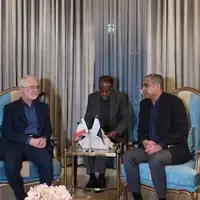
Two Iranian officials facing deportation from Canada, Salman Samani (left) and Majid Iranmanesh
Immigration, Refugees, and Citizenship Canada did not provide details on how Iranmanesh secured a visa to enter the country. Canada Border Services Agency referred his case to the Immigration and Refugee Board for hearings in November.
He is found inadmissible to Canada because he is a senior official, and if the Refugee Board concurs, a deportation order will be issued under sanctions adopted in November 2022 that banned senior members of the Iranian regime from Canada.
In his testimony, he acknowledged working for the Iranian government since 2017. He admitted that he was the director general of administration of information technology at the Vice-Presidency for Science and Technology until 2020, and since then he has been a consultant working on contract.
The Vice-Presidency for Science and Technology oversees operations of the Centre for Innovation and Technology Cooperation (CITC), which has been sanctioned by the United States and United Kingdom for supporting Iran’s nuclear and missile programs. “The Center for Innovation and Technology Cooperation is in a position to support a range of Iran’s weapons of mass destruction and military procurement objectives,” according to the US Treasury.
Iranmanesh, a 53-year-old mathematician, claimed that he has “been active in positions only for the benefit of humankind.”
According to Bill Blair, the Minister of National Defense, “When individuals have been involved in activity that would make them ineligible to be in this country, we’ll do everything we can to keep them out. And when they do get into this country, we’ll do everything we can to remove them.”
The deportations are in line with sanctions, imposed after Iran's morality police killed Mahsa Amini for defying hijab laws in September 2022. Amini's death garnered international condemnation and became a poignant symbol of resistance against the repression of women under Iran's clerical government.
In response, Canada classified Iran's government as a regime involved in "terrorism and systematic and gross human rights violations," leading to the effective exclusion of tens of thousands of Iranian officials and Islamic Revolutionary Guard Corps members from entering the country.
Canada’s ban applies to “a wide array of individuals in a regime that has perpetrated crimes against the people of Iran and other nations,” the government said when the policy was announced. “It includes: heads of state, members of the Cabinet, ambassadors, senior diplomats, members of the judiciary, senior military and intelligence officials and senior public servants.”
Canada severed diplomatic ties with Iran in 2012 due to concerns related to its pursuit of nuclear weapons and support for terrorist organizations including Hamas.
In an event to mark four years since Iran’s Revolutionary Guards downed Flight PS752 earlier this week, Canada’s Prime Minister Justin Trudeau said his government is looking at ways to label the IRGC a terrorist organization. Canada has been wrestling with designation of the IRGC as a terrorist entity for years, but calls grew louder after the Flight PS752 incident. Canada’s federal government has referred to the IRGC as a terrorist organization, described its leadership as terrorists, announced measures to make its senior members inadmissible to Canada, and has listed the outfit’s extraterritorial expeditionary division Quds Force as a terrorist entity.
Iran’s intelligence minister, Esmail Khatib, has said the failure to prevent last week’s bloody terror attack “brought shame upon us in front of the Supreme Leader.”
A twin bombing in the city of Kerman on January 3 killed around 90 people and injured hundreds who were attending the fourth anniversary of former IRGC commander Qasem Soleimani’s death in a US airstrike in Baghdad.
The Islamic State group in Afghanistan claimed responsibility for the large terror attack, putting Iranian officials on the defensive regarding their intelligence and security failure.
In a speech on Thursday, Khatib praised alleged successes by officials to thwart security threats but admitted that in this case their efforts were not sufficient.
"We witnessed this heartbreaking tragedy and this sedition and enemy conspiracy, which brought shame upon us in front of the Supreme Leader, the people, and the families of the martyrs,” the intelligence minister stated.
The Iranian regime frequently boasts about its ability to maintain public security and its strength in deterring threats from hostile foreign forces. Nevertheless, a series of unexplained incidents in recent years, including sabotage at sensitive sites and assassinations, have cast doubt on this self-portrayal.
Critics mocked security and intelligence organs for their failure to prevent the bombings, especially after they claimed that many similar plans were discovered in the weeks leading up to the Kerman incident. Others charged that the regime’s security forces pursue women and young girls in the streets to enforce hijab, while failing in their main duty to protect the public.