Ex-Iranian President's Daughter Denies Tower Ownership, Canada Migration

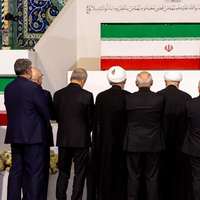
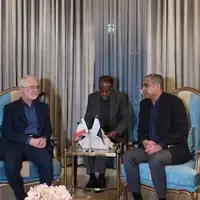
Fatemeh Hashemi, the daughter of the former President Ali Akbar Hashemi Rafsanjani, denied allegations that her family owns numerous towers in Canada.

Fatemeh Hashemi, the daughter of the former President Ali Akbar Hashemi Rafsanjani, denied allegations that her family owns numerous towers in Canada.
She made the comments in a recent interview commemorating the anniversary of her father's death.
Responding to accusations, she stated, "They were lying; we have never built any towers. It's all lies."
Furthermore, Hashemi addressed rumors regarding her sister, Faezeh, allegedly relocating to Canada. Dismissing the claims, she emphasized, "Rumors were spread to the extent that they claimed a tower was built in Canada."
On June 10, 2009, two days before Iran’s contentious Presidential elections, in which Mahmoud Ahmadinejad claimed victory and protests gripped the country, Rasekhoon, a website close to Supreme Leader Ali Khamenei, published an article accusing Faezeh of owning a major construction company in Canada.
Fatemeh Hashemi denied the allegations, asserting that reformist groups circulated the lies. She concluded, "Wherever we went, they said this belongs to the Hashemi family. They said Kish Island belongs to Hashemi! But dad paid the accommodation expenses himself."
In 2017, Javad Karimi Ghodousi, a former parliamentary representative and member of the Paydari Front accused Faezeh and another sibling, Yaser, of having plans to leave the country for Canada, citing their mother's illness as the reason.
Hashemi traced the origin of such remarks back to even before the Iranian Revolution. She added, "After the revolution, Mojahedin-e-Khalq (MEK) and other groups spread such rumors. Later, Forbes magazine falsely claimed that Hashemi Rafsanjani was the fifth richest person globally."
Forbes reported in 2003 on the controversial allocation of properties and contracts in Iran's Chamber of Commerce, alleging that Rafsanjani's family benefited substantially.
Expecting low voter turnout, Iran's President Ebrahim Raisi has called on state officials to make sure that the parliamentary elections on March 1 will be “spectacular.”
On the same day, two former Interior Ministry officials warned about possible election manipulation.
Despite his government's inability to address the country's multiple crises since he assumed office in August 2021, Raisi urged officials "to solve societal issues, inspire hope, and motivate the people to achieve a high turnout," aligning with Supreme Leader Ali Khamenei's call.
While Raisi's comments may have sounded like mere slogans, they shared a commonality with Khamenei's statement made a day earlier: both leaders addressed officials rather than the people, whom they desperately need to turn out at the polls.
Despite his seemingly agnostic demeanor, it appears that Raisi is aware of the root cause of Iranians' reluctance to vote, which is a lack of motivation and hope. In other words, he recognizes that his government and the entire Islamic regime of Iran have lost their legitimacy. Both leaders' solution to this problem is to rally officials to encourage people to participate in the elections.

Many Iranian scholars and even regime insiders have been saying during the year that long standing political and economic impasses have eroded people's hope the future. Consequently, most individuals and businesses struggle to plan beyond the next week.
Moreover, political biases enforced by hardline bodies like the Guardian Council and excessive pressures on the people through unhelpful legislation that threatens national interests have created significant rifts between the government and the nation, leaving the populace with little motivation for political engagement.
Nonetheless, this is one area where officials cannot take action without the people's active participation. The Iranian government, which has prioritized the interests of Hamas over the long-neglected demands of the Iranian people in the past three months, is now attempting to motivate unpopular officials to drive voter participation.
At the same time, hardliners in Iran, including Raisi and his father-in-law, Ahamd Alamolhoda, the firebrand Friday Imam of Mashhad, deny the existence of this problem. Alamolhoda said last week that economic problems would not stop the people from going to the polls. Some politicians speculate that Alamolhoda is likely to intervene in the election process by issuing a list of his preferred ultraconservatives candidates.
Meanwhile, two former Deputy Interior Ministers for Political Affairs, have warned that the Election Headquarters' decision to accept documents other that official ID cards from voters increases the likelihood of election manipulation in March. They also noted that the off-line voting system in many polling stations could lead to "errors" in vote counting.
The election headquarters has allowed voters to use documents such as driving licenses, smart cards (e.g., certificates of completion of compulsory military service), and passports for identification at polling stations, potentially facilitating multiple voting by individuals.
Ali Asghar Ahmadi and Mohammad Hossein Moghimi, who worked under the Rouhani Administration said only using the smart ID card will effectively eliminate the possibility of multiple voting by one individual.
All those problems aside, some reformists still insist that they are not likely to vote in the upcoming election.Reform Front Spokesman Javad Emam said: "We won't take part in meetings [with top officials] for begging or compromise." Referring to the disqualification of reformist candidates and Raisi's recent meeting with politicians and party leaders, he said: "Even Raisi has questioned the validity of Guardian Council's vetting." At that meeting, Raisi said "everybody is qualified to run for election unless the contrary is proved."

Defense systems above Erbil airport neutralized an armed drone targeting US facilities launched by the Islamic Resistance in Iraq, an alliance of Iran-aligned Iraqi militias.
Iraqi Kurdistan's counter-terrorism service reported the news on Wednesday. The airport houses international forces, including the United States. The official statement did not disclose any information regarding potential casualties or damage to infrastructure resulting from the thwarted attack.
Tensions in the region have been escalating since the start of the Gaza war, sparked by Iran-backed Hamas's invasion of Israel on October 7. US officials documented over 100 attacks on American interests in Iraq, Syria and the Red Sea. The Islamic Resistance in Iraq attributes the actions to their opposition against Washington's support for Israel during the Gaza conflict.
Iran had refrained from attacking US bases for nearly a year leading up to the October 7th invasion by Hamas. During this time, confidential discussions between Tehran and Washington took place, aiming to release billions of dollars in blocked Iranian funds. In an effort to de-escalate tensions, the Biden administration agreed to release at least $8.7 billion held in South Korea and Iraq since June, along with securing the release of five American hostages held by Iran.
However, the Gaza war has triggered action from Iran's proxies around the region. Iran, a supporter of Hamas, issued a warning to the United States, threatening potential threats to US interests if attacks on Gaza persist.
Iran-backed Houthi rebels in Yemen have also declared their intention to target both US and Israeli interests in the Red Sea, prompting the formation of a more than 20-nation coalition by the United States to address these threats. Despite the initiative, the Biden administration is facing increasing criticism for its perceived inability to deter Iran and its affiliated groups in the Middle East.

The World Economic Forum has been urged to revoke its invitation to Iran’s Foreign Minister Hossein Amir-Abdollahian over his close links to the IRGC.
Mark Wallace, the CEO of United Against Nuclear Iran, and Alireza Akhondi, a Swedish parliament member of Iranian descent, voiced their concerns on Wednesday over reports that Amir-Abdollahian is scheduled to travel to Switzerland to attend the World Economic Forum in Davos.
“Amir-Abdollahian is an active card-carrying member of the IRGC’s Basij paramilitary force,” Wallace and Akhondi wrote in a letter to the forum and Swiss Foreign Minister Ignazio Cassis.
They added that granting a visa to Amir-Abdollahian and allowing him to participate in the Davos forum would be “a slap in the face” to the Iranians who have been fighting the Islamic Republic during the “Woman, Life, Freedom” movement. Last year, Iranian government officials were not invited to the Davos forum amid the nationwide uprising sparked by the death in morality police custody of Mahsa Amini.
Iran’s foreign minister is also an affiliate of the IRGC Quds Force and was involved in planning meetings in Beirut and Tehran prior to the Hamas October 7 onslaught on Israel, Wallace and Akhondi noted.
“Switzerland and the World Economic Forum would not dream of inviting Hamas leadership to travel to Davos. By the same token, they should similarly deny a visa and invitation to its major Iranian sponsor,” the letter went on to say.
The 54th annual meeting of the World Economic Forum will be held from January 15 to January 19, 2024.

The UN Security Council passed a resolution on Wednesday, calling on Yemen’s Iran-backed Houthis to stop attacks on shipping in the Red Sea immediately.
The Houthis, armed by Iran, have been targeting commercial vessels since mid November, after Israel began its onslaught on Gaza following the October 7 Hamas attack, effectively closing down a major maritime route and disrupting the global flow of goods.
After much deliberation, the 15-member council arrived at a draft with no direct reference to Iran and mild enough for Russia and China to not use their veto. Both countries abstained.
“With this resolution, the Council has lived up to its responsibility to help ensure the free flow of lawful transit through the Red Sea continues unimpeded,” said the US ambassador to the UN after the vote. “The world’s message to the Houthis today was clear: Cease these attacks immediately.”
The Houthis, however, rejected the resolution.
“The United Nations resolution on the security of navigation in the Red Sea is a political game,” a group’s spokesman said shortly after the vote. “Washington is the one violating international law, and what the Yemeni armed forces are doing is a legitimate defense, and any action it faces will have a reaction.”
A key provision of the resolution stresses the right of UN member states, “to defend their vessels from attack,” in accordance with international law.
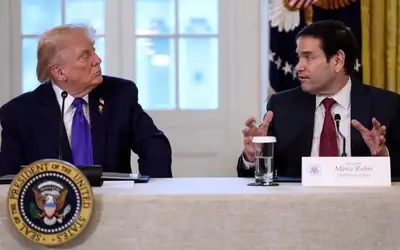
Hours before the vote at the Security Council, US secretary of state Anthony Blinken once more threatened the Houthis with military response, emphasizing Iran’s role.
“These attacks have been aided and abetted by Iran with technology, equipment, intelligence, [and] information,” he said. “If these attacks continue, as they did yesterday, there'll be consequences.”
Blinken was referring to a barrage of “complex” Houthi attacks on ships in the Red Sea a day earlier, using “Iranian-designed” drones and missiles, all of which the US and UK forces neutralized, according to the US military.
The Houthis say they act in support of Hamas and only go after vessels that are linked or headed to Israel, although some of the targets have had no discernible link with the country, merely forcing mass reroute of cargo ships that experts say could push up global food prices.
Curiously enough, oil tankers have not been targeted so far, either because the Houthis dread a potentially catastrophic oil leak, or more likely because they have been hinted by their sponsors in Tehran that oil –the Iranian regime’s lifeline– has to remain off limits.
The Wednesday’s resolution condemned “large-scale” violations of the arms embargo against the Houthis without naming Iran, which is the group’s main arms supplier.
Leaving out Iran seems to have been a compromise US and Japan, the resolution sponsors, have had to make to get the nod from the Chinese and the Russians –who, in turn, had to abandon their draft amendment which called the Israeli war on Gaza a “root cause” of the Houthi attacks.
Nonetheless, the Russian representative to the UN Vasily Nebenzya did make his country’s position clear.
“In order for the Red Sea waters to become calm again, the current escalation in the Palestinian-Israeli conflict zone must be resolved, the slaughter in Gaza must be stopped and Palestinian-Israeli settlement must be addressed seriously,” he stated.
The Houthis say they will only stop their operations if Israel stops theirs in Gaza. The group has repeatedly called for a ceasefire, which the US and Israel reject.
White House spokesman John Kirby said Tuesday that the US does not support a ceasefire because it only benefits Hamas.

A prominent conservative newspaper editor and politician argues that Iran is grappling with a governance crisis, yet desperate pleas are falling on deaf ears.
Masih Mohajeri’s comments to a news website in Tehran appear as an indirect message to the country’s 84-year-old ruler Ali Khamenei, although he mentions President Ebrahim Raisi’s embattled government.
Mohajeri, a cleric, was a regime insider since the very early days of the Islamic Republic and the editor of Jomhuri-e Eslami (Islamic Republic) newspaper for more than 40 years. He also served two presidents in the 1990s and early 2000s as advisor. However, he has been one of the few conservative voices in the country who have been sounding the alarm in recent years, arguing that the regime is going astray in many political and economic areas.
Ironically, his newspaper’s publication permit is registered to Ali Khamenei himself, who established the paper in the early 1980s as the official organ of the Islamic Republican Party, the governing clerical coalition following the 1979 revolution.
"We used to think during [President Mahmoud] Ahmadinejad's time that the worst government this country had seen was Ahmadinejad's government,” Mohajeri said, adding that now he believes the Raisi administration is much worse.

However, what bothers him, Mohajeri indicated, is that "No one listens, and the gentlemen who are in charge do whatever they want, pay no attention to warnings, and don't even consider warnings as friendly advice. They label it as pessimism and negative portrayal of the situation and are not willing to accept that they too are human and may make mistakes."
Many Iranians would instinctively assume that Mr. Mohajeri is addressing Khamenei, since the current political reality is ultimately his creation.
Many of the ultraconservatives currently ruling in Iran are former allies and officials of Ahmadinejad, with an overall bad reputation in terms of mis-governance during 2005-2013, when he was president.
They came to power in the 2020 parliamentary and the 2021 presidential elections, after the all-powerful Guardian Council, controlled by Khamenei, barred many other regime insiders from running for office.
Mohajeri spoke fondly of late President Akbar Hashemi Rafsanjani, who died in 2017 at an old age, but under controversial circumstances. He argued that Rafsanjani was a problem solver who often prevented challenges from turning into crises.
His praise for the man, who in 1989 helped Khamenei become Supreme Leader, is another indication that Mohajeri was driving a message home. It is said that Khamenei did not like Rafsanjani’s wide-ranging influence and helped curtail it in the years before his death. However, in his interview, Mohajeri was indirectly comparing Khamenei to his rival.
Mohajeri was asked if there is any chance to transition from the current political situation, in the same way that Hassan Rouhani was elected in 2013, following Ahmadinejad’s two terms in office. He replied that there are politicians who can forge a transition, but they are not allowed to play a role.
Once again, indirectly referring to Khamenei, the old Islamic revolutionary said, “These conditions will only change if the top leadership decides to make elections competitive, free, and fair so that people have the maximum incentive to participate. These points are often talked about regarding elections, but they are not put into action. It has been this way until now, so we cannot hope for moderate individuals, who can make a difference, to come forward and take charge anytime soon.”