Iran Gold Retailers Strike Over Possible Tax Hike

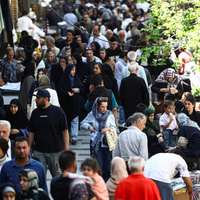
Gold jewelers in different Iranian cities have gone on strike in protest to a possible sales tax increase as the government has ordered registration of all gold transactions.

Gold jewelers in different Iranian cities have gone on strike in protest to a possible sales tax increase as the government has ordered registration of all gold transactions.
Over the weekend, the strike spread and transactions in Tehran and several other cities gold market were halted.
Last week, the Iranian National Tax Administration issued a notice, requiring a group of businesses, including gold dealers, to issue electronic invoices to their customers for each transaction beginning December 22.
Gold buyers and sellers were immediately concerned by the announcement, assuming the plan would result in a 25% tax on profits due to government efforts to fill its empty coffers.
Although the Tax Administration announced on Sunday that it has not imposed new taxes and rumors over a "25% tax were not true," the market was far from calm and strikes continued.
Nader Bazrafshan, secretary of the Tehran Jewelry Union, called the Tax Administration's notice "vague" and said that gold dealers are worried that recording the information of every transaction in the system will make them liable to more tax.
Bazrafhsan said that because of concerns over registering transactions, people abstain from buying gold, which has negatively affected the industry even more than it did under Covid.
Iran's President Ebrahim Raisi presented his proposed budget to the parliament in early December, which revealed that tax revenues were expected to be twice the government's oil revenues.
According to the Jahan-e-Sanat Daily, the Iranian government is also counting on an "inflation tax" to fund the budget for the next fiscal year which begins on March 21, 2024.
The Supreme Court of Iran has confirmed the death sentence of Reza Rasaei, one of the detainees of last year's nationwide protests, US-based Human Rights Activists News Agency (HRANA) reported.
Rasaei, 34, who comes from the marginalized Kurdish and Yarsan minorities in Iran, was previously sentenced to death by a Revolutionary Court on trumped-up charges related to the killing of an IRGC agent.
A family member of Mr. Rasaei told HRANA that the protester's death sentence was recently confirmed by the “17th branch of the country's highest judicial authority headed by Judge Barani."
Amnesty International issued a warning after his trial and noted that during interrogations Rasaei was subjected to torture and other ill-treatment, including electric shocks and severe beatings to compel him to self-incriminating “confessions”.
Australian lawmaker Keith Wolahan as well as Iranian-American dissident activist Masih Alinejad took to social media to warn of his imminent execution over the weekend.
As revealed by UN's Special Rapporteur on Human Rights in Iran in December, more than half of the people who were killed during the "Woman, Life, Freedom" protests were from Baluch and Kurdish provinces.
As the ongoing Israel-Hamas conflict continues, Iran has executed at least 229 people for various convictions since October 7, according to The Telegraph, including women and minors.
On Sunday, the Iranian High Court confirmed the death sentence of another protester,Mojahed Kourkour.

Danish shipping company Maersk has announced its decision to resume shipping operations in the Red Sea and the Gulf of Aden amid growing maritime tensions.
The decision follows Maersk's temporary suspension of vessel transit through the Bab al-Mandab strait in December. The action was taken in response to attacks from Iran's Yemeni proxy, the Houthis, on Maersk ships, resulting in the closure of the Suez Canal—a critical artery for global trade—rendering it impassable for a majority of routes.
On Tuesday, the United States officially declared the initiation of a multinational operation aimed at safeguarding Red Sea commerce from the Iran-backed militants. Since the outbreak of the Gaza war on October 7, the Houthis have been launching drones and missiles at international vessels, citing their actions as a response to Israel's attacks on fellow Iran-backed militants, Hamas.
In a statement released on Sunday, Maersk confirmed the establishment and activation of the previously disclosed multinational security initiative, Operation Prosperity Guardian (OPG). The primary objective of OPG is to facilitate maritime commerce through the Red Sea and the Gulf of Aden, thereby facilitating the resumption of traffic through the Suez Canal—a crucial link connecting Asia and Europe.
"With the OPG initiative in effect, we are preparing to allow vessels to resume transit through the Red Sea both eastbound and westbound," stated Maersk in the official communication. The company emphasized that additional details would be forthcoming in the coming days and highlighted the potential reconsideration of diverting ship traffic based on evolving safety conditions.
Concurrently, other entities, including the oil major BP, have also suspended transit through the Red Sea in recent weeks due to heightened safety apprehensions.

The Supreme Court of Iran has officially confirmed the death sentence for Mojahed Kourkour, a protester detained during the Women, Life, Freedom protests.
Mojahed (Abbas) Kourkour was taken into custody on December 20, 2022, following violent clashes between protesters and security forces near Izeh. Earlier this year, the judiciary issued a death sentence for Kourkour, designating him as the "main suspect" in the case involving the killing of 10-year-old Kian Pirfalak.
Pirfalak's family have explicitly blamed government forces for their son's death. On the evening of November 16 last year, the family's car, carrying Kian, his parents, and three-year-old brother Radin, was targeted by plainclothes individuals in Izeh. Kian’s father sustained severe injuries and was paralyzed during the shooting. Authorities claim the family car was attacked by "terrorists".
Contrary to official statements, Zeynab Molaei-Rad, Kian's mother, asserted that their car was shot by security forces and released a photo of herself with her hands in the hands of Kourkour's mother. Maysam Pirfalak, Kian's father, who was severely injured during the incident, also released a video rejecting the allegations against Kourkour following the judiciary's announcement.
Negar Kourkour, Mojahed's sister, said her brother's case had been transferred from the first branch of the revolutionary court in Ahvaz to a court in Izeh, southwest of Iran.

The employees of Iran's National Steel Industrial Group in Ahvaz continued their strike for a second day after 21 employees were banned from working.
Chanting slogans such as "Neither threats nor prisons are effective anymore", it was prompted by recent work bans as punishment for participation in protests and the failure to implement job classification plans, according to Ilna news agency.
Following the Saturday strike, the management blocked the entry cards of 17 other workers and on Sunday, there was a heavy security presence at the strike site, according to the Free Union of Iranian Workers Telegram channel.
Ilna quoted Ali Mohammadi, the CEO of the group, as saying the workers' ban was to “prevent the gatherings and halts in production lines from happening," indirectly threatening workers' salaries would not be paid if the protests continued.
"We have to pay the salaries of 3,000 personnel on the seventh or eighth day of this month, and the salaries cannot be paid with closed production lines," Mohammadi said.
In August, the Minister of Labor had stated that workers should negotiate salary increases with their employers directly, and denied that this had any relation to his ministry.
After failing to negotiate for the implementation of labor laws, many workers, including Ahvaz Steel, have also had problems with salary increases, leading not only to security clashes but also to threats of salary cuts in response to their protests.

Iran's Police closed down one of the country’s leading bookstores in Tehran on Friday for allowing women without “proper” Hijab to participate in a cultural event.
In a statement posted on its website, Shahr-e Ketab (Book City), a flagship chain bookstore, revealed that the police department in charge of overseeing retail shops, restaurants and similar businesses had sealed its central store in Tehran.
The police cited a “failure to abide by regulations of trade and interior ministry’s [directives]” as the reason for the closure of the popular bookstore in the heart of the capital.
Shahr-e Ketab, Iran’s largest chain of book and music stores, is a non-profit organization that operates dozens of modern bookstore-cafes across the country. In addition to selling books, it holds various cultural events.
“The Book City of Tehran was closed down over a few strands of hair!” Mohammad-Taghi Fazel-Meybodi, a prominent cleric who opposes coercion of women to wear the hijab, said in a tweet Friday. He questioned the religious and legal justification for suspending cultural centers and businesses over such minor issues and criticized the authorities for disgracing the country.

Fazel-Meybodi, like many others, also criticized the government for prioritizing the enforcement of hijab rules over addressing more pressing issues such as corruption and economic improvement. He suggested that the money spent on enforcing the compulsory hijab could have been better utilized to combat embezzlement and rising prices.
In recent months, authorities have increased pressure on businesses and retailers to enforce hijab rules and have warned or shut down thousands of businesses.
The closure of businesses for hijab-related issues, a tool used by authorities for four decades, is aimed at pressuring them to police women's hijab compliance, allowing the police and other authorities to avoid direct confrontation and potential clashes with citizens over hijab observance.
Many among Iranian women are increasingly refusing to wear the hijab even at the risk of being deprived from services in government offices, hospitals, and other public areas or their vehicles being impounded by the police for weeks.
On Friday an airport police official, Mohsen Aghili, said women who do not fully adhere to the “sharia-dictated hijab”, would no longer be served at airports.
After weeks of denial by various officials including the mayor of Tehran and the interior minister, the Secretary of the Supreme Cultural Revolution Council, Abdolhossein Khosropanah, on Friday confirmed that hijab enforcers are indeed organized by the council’s “Hijab and Chastity Taskforce” in coordination with the interior ministry.
Hijab enforcers, uniformed women in black veils, are sometimes accompanied by male plainclothes cameramen who record hijab breaches. They were initially stationed at metro stations in August but are now seen patrolling other public places, such as parks and busy streets, and admonishing women whose appearance does not conform to the dictated hijab rules.
Khosropanah also demanded gender segregation in universities and claimed that “the world has realized that gender segregation in different areas [of society] ensures better performance and security of both genders.”