Iran-Linked Hackers Target Israel With New Malware

A hacking group linked to Iran’s government has been targeting Israel with newly developed malware technology, it has been reported.

A hacking group linked to Iran’s government has been targeting Israel with newly developed malware technology, it has been reported.
The group has developed new malware downloaders and recently deployed them against Israeli healthcare institutions, manufacturing firms and local government, according to cybersecurity news website Recorded Future News.
ESET, a Slovakia-based company, has linked the newly discovered downloaders to the Iranian hacking group OilRig, also known as APT34.
OilRig is using well-known cloud service providers as a veil for its activities when communicating with its command-and-control servers, according to ESET.
This strategy enables malicious downloaders to blend their activities more easily into the normal stream of network traffic, the researchers said.
Numerous reports have been made of the same group targeting Middle Eastern organizations since at least 2014 in countries including Saudi Arabia and the United Arab Emirates.
Their main focus has been on government organizations and businesses within the financial, energy, chemical, and telecommunications industries.
Iranian-backed hackers have recently expanded their targets beyond the Middle East to target any trace of Israeli ties abroad.
An Iranian-linked hacker attacked a water facility in County Mayo in Ireland earlier this month, leaving residents without water for two days.
The pro-Iran cyber attack group targeted the facility because it used Unitronics Vision Series programmable logic controllers (PLCs), an Israeli product.
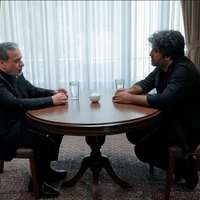
A new cultural agreement between Iran and Russia will exclude education, according to an Iranian lawmaker speaking on Friday.
The statement by MP Mohammad Vahidi comes after President Vladimir Putin said on Wednesday he plans to open Russian schools in the Islamic Republic.
Last week, Iran's parliament approved a deal to maintain “cooperation between the government of Iran and Russia through cultural centers”.
On Friday, Vahidi insisted that the move is “not relevant to the Ministry of Education”, but rather to the “institutions that act as cultural advisors for the two countries”.
Putin had stressed the importance of "soft power" in improving Iranian-Russian relations, describing it as a means of promoting culture and education.
“Soft power in the kindest and best sense of this word, the promotion of our culture and our education systems. We will mull this over as well,” he added.
Political, trade and military ties between Russia and Iran have been developing in a relationship which is of growing concern to the US.
Earlier this week, Iran lifted visa requirements for visitors from 33 countries, including Russia.
Russia said on Tuesday that it's working on a major new agreement with Iran without revealing any details.
A rare meeting lasting five hours between President Vladimir Putin and Iranian President Ebrahim Raisi took place last week in the Kremlin during which the two pointed to the "start of a new chapter" in their bilateral relationship.
Tehran and Moscow have become particularly close allies since Iran began supplying Russia with drones and missiles as part of its invasion of Ukraine.
According to analysts, the ongoing Gaza war has helped Russia by diverting worldwide attention away from its war in Ukraine and by allowing it to align itself with nations in solidarity with the Palestinian people.
While Iran has denied any involvement in Hamas’s October 7 deadly assault on Israel, it has praised the militant group publicly. Additionally, its proxies have attacked Israel, including Hezbollah from the border of Lebanon.

A firebrand senior ayatollah in Iran has described opposition to the US “a religious obligation” and and emphasized that “it is essential to fight the West on all fronts.”
Ahmad Alamolhoda, who is the father-in-law of President Ebrahim Raisi, said during his Friday prayer sermon that Iran should cut off all ties with the United States and Western countries, including in the areas of technological innovation and economic development.
In his remarks, the ultraconservative loyalist of Supreme Leader Ali Khamenei lauded the government's “recently developed economic ties with the East.”
Khamenei has been a staunch opponent of the West during his 34-year rule and since 2018 has proclaimed a policy of establishing closer ties with Russia and China.
Official propaganda by the regime heralds the ultimate weakening of the US and the downfall of the West.
There has been exponential growth in the Iran-Russia alliance since Moscow invaded Ukraine. Iran supplied hundreds of Kamikaze drones to Russia during the conflict to inflict massive damage on Ukrainian infrastructure and civilian targets.
On Monday the EU brought sanctions against Iranians involved in the manufacture of unmanned aerial vehicles (UAVs) used by Russia in Ukraine.
Iran and Russia are strengthening their relationship at a time when the conflict in Gaza is likely to divert international attention from the war in Ukraine while at the same time weakening the military assistance provided by Western countries to Kyiv.
Last week during a meeting in the Kremlin Iranian President Ebrahim Raisi and his Russian counterpart Vladimir Putin celebrated the "start of a new chapter" in their bilateral relationship.

The Head of the Medical Council of Iran stated on Thursday that healthcare professionals should not “be allowed to leave the country easily”.
The remarks by Dr. Mohammad Raeeszadeh follow repeated warnings from many figures in Iran, including lawmakers, that the ever-increasing desire of healthcare professionals to leave the country will cause the healthcare system to collapse.
“The figures for the immigration of doctors are not publicized because they will be misused. Even the departure of one member of the medical community is a loss for us; because we need their expertise,” Dr Raeeszadeh said.
There are no reliable official figures concerning emigration.
Hossein Salami, the commander-in-chief of the Islamic Revolution Guard Corps (IRGC), on Tuesday dismissed the alarming reports about the mass emigration of doctors and nurses as “psychological warfare” and "negative propaganda and lies."
Earlier on December 7, Ali Fadavi, Acting IRGC Commander said the wave of migration by doctors and nurses is "planned by the enemy" and emphasized, "We are aware of each and every doctor and nurse who left. We know what hospital they go to and how much they get paid."
An Iranian parliament member, Masoud Pezeshkian, warned of an imminent shortage of healthcare professionals as a result of growing emigration. He emphasized that the primary reason for the exodus is financial.
A report released on Tuesday by Iran Open Data (IOD) revealed that the number of doctors who leave Iran to work in more prosperous countries outweighs the number of new doctors by 30% on an annual basis.
Officials attribute the exodus to poor economic condition, but there is also a political component of lack of freedoms and persecution.
In July, it was reported that Iran's Association of Medical Academic Societies had warned against the recent forced retirement and dismissal of over 100 doctors from residency admissions boards.
Reformist Ham-Mihan newspaper reported in July that most of the doctors who were forced to retire or were removed from boards had signed statements supporting protests.
During the “Woman, Life, Freedom” protests last year, doctors and nurses condemned the use of ambulances for the transport of detainees by security forces, as well as their use of shotgun “birdshots” that blinded or injured hundreds of protesters.
Moreover, they stated that they could not comply with authorities' demands to deny services to women who defy hijab restrictions.

The US has warned Yemen’s Iran-backed Houthi rebels to stop attacking ships in the Red Sea, according to reports.
American news website Axios cites officials in the Biden administration as issuing the warning via several channels.
The US special envoy for Yemen, Tim Lenderking has requested that his Saudi Arabian, Omani, and Qatari counterparts give the Houthis the message to stop the attacks.
Houthi militants in Yemen are part of a so-called “Resistance Front” alliance of Iran-backed forces in the region that also includes Hezbollah.
In the two months since the war in Gaza began, Yemeni rebels have intensified their attacks on ships traversing the Red Sea, one of the world's busiest maritime routes, after calls to stop shipments to Israel by Iran’s leader.
While Iran has avoided direct military engagement in the Gaza war, its armed proxy forces in Iraq, Syria, and Yemen have launched more than 90 attacks.
According to the US military, the Yemeni attacks against commercial ships are “fully enabled” by Iran.
Last week, US National Security Advisor Jake Sullivan indicated that Washington was in discussions with other countries regarding the formation of a maritime task force to ensure the safe passage of ships in the Red Sea.
Following Sullivan’s comments, the Iranian Defence Minister Mohammad Reza Ashtiani cautioned on Thursday that the proposed US-backed multinational task force to protect Red Sea shipping would encounter "extraordinary problems."
"Nobody can make a move in a region where we have predominance," he said, referring to the Red Sea.
Last week Reuters reported senior sources in Iran-aligned groups had indicated the Houthi attacks were part of a bid to pressure Washington to stop Israel's retaliation in Gaza.

The perpetrators of a rocket attack on the US embassy in Baghdad are linked to local security forces, Iraqi officials have revealed.
The incident on December 7 was the latest in a series of attacks against American targets in the region by suspected Iran-backed forces.
Speaking on Thursday, Iraqi Prime Minister Mohammed Shia al-Sudani’s office called the attack on the embassy a “terrorist act”, and said a number of arrests had been made, with more expected to come.
The statement, issued by Special Forces Major General Yehia Rasool, did not name the suspects or identify which security services they were associated with.
According to an anonymous Iraqi security official cited by news agency AFP, 13 people had already been arrested, including members of the security forces.
The US Ambassador to Iraq Alina Romanowski on Thursday tweeted praise for the Iraqi authorities for “successfully apprehending a number of those responsible for the terrorist attacks”.
The attack on the embassy was the first in well over a year and came after weeks of incidents targeting US forces in the region that had been claimed by Iran-backed armed groups.
No group has specifically claimed responsibility for the December 7 attack and there were no reports of casualties or damage.
Approximately 90 attacks against US bases in Syria and Iraq have been launched by the Iranian-sponsored military alliance in the region since the beginning of the Israel-Hamas war on October 7.
The conflict was triggered by a surprise attack by Hamas in which around 1,200 Israelis and other nationals were killed and more than 240 civilians kidnapped.