Tehran University Official In Physical Altercation Calling Students 'Prostitutes'

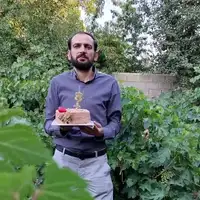
The head of the Faculty of Social Sciences at the University of Tehran is facing backlash after a video was published showing him attacking and insulting students.

The head of the Faculty of Social Sciences at the University of Tehran is facing backlash after a video was published showing him attacking and insulting students.
Gholamreza Jamshidiha claims male and female students were "kissing" and "shaking hands". Jamshidiha said on Wednesday that, "When I saw female and male students shaking hands and kissing each other as if this is not a university, I got angry and upset."
He went on to add, "Perhaps I said something in anger, and the students wanted me to apologize to them. I told them I don't apologize to you. The student who had violated the rules actually had no objection, but other students supported the situation. They gathered in front of my office and chanted slogans in protest."
Iran's Student Union Council reported that a group of students from the faculty visited the university's administrative office to retrieve their disciplined friend’s ID card after learning about the alleged kissing incident. In the initial confrontation, Jamshidiha insulted and physically attacked the students in the presence of several staff members and board members, shouting, "I came here today to fight!" He used offensive language, referring to the faculty as a "brothel" and the students as "prostitutes," even threatening to expel them.
The incident comes amidst high tensions between students and pro-regime staff and security apparatus. However, the recent skirmish is unprecedented, seeing the head of a faculty engaging in such insulting and threatening behavior towards students.


An Iranian Revolutionary Guard official revealed that prisoners expressed a desire for the return of the exiled prince Reza Pahlavi to Iran.
The surprising statement by Yadollah Javani, the political deputy of the IRGC came during an organizational meeting held on Tuesday night in East Azerbaijan province.
Javani raised concerns about the use of terms like "conquering the streets," "a new revolution," and other similar phrases by opposition groups.
Notably, this is the first instance of a senior official within the IRGC publicly acknowledging support for the Pahlavi regime and the desire for Reza Pahlavi's return to Iran during a public speech. The exiled prince is widely considered the most viable alternative to the Islamic regime and remains a positive figure on the world stage.
The regime's smear campaign against the Pahlavis aligns with its evolving tactics in the realm of 'soft warfare,' as coined by Iran's Supreme Leader Ali Khamenei. In recent times, Khamenei has employed this term to describe endeavors in the media and on social platforms, aimed at presenting alternative interpretations in an attempt to portray the regime more favorably than its actual nature.

The Thai government is currently in discussions with Iran and Qatar to secure the release of 23 hostages held in Gaza, as reported by Hebrew media sources.
Thai citizens were killed and abducted during an assault on southern Israeli communities in a terror raid by Hamas on October 7. Foreign workers, many from Thailand, have long been employed in Israeli farms bordering Gaza, contributing to various agricultural tasks.
Thai Prime Minister Srettha Thavisin has assured that the hostages in Gaza are safe and will soon be freed. However, details regarding the negotiations and the mediators involved have not been disclosed.
Israeli Channel 12 reported on Monday that the Thai government recently made a donation of 3 million baht, equivalent to approximately $85,000, to the United Nations' agency for Palestinian refugees. Questions have risen regarding whether the donation is linked to the ongoing negotiations.
Channel 12 has also revealed that Iran is playing a pivotal role in the negotiations for the release of the captured Thai nationals. If an agreement is reached, the captives may be transferred to Egypt and then to Tehran before being repatriated to Thailand.
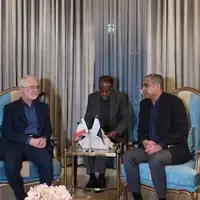
Moreover, Channel 12 showcased a photograph of a Thai delegation, led by the country's deputy prime minister, meeting in Tehran with Iran's Foreign Minister Hossein Amir-Abdollahian a few days ago.
During the October 7 onslaught, which marked the beginning of the Israel-Hamas war, 32 Thai citizens were killed, and 23 were abducted, according to official Thai government figures.
The toll from the attack resulted in the loss of approximately 1,400 lives, with the majority being civilians, and over 240 individuals kidnapped.

Nasim Simiari, a political prisoner detained in Iran, has been held incommunicado in the women's ward of Evin Prison for six months.
Simiari faces a series of charges, including "collusion and conspiracy to act against the country's security, setting bombs in public places, and disrupting public order."
On May 18th, Simiari was taken into custody by Intelligence agents of the Islamic Revolutionary Guard Corps and transferred to a detention center within Evin Prison.
Following her arrest, authorities conducted a search of her residence, seizing personal belongings, including identification documents, mobile phones, a computer, money, gold, watches, and clothing belonging to her and her family.
After enduring two months of interrogation and detention in a separate cell, Simiari was moved to another solitary cell. A source close to Simiari's family revealed that prior to her transfer, she was coerced into a forced confession to camera.
Despite being transferred to the women's ward of Evin Prison in October, Simiari remains in detention without a court hearing or a verdict. It has been a recurring practice in the Islamic Republic to force detainees to provide forced confessions, subsequently leading to verdicts against political prisoners, a practice strongly criticized by human rights organizations.
Born in 1988 in Tehran, Simiari holds a degree in architecture and operated a women's beauty salon in Tehran before her detention. Her story underscores the ongoing concerns regarding human rights and due process in Iran's judicial system.

Three women have been arrested for allegedly physically assaulting a hijab enforcer in an incident in the Tehran Metro.
According to Abbas Karami-Rad, the head of the Tehran Metro Police, the incident occurred on Saturday afternoon when one woman approached three others to admonish them regarding their hijabs.
He stated that the situation escalated, leading to the three women "attacking her and physically assaulting her." Subsequently, the three women were taken into custody.
Karami-Rad explained that metro staff, who observed the altercation through surveillance cameras, promptly reported the incident to the law enforcement officer at the station, leading to the arrest of three women.
The incident has stirred negative reactions on social media, particularly in the wake of the tragic death of Armita Geravand, a 16-year-old student, who lost her life due to a violent confrontation with a hijab enforcer in the metro, and authorities deleted all traces of evidence from CCTV footage.
Amir Kalhor, a journalist, took to social media to question the circumstances of the arrests, remarking, "How did they find out? Through the cameras that have operators sitting behind them. After the Armita Geravand incident, there was no news of cameras and operators, and in some cases, the existence of cameras in the metro was denied."
Geravand was the latest victim of the repressive policies of the Islamic Republic, falling into a coma after an altercation with hijab enforcers.

The Nobel Committee has called on Tehran to give medical help to this year's Nobel Peace Prize laureate Narges Mohammadi, on hunger strike in Tehran’s Evin prison.
The imprisoned activist has been on hunger strike since Monday in Evin Prison to protest the lack of medical attention for sick inmates and the jail withholding medical treatment from her because she refused to wear a mandatory head scarf for a hospital visit.
"The requirement that female inmates must wear a hijab in order to be hospitalized, is inhumane and morally unacceptable," the Norwegian Committee said on Monday.
According to a statement released on her Instagram page by Mohammadi's family, she is protesting against what they describe as "the Islamic Republic's policy of procrastination and lack of medical care for the health and lives of prisoners" and "the policy of either death or compulsory hijab for Iranian women."
The women's rights advocate won the award on October 6 in a rebuke to Tehran's theocratic leaders, who accused the Nobel committee of meddling and politicizing the issue of human rights.
The US-based Human Rights Activists News Agency (HRANA) said authorities had not let the 51-year-old go to hospital for heart and lung treatment last week because she had refused to wear a mandatory head scarf for the visit. "This deprivation continues under the order of the prison authorities," HRANA added.
Mohammadi's family, expressing their concerns about her health and physical condition, stated in their announcement that she has needed urgent transfer to a heart and lung center for a week, but after Narges's follow-ups from prison and her lawyer's requests to judicial authorities, the prosecutor has opposed her transfer and refuses to issue the transfer permit.
On October 30, Mohammadi was denied access to proper medical care and a transfer to a hospital for the second time due to her refusal to wear a hijab. Following that, on October 30 and 31, she and some of her fellow inmates staged a sit-in protest in the courtyard of Evin Prison.
"She is willing to risk her life by not wearing the 'forced hijab' even for medical treatment," said a November 1 statement, written before Monday's announcement of the Nobel laureate's hunger strike.
Mahsa Amini, a young woman who was physically assaulted for not wearing compulsory hijab and was killed in a police station in September 2022, and the tragic death of Armita Geravand, a schoolgirl who was subjected to violence by hijab enforcers in the metro and died after 28 days in intensive care, are among the most well-known victims of the compulsory hijab policy of the Islamic Republic.
In recent years, many political prisoners, including Sasan Niknafs, a civil activist, Behnam Mahjoubi, a Gonabadi Dervish religious minority, Baktash Abtin, a poet and filmmaker, and Javad Rouhi, a protester sentenced to death, have lost their lives in prison. The Islamic Republic has not accepted any responsibility for their deaths, which were due to pressure, torture, and the denial of medical care.
In recent years, there have been numerous reports of the lack of medical care for political prisoners and the violation of their right to access proper healthcare by prison authorities in Iran.
According to the Nobel Committee, Mohammadi was recognized for her fight against injustice towards Iranian women and her efforts to promote human rights and freedom for all.
"We are concerned about Narges Mohammadi's physical condition and health," the Free Narges Mohammadi campaign wrote on X, formerly known as Twitter.


Tweet unavailable