Iran's FM To Start Regional Tour Amid Israel-Palestine Conflict

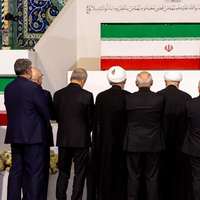
Iran's Foreign Minister Hossein Amir-Abdollahian is to start a regional tour with the aim of addressing the ongoing Israeli-Palestinian conflict on Thursday.

Iran's Foreign Minister Hossein Amir-Abdollahian is to start a regional tour with the aim of addressing the ongoing Israeli-Palestinian conflict on Thursday.
The tour, which includes visits to Iraq and Lebanon, was officially announced by Iranian state media and will begin with Amir-Abdollahian's visit to Iraq, followed by a subsequent trip to Lebanon.
"In light of the current Palestinian events, the crimes committed against Gaza and their dangerous ramifications, the foreign minister's regional trip will start today", Iran's ambassador in Lebanon said on social media.
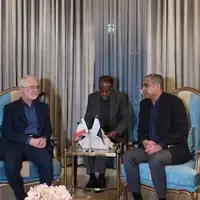
Overnight, the Iranian FM held discussions with his Emirati counterpart, Sheikh Abdullah bin Zayed, during which he called upon Islamic and Arab countries to extend their support to the Palestinian people, emphasizing the urgency of the situation.
Iranian President Ebrahim Raisi also engaged in separate telephone conversations with Syrian President Bashar al-Assad and Saudi Crown Prince Mohammed bin Salman about the Israeli-Palestinian conflict.
Before the outbreak of the Hamas-Israel conflict, Iranian officials had made frequent diplomatic visits to Syria and Lebanon as part of their regional strategy. Tehran has a long history of supporting various terror groups, including Hamas, Islamic Jihad, and Hezbollah.
The Islamic Republic’s support for Palestinian groups has been a source of tension and conflict in the region. It has contributed to ongoing instability in the Middle East and has often been a point of contention in international relations, particularly in the context of negotiations and peace efforts in the Israeli-Palestinian conflict.
Additionally, Iraqi groups aligned with Iran have issued a warning that they may become involved in the Hamas-Israel conflict should Israel intensify its attacks on Hezbollah. The development, amidst rapidly rising tensions, has raised concerns about the potential for a wider regional conflict.
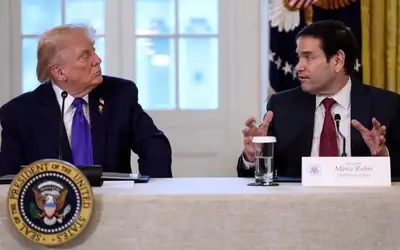
US Secretary of State Antony Blinken made a visit to Israel Thursday amid Israel’s ongoing war with terror group Hamas.
In a show of solidarity with Israel, the US is attempting to prevent the conflict’s escalation and participate in possible hostage negotiations with possibly dozens of US citizens held by Hamas in Gaza.
On Thursday, Blinken wrote on X: "I’m in Israel today to make one thing clear: The United States stands with Israel and its people, and we will always stand — resolutely — against terrorism.”
The visit is further messaging to Iran not to take matters further with its proxies on Israel’s Lebanon and Syrian borders as missiles have been fired in recent days taking the war to yet more fronts beyond Gaza, where Iran-backed Hamas has unleashed all-out war on Israel in the early hours of Saturday morning. Hundreds of militia infiltrated Israel through land, air and sea.
While celebrations of the assault on Israel have rung out in Tehran and US President Joe Biden said a deployment of military ships and aircraft closer to Israel should be seen as a signal to Iran to stay out of the conflict, in a powerful message, Biden said: ”We made it clear to the Iranians, be careful.”

Prime Minister Benjamin Netanyahu thanked Blinken for the show of loyalty. “Mr. Secretary, you come here to a nation that is hurting, a nation of fighters, a nation of lions, a nation that is determined to defeat the forces of evil around us,” he said.
The war so far has seen at least 1,300 Israelis killed, with civilians including women and children burnt alive, murdered in their homes and a further 150 taken hostage in Gaza while over 3,000 have been wounded.
“President Biden was absolutely correct in calling this sheer evil,” Netanyahu added. “Hamas is ISIS and just as ISIS was crushed, so too will Hamas be crushed. And Hamas should be treated exactly the way ISIS was treated.”
Alongside Prime Minister Benjamin Netanyahu, several top figures attended the meeting with Blinken, including Foreign Affairs Minister Eli Cohen, Strategic Affairs Minister Ron Dermer, the Prime Minister's Chief of Staff and the Director of the National Security Council.
Among those attending for the American side were the Acting US Ambassador to Israel, the Assistant Secretary of State for Near Eastern Affairs, and the Diplomatic Adviser.
Meanwhile, Syria's state television claimed Israel launched attacks on the main airports in the capital Damascus and the northern city of Aleppo on Thursday, believed to be stopping the import of Iranian weapons and capabilities to send to its proxies in the region.
Syria said the attacks damaged the runways and put both hubs out of service. Speaking to Syria’s state news agency, a Syrian military source said "bursts of missiles" hit the two airports at the same time, in what he said was a bid to distract the world's attention from Israel's war with Hamas militants in Gaza.
The attacks came a day before Iran's foreign minister, Hossein Amirabdollahian, was due to visit Syria, the timing not deemed a coincidence as Israel cuts off the regime’s influence and military might on its borders.

A Russian strike by an Iran-made drone hit a grain storage facility in the southern Ukrainian region of Odessa overnight.
The attack resulted in damage to the facility and some of the stored grain, though the primary target of the drones appeared to be the Danube port infrastructure.
"Unfortunately, there was a hit on port infrastructure. A grain storage facility was damaged, there is damage directly to the grain itself," Natalia Humeniuk, a spokesperson for the southern military command, told an online briefing. The quantity of damaged grain was not disclosed by her.
In response to the aerial threat, Ukrainian air defenses successfully intercepted and destroyed ten Shahed-type drones in the vicinity. Additionally, four more drones were downed in the Mykolaiv Oblast, according to the defense forces Telegram channel.
On Tuesday, Russia launched a total of 36 Iranian drones at Ukraine. Of these, 27 were neutralized by Ukrainian air defense systems. The Iran-manufactured Shahed drones executed attacks in the Odesa, Mykolaiv, and Kherson regions, with the assault on Odessa Oblast persisting for three hours and specifically targeting transport infrastructure.
Since mid-2022, Iran has reportedly supplied a substantial number of kamikaze Unmanned Aerial Vehicles (UAVs) to Russia, which have been extensively deployed to target civilian infrastructure and cities. The drones have also been incorporated into large-scale missile attacks, overwhelming Ukrainian air defenses.
Despite Iran's denials regarding its involvement in supplying drones and potentially other weaponry to Russia, the United States and its NATO allies have imposed a series of sanctions on individuals and entities implicated in the drone shipments.

The German Chancellor has spoken against organizations supporting Hamas and held Iran accountable for the group's ability to conduct the latest invasion.
Olaf Scholz stated on Wednesday, "While we have no firm proof that Iran operationally supported this cowardly attack, it is clear to us all that without Iranian support Hamas would never have been able to launch this unprecedented attack."
He expressed concern for the growing suffering of civilians in the Gaza Strip, attributing it to Hamas and their attack on Israel.
"Sadly, we can foresee the suffering of the civilian population in the Gaza strip likely growing further but that too is the fault of Hamas and its attack on Israel," he added.
On the domestic front, Chancellor Scholz announced Germany's prohibition of all fundraising and support activities for Hamas and the ban on Samidoun, an international activist organization purportedly supporting Palestinian prisoners but criticized by German authorities for promoting hate speech and advocating for Israel's destruction.
He stressed the importance of preventing further regional escalation of violence and issued a warning to Hezbollah, another Iranian-backed militant group in neighboring Lebanon, against provoking an attack on Israel.
Scholz also highlighted his ongoing communication with key potential regional players in negotiators including the Egyptian and Turkish Presidents and the Emir of Qatar, stressing the pivotal roles the leaders can play in de-escalating the situation.

The foreign ministers of Iran and the UAE spoke about the unfolding events in Palestine on Wednesday night.
During the call, Iran's Foreign Minister Hossein Amir-Abdollahian proposed convening an emergency meeting of the Organization of Islamic Cooperation.
Emirati Foreign Minister Abdullah bin Zayed pledged to raise the request in discussions with other Arab nations, as reported by the Iranian Foreign Ministry.
Meanwhile, amid talks with the UAE, Iranian President Ebrahim Raisi told Syria’s Bashar al-Assad that all countries that "openly normalized their relations with Israel under the pretext of defending Palestinian rights have been disgraced."
The remarks are made in the context of Hamas Saturday terror attack in which the Israeli death toll has risen to 1,300. The fate of approximately 150 individuals who were abducted and taken to the Gaza Strip during this devastating attack by the Hamas terror group remains uncertain. About 3,300 people have been injured, with 28 in critical condition and 350 in serious condition.
According to the Hamas-run health ministry, Israeli airstrikes in the Gaza Strip have resulted in the death of 1,203 Palestinians and the injury of another 5,769.
The Israel Defense Forces have reported that they have eliminated around 1,500 Palestinian terrorists on Israeli territory.

The Biden administration is not ruling out freezing the $6 billion in Iranian oil revenues that it released last month as part of a deal to free five American hostages.
The deal faced objections in Washington from day one, but it never seemed in danger until Hamas attacked Israel and killed more than 1,200 people.
In the few days since the attack, Republican lawmakers have been intensifying their efforts to make the administration punish the Islamic Republic for its support of Hamas.
On Wednesday, Treasury Secretary Janet Yellen confirmed that all options are being explored in dealing with the regime in Iran, including to block the $6 billion that was allowed to be accessed as part of the prisoner deal.
“These are funds that are sitting in Qatar that were made available purely for humanitarian purposes and the funds have not been touched,” Yellen said. “I wouldn’t take anything off the table in terms of future possible actions.”
Before Yellen, John Kirby, spokesperson US National Security Council had suggested that the funds “can be re-frozen” at any time. In an interview with MSNBC, Kirby said: “None of it has been allocated. None of it has been spent.”
But leaving the door open to a ‘re-freeze’ seems to have failed to satisfy the Republicans, who are now moving ahead with a bill that would "immediately" freeze Iran’s $6 billion.
“The civilized world must re-impose serious consequences on the regime that aids and abets murderous evil against innocent Israelis,” said Senator Tom Cotton, who has sponsored the legislation along with Senator Mitch McConnell .” The United States must lead that effort by our example, and freezing Iranian assets is an important first step.”
Remarkably, the Cotton/McConnel legislation has bipartisan support. By the end of day Wednesday, four Democratic Senators had issued statements backing a re-freeze.
“These funds should remain frozen until we can determine whether Iran played a role in the attack and what the appropriate U.S. response should be,” said Senator Bob Casy of Pennsylvania.
With the 2024 election campaign under way, the US policy towards Iran in general, and the ‘$6 billion’ in particular, could become a major issue, especially in swing states where Donald Trump won in 2020.
President Biden would likely have a harder time fashioning and implementing his Iran policy in an election year. He is keen to ease tensions with the Islamic Republic and reach an agreement that would halt the regime’s nuclear ambitions. But that could prove unpopular with the voters while the memory of the Hamas attack is fresh.
The ‘refreeze’ seems to have wide support in the Capitol. Senators McConnell and Cotton say they will seek unanimous consent to pass their legislation –which blocks Iran’s access to the $6 billion in Qatari banks.
But not everybody is in favor of a ‘refreeze’.
“If Biden re-freezes the Iranian funds,” warns Trita Parsi of Quincy Institute, “the US will completely lose any capacity to revive the JCPoA or come to a new agreement limiting Iran's nuclear program.”.
Many believe that to be a positive outcome, however, as they are against the JCPoA to begin with.
“Belatedly rejecting Biden’s reckless ransom payment of $6B in sanctions relief isn’t enough,” said Senator Bill Hagerty posted on X Wednesday. “After Iran-backed Hamas slaughtered >1,000 ppl in Israel, Democrats should support Maximum Pressure — including the US and EU triggering automatic snapback of JCPoA-lifted sanctions at the UN.”
The regime in Iran is still celebrating the attack on Israel. It may find it harder to celebrate when the consequences of the attack become clearer.