Russian Foreign Ministry spokeswoman Maria Zakharova
Iran and Russia are working on a new strategic partnership according to the Russian Foreign Ministry spokeswoman Maria Zakharova.
The announcement comes amidst concerns over potential difficulties in the development of this agreement due to protests from the Iranian side in response to a joint statement following the Russia-GCC Strategic Dialogue ministerial meeting.
The disagreement centers around one specific point in the joint statement, which Iranian officials believe reflects solidarity with the UAE's stance on the territorial dispute concerning three islands in the Persian Gulf, territories that Tehran considers its own. The Iranian side expressed dissatisfaction with the explanations provided by Moscow.
However, despite the challenges, Zakharova on Thursday asserted that the process of drafting the new interstate treaty between Iran and Russia is ongoing.
Zakharova further noted that in a recent telephone conversation on July 18, the Foreign Ministers of Russia and Iran discussed the outcomes of the Russia-GCC Strategic Dialogue meeting.
“During the call, they reaffirmed their commitment to upholding the fundamental principles of international law enshrined in the UN Charter, with a particular emphasis on respecting sovereignty and territorial integrity,” she said.
Iran’s foreign ministry summoned Russia's ambassador and Foreign Minister Hossein Amir-Abdollahian and government spokesman Ali Bahadori wrote in separate tweets that "Iran will not compromise over its national interests and territorial integrity."
However, Tehran’s official reaction to one of its most powerful allies has been meek as the regime navigates through the crisis.
Reza Seqati, the former director of Iran's Ministry of Culture and Islamic Guidance in Gilan province
A director from Iran's culture ministry, that acts as a hijab watchdog, has been dismissed after his sex tape with a young man was leaked online.
The controversy surfaced when a video began circulating on social media, allegedly showing Reza Seqati engaging in a sexual act with a young man. The identity of the other individual in the video remains undisclosed.
Local media reported on Wednesday that Seqati's dismissal was attributed to "scandals". It was claimed that the decision to remove the director of the ministry's Gilan province branch was carried out under the directive of President Ebrahim Raisi’s culture minister.
The Iranian government has not yet commented and Culture Minister Mohammad Mahdi Esmaili only claimed in a video on Wednesday that he had “fired several ministry managers for their failure to adhere seriously to implementing the hijab law.”
Iran International cannot independently verify the authenticity of the video.
Seqati, who is reported to be married with three daughters, has previously been known as a staunch advocate of mandatory hijab in Gilan. In May, he had announced the launch of a hijab hypermarket in the province and had taken measures to establish a hijab exhibition in Rasht's central exhibition hall, focusing on producing clothing in line with “Iranian-Islamic culture”.
Hardliners have been looking for ways to strengthen the enforcement of hijab after their ‘morality police’ tactic of arresting women for “improper hijab” backfired with the death of Mahsa Amini last September, triggering nationwide popular protests.
The standing of the Iranian passport has improved compared to last year, a residence and citizenship consulting firm says, but Iranians still face myriads of snags.
London-based consultancy company Henley & Partners, which publishes rankings and reports on global mobility, investment and wealth migration trends, placed Iran on the 92nd position in its latest Henley Passport Index.
According to the company’s Global Mobility Report 2023 Q3, the ranking of the passport has risen by seven steps compared to the figure in the first quarter of this year, although the number of destinations accessible to Iranians without a prior visa has increased just by one country, reaching a total of 44.
It means that Iran’s passport grants visa-free or visa-on-arrival access in 44 destinations. The index, which includes 199 different passports and 227 different travel destinations, is updated quarterly. The index is based on exclusive data from the International Air Transport Association (IATA) – the most extensive and accurate travel information database -- and is further enhanced by Henley & Partners' research team.
Iran shares its spot with Eritrea and Sudan – both granted easy access to 44 destinations. Iran's passport is weaker that those of Congo, South Sudan, Nigeria, and Myanmar and stronger than Kosovo, Libya, Sri Lanka, Bangladesh, and North Korea.
Wikipedia's visa requirements map for Iran
Before the 1979 revolution, as Iran was a fast modernizing country with a strong economy, its passport enjoyed visa-free status in most European countries, when global travel was more limited than today.
After five years of Japan's dominance, Singapore now tops the list with visa-free access to 193 destinations, similar to Germany, Italy, and Spain.
Given the fact that countries can share spots in the ranking, and although Iran is placed on the 92nd spot, there are only 14 passports worse than that of Iran. Afghanistan, Iraq, Syria, Pakistan, Yemen, Somalia, and the Palestinian Territory sit on rock-bottom with insignificant changes since the last report.
Most of the countries with which the Islamic Republic has agreed to visa waivers or reduced entry restrictions are located in Africa or South America, such as Venezuela, Bolivia, Ecuador, or former Soviet republics like Kazakhstan. Several countries, including the United States, Canada, Israel, and Morocco, still do not have an embassy or consular section in Iran.
Earlier in July, Ali-Asghar Shalbafian, the deputy in the ministry of tourism, claimed that Iran is considering the possibility of unilaterally waiving visas for 60 countries.
Over the past decade, Iranian authorities have made repeated claims regarding visa waiver agreements, including with their ally Russia. However, Russia still demands visas.
For Iranians, getting visas for developed countries, including those of the Schengen area in the European Union, has always been challenging. In recent years, the obstacles have intensified, so have the number of Iranians who seek to leave the country.
During the peak of antigovernment nationwide protests in 2022, reports emerged about certain European countries refusing to issue Schengen visas in Tehran.
Although some of these countries officially denied the reports or responsibility for such actions, sources within European embassies in Iran confirmed the reports.
In October, the French Embassy in Tehran denied the visa issuance suspension as "common rumors in the virtual space," claiming that "The problems are entirely beyond our control.” In a statement, it said "Due to internet filtering, which Iranian authorities have decided to implement, the French embassy is temporarily unable to process a large volume of files.”
The problems are not limited to Western countries. The Islamic Republic's embassy in Baku recently announced that based on a decision by the Azerbaijani Foreign Ministry, issuing visas upon arrival for Iranian citizens has been suspended.
Apart from the difficulties in obtaining visas, Iranians also face challenges in extending their stays or accessing banking and insurance systems in the countries that allow them in with fewer restrictions.
Turkey, which has been a very popular destination for Iranians seeking refuge from uncertainties of life in Iran, has ceased issuing residence permits to Iranians based on rent contracts, which used to be a common practice in Turkey. Although official regulations have not changed, Iranians are rejected by the immigration office or at banks without providing any explanation to the applicants.
Concerns about people fleeing Iran and possible destabilizing actions in other countries by Islamic Republic agents are prime reasons for widespread travel restrictions. Prior to the 1979 revolution, which led to the ouster of Mohammad Reza Shah, Iranians could travel without visas throughout Western Europe, with the exceptions of Austria and Switzerland.
Iran's Defense Minister Brigadier General Mohammad Reza Ashtiani
The defense ministers of Iran and Bolivia signed an agreement to strengthen bilateral cooperation in the areas of defense and security.
Speaking at the ceremony on Thursday, Iranian Defense Minister Mohammad Reza Ashtiani emphasized the significance of Latin American nations in Iran's foreign and defense policy. He claimed that these countries occupy a special place in Iran's strategic outlook, prompting the desire to forge closer ties with Bolivia in particular.
“In light of Bolivia's critical requirements in border defense and the fight against drug trafficking, we actively sought to establish collaborations in equipment and expertise with the country. This cooperative endeavor has the potential to serve as a pioneering model for other nations in South America,” Ashtiani said.
Meanwhile, the Minister of Defense of Bolivia, Edmundo Novillo Aguilar, acknowledged his country's concerns regarding drug smuggling and border control, highlighting the importance of external cooperation to address these pressing issues effectively.
Iran's pursuit of defense partnerships in the region has raised eyebrows due to its historically opaque behavior on the international stage. There are fears that the motives behind these engagements might extend beyond genuine cooperation and could involve the export of radical ideologies and the dissemination of unconventional arms and technologies.
Of particular concern is Iran's track record of supporting extremist groups and engaging in proxy warfare in other parts of the world. There are apprehensions that Iran may seek to exploit defense cooperation with South American nations as a means to advance its interests, extend its influence, and potentially interfere in regional affairs. Its growing encroachment on the continent is of particular worry to the US.
Israeli President Isaac Herzog addresses a joint meeting of Congress inside the House Chamber of the Capitol in Washington, July 19, 2023.
On a high profile visit to the United States, Israel’s President Isaac Herzog called Iran “the greatest challenge Israel and the United States face at this time”.
Referring to the regime’s ongoing development of its nuclear program, he told the joint session of the US Congress: “Let there be no doubt: Iran does not strive to attain nuclear energy for peaceful purposes. Iran is building nuclear capabilities that pose a threat to the stability of the Middle East and beyond.”
Meanwhile, the UK’s Foreign Secretary, James Cleverly, echoed his sentiments at a fireside chat in Aspen, US, in which he said the UK is committed to working with its allies in the US, Europe and the Middle East “to ensure that we never see a nuclear-armed Iran”.
Both leaders stressed the global threats Iran poses, from its proxies across the Middle East to its foiled attacks in countries including at least 15 in the UK alone, as well as recent plans to attack Jewish and Israeli targets in Greece, Cyprus and Azerbaijan.
“Every country or region controlled or infiltrated by Iran has experienced utter havoc,” Herzog said. “We have seen this in Yemen, in Gaza, in Syria, in Lebanon, and in Iraq. In fact, we have seen this in Iran itself where the regime has lost its people, and is suppressing them brutally.”
James Cleverly, the UK Secretary of State for Foreign, Commonwealth and Development Affairs
The two leaders were speaking as the UK had imposed yet further sanctions on the country, ramping up on several months of penalties for both ongoing nuclear activity and the brutal suppression of protesters since September’s uprising in the wake of the death in morality police custody of Mahsa Amini.
“We maintain a tough and robust position towards Iran and that will remain our position,” Cleverly said. “If Iran does not like the UK’s response, then Iran needs to change its behavior. Our actions are in response to their behavior.”
Herzog also raised the issue of Iran’s arming Russia in its war in Ukraine, a claim the regime denies but more recently, evidence has shown the cooperation continues, and now it has been revealed that the two nations are building a joint weapons plant.
He said: “Iran has spread hatred, terror, and suffering throughout the Middle East and beyond, adding fuel to the disastrous fire and suffering in Ukraine.”
Israeli President Isaac Herzog gestures as US Vice President Kamala Harris and House Speaker Kevin McCarthy (R-CA) applaud on the day of Herzog's address to a joint meeting of Congress inside the House Chamber of the Capitol in Washington, July 19, 2023.
The Israeli President addressed in candid detail the threat posed to the Middle East’s only democracy. “Iran is the only nation on the planet publicly calling, plotting, and developing means to annihilate another nation, a member of the family of nations, the State of Israel. Israel has no border with Iran. Israel has no resources contested by Iran. Israel has no conflict with the Iranian people. And yet, the Iranian regime – together with its proxies throughout the Middle East – is aiming and working towards destroying the State of Israel, killing the Jews, and challenging the entire free world,” he told Congress.
He said that allowing Iran to become a nuclear threshold state, “whether by omission or by diplomatic commission, is unacceptable”, calling on the world not to remain indifferent to the Iranian regime’s call to wipe Israel off the map.
“Tolerating this call and Iran’s measures to realize it, is an inexcusable moral collapse,” he said, calling on the US to work with the Jewish state to prevent Iran’s fundamental threat to international security.
“I am here to reiterate what every Israeli leader has declared for decades: the State of Israel is determined to prevent Iran from acquiring nuclear weapon capabilities,” he added.
Israeli President Isaac Herzog addresses a joint meeting of Congress inside the House Chamber of the Capitol in Washington, July 19, 2023.
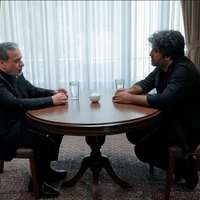
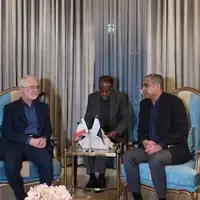
Iran's foreign minister claims there are ‘initiatives’ being discussed in the nuclear negotiations following discussions with his Omani counterpart in Tehran.
The primary objective of Omani FM Sayyid Badr Albusaidi's visit was to deliberate the JCPOA and further explore the ‘initiatives’ put forth by the Omani side in pursuit of resolving the nuclear agreement's impasse, Hossein Amir-Abdollahian revealed in a statement on Wednesday.
The unanticipated visit of Oman's senior diplomat sparked media speculation regarding the fate of the JCPOA revival talks. Notably, during the visit, Iran's market experienced a decline in the dollar's value to 480,000 rials, with media outlets like Etemad Online attributing this development to Minister Albusaidi's discussions in Tehran.
In light of this, Amir-Abdollahian stressed Oman's "dedication to bridging the gap between all parties involved in the JCPOA and restoring their adherence to the agreement's commitments.”
Highlighting the longstanding diplomatic ties, Amir-Abdollahian also referred to the Sultan of Oman's meeting with the leaders of the Islamic Republic during his visit to Tehran in late May. It was revealed that the discussions during the recent visit between the foreign ministers also included deliberations on the bilateral agreements between the two sides.