Senator Bill Hagerty (R-TN) reintroducing the Iran Sanctions Relief Review Act (ISRRA)
Reports on a possible unwritten deal between Washington and the Iranian regime has led to multiple Congressional initiatives to ensure legislative oversight.
On Thursday 33 US senators joined to introduce the Iran Sanctions Relief Review Act (ISRRA – S.488) to “make it abundantly clear to the Biden Administration that any agreement made with Iran that involves sanctions relief must be submitted for Congressional review,” said Senator Bill Hagerty (R-Tenn) who leads the effort.
When in 2015 the JCPOA Iran nuclear deal with Iran was concluded, the Obama administration seeing serious opposition in Congress decided not to make it a treaty requiring Senate approval. As a tactic to reduce opposition, Obama agreed to the Iran Nuclear Agreement Review ACT (INARA) to allow Congress to oversee future dealings with Tehran, especially any reduction in sanctions.
As all signs point to indirect and even direct talks with the Islamic Republic emerge, many in Congress fear that the Biden administration is moving toward releasing Iran’s frozen funds in countries such as Iraq and South Korea, and possibly even sanctions in return for an Iranian pledge not to enrich uranium beyond 60 percent. Many lawmakers regard such a deal as harmful because Iran has already stockpiled enough enriched uranium to be able to quickly produce weapons-grade material if it decides to produce for nuclear weapons.
Iranian Armed Forces Chief of Staff Major General Mohammad Bagheri and IRGC Aerospace Force Commander Amir Ali Hajizadeh walk during the unveiling of "Kheibarshekan" missile at an undisclosed location in Iran, in this picture obtained on February 9, 2022.
The Washington Free Beacon also reported on Thursday that Republicans in the House of Representatives are preparing to subpoena top Biden administration officials over the secret talks with Iran. The effort is led by the Republican Study Committee, the largest conservative caucus in the US Congress. The group intends to subpoena Iran envoy Robert Malley and White House national security aide Brett McGurk, both seen as key players in ongoing secret talks with the Islamic Republic.
At same time, more than 200 prominent Iranian Americans have written to Rep. Michael McCaul, Chairman of the House Foreign Affairs Committee asking him to subpoena US special envoy for Iran Robert Malley, who is deeply distrusted by Iranian activists and others opposed to the Iranian regime.
“We therefore implore you to subpoena Mr. Malley to provide, under oath and in a public hearing, a rundown of what has been agreed upon with the regime,” the letter asked Rep. McCaul, and added, “We consider access to and knowledge of this information to be unalienable right of the American people and our community, as our friends and families inside Iran suffer under the tyranny and brutality of the Islamic Republic regime.”
Some prominent signatories were; Reza Behrouz, physician and Professor at the University of Texas ; Yass Alizadeh, Assistant Professor of Persian language and literature at New York University; Atlanta-based attorney Sasan Nematbakhsh; DC-based legal scholar Shima Bozorgi; Amin Sophiamehr, philosophy instructor from Indiana University and Sara Eshaghi of the California-based group, “Action for Iran.”
This week, a bipartisan group of 26 senators sent a letter to the White Houseexpressing concern over reports that the administration is trying to reach a limited deal with Iran without Congressional oversight.
“It is imperative today that we strengthen our efforts to deter Iran from achieving nuclear weapons capability. We must make Iran understand, in no uncertain terms, that further advances in its nuclear program will be met with unified international action,” the 26 senators wrote to Biden.
“It is crucial for your administration to remain aligned with Congressional efforts related to Iran’s nuclear program and not agree to a pact that fails to achieve our nation’s critical interests,” the letter said.
Interior Minister Ahmad Vahidi talking to lawmakers at the parliament
Under immense pressure by more than 200 lawmakers, Interior Minister Ahmad Vahidi promised this week to fire his political deputy Mohammad-Reza Gholamreza.
Deputy Interior Minister for Political affairs who also chairs the ministry’s Election Supervisory Board for the upcoming parliamentary election in March, had issued a statement to bar lawmakers from intervening in executive affairs in their constituencies.
The ministry's concern was mainly about interference with the election process by lawmakers who wish to be re-elected. Apart from the conflict of interest issue, another concern was undermining the prerogative of the executive branch.
More than 200 lawmakers tabled a motion Monday night to impeach the interior minister. This was a vehement threat, as calls for impeachment are usually signed by between 20 to 40 lawmakers. Vahidi was caught in a situation no minister would want to be in, particularly as Tuesday morning government ministers and President Ebrahim Raisi were going to the Majles to defend the nomination of a new agriculture minister.
Interior Minister Ahmad Vahidi (center) and his political deputy Mohammad-Reza Gholamreza (2nd right) during a ministry session
The social media rumor mill pointed out early in the morning that the President and the Interior Minister will have to step back, otherwise the lawmakers will impeach the interior minister and will not give their vote of confidence to the new agriculture minister. This was probably what played out in the corridors of power in Iran: Another tempest in the teacup as the man in the street cannot care less about a government that has messed up the economy and a parliament that cannot hold the government to answer.
The Interior minister overruled his deputy's order practically allowing lawmakers to interfere in the hiring and firing of local government officials in order to control the election process. But the lawmakers were still not happy. They demanded the removal of the deputy interior minister. They further threatened that they will go ahead with the interior minister's impeachment if his deputy was not removed from his post until Saturday, the beginning day of new week in Iran.
According to reformist daily Shargh, some lawmakers such as Shahryar Haidari said that the statement issued by the deputy interior minister was an insult to lawmakers. Others also made equally angry remarks partly to show their clout to potential voters in the next election. They also demanded an apology from the Raisi administration.
Others accused the interior ministry of undermining Supreme Leader Ali Khamenei's order for cooperation between the Majles and the government. Nothing in Iranian political circles can be as damning as accusing someone of disobeying Khamenei.
Etemad Online and other news sources in Iran pointed out that Vahidi's arrival at the Majles Tuesday morning caused an uproar among more than 200 of Iran's 290 lawmakers. Interestingly, they said they wanted to impeach Vahidi for his poor performance during the 2022 protests. Another interesting point was that although the Majles presidium usually objected to calls for impeachment, they were supportive of the angry lawmakers.
Tensions at the Iranian parliament over Deputy Interior Minister for Political Affairs Mohammad-Reza Gholamreza, who also chairs the ministry’s Election Supervisory Board for the upcoming parliamentary election (June 2023)
After a closed-door session, Vahidi promised to fire his deputy, but this does not necessarily mean that Gholamreza will be dismissed. He is an IRGC general and enjoys support within the ranks of the corps. On the other hand, as far as the government is concerned, the MPs should not be emboldened beyond what they have achieved.
By midday, the crisis appeared to be over. The lawmakers who have always been accused of being intimidated by the government shouted at Vahidi and restored their credibility in the eyes of their constituents. The government was happy to have won the lawmakers' vote of confidence for a new agriculture minister and Vahidi barely saved his pride by postponing his deputy's removal to a future date that may not happen.
In the Iranian political circus, everyone is a winner until Khamenei's next speech when he chooses who is going to enjoy his support and who is going to be faced down.
Iran's Supreme Leader Ayatollah Ali Khamenei visits the Iranian centrifuges in Tehran, Iran June 11, 2023.
The intelligence agencies of European countries determined that the Islamic Republic of Iran sought nuclear weapons technology during 2022.
The agencies published their findings during the first six months of 2023, according to the Middle East Media Research Institute (MEMRI), which first located and translated the damning material asserting Iran’s regime sought weapons of mass destruction (WMD) technology.
According to the report of the Netherlands General and Intelligence Security Service (AVID), “The AIVD and MIVD [ Military Intelligence] succeeded a number of times in preventing Russia and Iran from acquiring Dutch knowledge or technology for their nuclear weapons programs."
The Dutch intelligence document did not disclose the nature of the knowledge and technology that the clerical regime sought to obtain.
The report noted that the Dutch intelligence establishment “succeeded a number of times in preventing Russia and Iran, among others, from procuring materials, technology, and (applied) scientific knowledge in the Netherlands that they could have used for their nuclear weapons programs. It concerned, among other things, high-tech products that play an important role in the modernization of weapons of mass destruction. The AIVD has issued official communications in this regard to the government and to financial institutions."
A number of new generation Iranian centrifuges are seen on display during Iran's National Nuclear Energy Day in Tehran, Iran April 10, 2021.
The Netherlands intelligence agencies also covered the Islamic Republic’s biological weapons program. "In 2022, the counter-proliferation unit continued its investigation into the use of chemical weapons in Syria. The focus was on the current situation, but it also examined which generals of the Syrian regime are responsible for poison gas attacks in the past. In 2022, the unit also continued research into biological weapons programs of several countries of concern, including Russia and Iran. Additional focus was on recent developments in biotechnology and its possible consequences for the development of new types of biological weapons, “wrote the intelligence officials.
Since the 2000s there have been numerous reports of Iran trying to procure nuclear or missile technology from Western and other sources, and many individuals and entities have been sanctioned by the United States and its allies for assisting Iran’s covert operations.
But the Iranian regime and government-controlled media have rarely reacted directly to such accusations. On the contrary, Iranian officials often claim that their nuclear and missile programs are “entirely homegrown” and insist that they have made progress “despite sanctions.”
Head of Iran's Atomic Energy Organization Mohammad Eslami and International Atomic Energy Agency (IAEA) Director General Rafael Grossi attend a news conference, in Tehran, Iran, March 4, 2023.
Mohammad Eslami the head of Iran’s nuclear program claimed in March that “We are a nuclear country without any foreign help.”
Behruz Kamalvandi, the nuclear program spokesman said in Maythat any attack or other punitive measures against Iran’s “peaceful” nuclear technology is meaningless because the country is totally self-sufficient. He was addressing a gathering of Iranian senior diplomats abroad.
However, it is widely believed that Israeli secret services deeply penetrated Iran’s nuclear program and were able to explode the main uranium enrichment site in Natanz twice; in 2020 and 2021. Some observers speculated that Israel could have smuggled in the explosives by rigging components that Iran illicitly imported from abroad.
The German media outlet Bild reported, in 2019, the German engineering company The Krempel Group located in the southern city of Stuttgart sold electronic press boards to Iranian companies that were used in the production of rockets. Forces under the control of Syrian dictator Bashar al-Assad fired Iranian regime-produced chemical missiles containing Krempel material, resulting in the severe gassing of 21 adults and children.
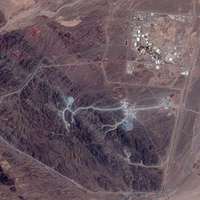
A view of a damage building after a fire broke out at Iran's Natanz Nuclear Facility, in Esfahan (Isfahan), Iran, July 2, 2020.
The Dutch intelligence report said Netherlands intelligence “prevented an Iranian scientist, who was associated with a sanctioned institute, to acquire relevant (applied) knowledge at a Dutch university of technology. That knowledge could have been of use in Iran's nuclear weapons program. If necessary, the AIVD will also investigate new developments in the field of weapons of mass destruction."
The Swedish Security Service said in its 2022-2023 situational assessment "Iran engages in industrial espionage, which is mainly aimed at the Swedish high-tech industry and Swedish products that can be used in nuclear weapons program.”
According to the Swedish intelligence report, "Swedish technology as products with dual uses and critical cutting-edge products for both civilian and military use is of interest to Iran. Iran procures both technology and knowledge through illegal methods, and develops its own ability through Swedish universities and research institutions."
The Swedish intelligence officials added "Iran – a tangible security threat... conducts intelligence activities and security-threatening activities in and against Sweden and Swedish interests in the form of intelligence gathering, influencing opposition parties and through procurement activities. The Iranian intelligence services have also for a long time carried out attacks against people [in Sweden] who are perceived to threaten the stability of the Iranian regime."
The Swedish Security Service "Authoritarian states strengthen their positions.The threat from foreign power is high. Russia, but also China and Iran, still constitute the largest security threats to Sweden. Authoritarian states have in the latest the years become increasingly offensive in their actions. They act aggressively and use all of society's resources.”
Germany’s Federal Office for the Protection of the Constitution (BfV) released its national intelligence report on June 20. The report stated: "The authorities for the protection of the constitution were able to find, in 2022, a consistently high number of indications of proliferation relevant procurement attempts by Iran for its nuclear program."
The German national intelligence report defines "Proliferation," as "The activities of foreign powers also include procuring products and knowledge for the production of weapons of mass destruction, their delivery systems, other armaments or elements of new weapon systems."
Germany’s sixteen states release individual intelligence reports. The German state of Rheinland-Pfalz, said in its June 5 report: "An important area of responsibility of the Office for the Protection of the Constitution is the reconnaissance and prevention of attempts by so-called critical states which owned weapons of mass destruction and the necessary carrier technology as well as the access to the relevant know-how. Because they themselves in their development and production are often not in a position [they would like to be in], these states try to illegally obtain the necessary knowledge, products and goods using secret service methods. Such procurement attempts have been going on for years, most of all by Iran.”
The state of Bavaria said in its April intelligence report"[t]he procurement structures of other proliferation relevant risk states like China, Iran, North Korea, Pakistan, and Syria act in the same way [as Russia] and are moving ahead greatly with their conspiratorial procurement activities."
The intelligence agency for Germany’s most populous state, Nordrhein-Westfalen wrote in its April report in the section covering proliferation of biological or chemical weapons of mass destruction (ABC weapons)"At-risk states in this connection appear to be mainly Iran, Pakistan, Syria, and Russia."
The Nordrhein-Westfalen agency report added "In the area of proliferation, the sanctions imposed on Russia lead to covert, intelligence-led evasion and purchasing efforts. Iran also continues to seek technology for its programs."
(Iran International’s Mardo Soghom contributed to this report.)
Clashes between two Kurdish parties in Iran left at least two dead and three wounded.
Following the collapse of the alliance between the Organization of the Toilers of Kurdistan and the Komala Party of Iranian Kurdistan, an armed conflict occurred between their Peshmerga forces on Thursday morning, reported Hengaw Human Rights Organization.
The Komala Party announced on Wednesday that the efforts for an alliance have failed, and they will continue their activities independently.
Sources told Iran International the security forces of the Iraqi Kurdistan region entered their camps and ended the conflict.
In a tweet, Hengaw called on the two parties to "stop the military conflict and plan for an immediate mechanism to hold negotiations and end the disputes."
The human rights organization also expressed readiness "for any mediation to resolve disputes peacefully."
Rudaw Kurdish news agency reported the conflict took place in the Zargawez in the Kurdistan region of Iraq.
The Islamic Republic had previously called for the implementation of the security agreement with Iraq to prevent the activities of Iranian Kurdish parties in the Kurdistan Region of Iraq.
Komala has been engaged in guerrilla warfare against the Iranian government, notably during the 1979 Kurdish rebellion and the Iran–Iraq War.
The Organization of the Toilers of Kurdistan, also known as the Komala Reform Faction, is an armed communist and separatist ethnic party of Kurds in Iran based in northern Iraq. It split from the Komala Party of Iranian Kurdistan in October 2007 over internal disagreements but reunited with them in November 2022.
Figurines of former IRGC Quds Force Commander Qasem Soleimani in Cuba and Nicaragua
As part of the regime’s propaganda, two busts of the former IRGC Quds Force Commander Qasem Soleimani were erected in Cuba and Nicaragua.
During the recent trip of Ebrahim Raisi to Latin America, two figurines of Soleimani were unveiled by the wife of the President of the Islamic Republic of Iran, Jamileh Alamolhoda, in the two countries, Tasnim News Agency reported Thursday.
On January 3, 2020, the US military, on the order of President Donald Trump, killed Soleimani in a drone strike near Baghdad International Airport, saying that he had been "actively developing plans to attack American diplomats and service members in Iraq and throughout the region."
One of the busts was placed in the Hall of Heroes of Nicaragua in the presence of the Ministers of Culture, Family and Science, and another one the University of Havana with the Head of the Communist Party of Cuba and the Dean of the University of Havana attending the ceremony.
“Soleimani was a man of action and a hero in the fight against terrorism for the women of the region and a harbinger of security for the whole world,” said Alamolhoda on the sidelines of the ceremony.
On Saturday, Saudi Arabia's Foreign Minister Prince Faisal bin Farhan refused to hold a joint presserin Iran under Qassem Soleimani’s picture and the presser was relocated.
The Qods Force under Soleimani became deeply involved in the conflicts in Syria and Iraq, setting up militant proxy militias.
In a somewhat unexpected move, media in Tehran reported Thursday that a meeting was called between Iran's intelligence bodies, signaling possible discord.
The joint meetingof the Ministry of Intelligence and the Intelligence Organization of the IRGC was held June 16 in the religious city of Mashhad.
The session was opened with the message of the Supreme Leader Ali Khamenei who urged for more mutual understanding and synergy.
“Intelligence is one of the most important issues of the country, and one of our weaknesses in relation to intelligence systems is the lack of coordination,” read Khamenei’s message.
The meeting comes as a lack of coordination between the intelligence organizations has led to major cyber attacks from regime opposition groups. Repeated acts of sabotage attributed to Israel have also plagued the Iranian regime since July 2020.
Most recently, a hacktivist group broke into servers of the Iranian president’s office in late May and leaked troves of sensitive data, proving corruption, conflicts, and an ongoing nuclear expansion.
Intelligence Minister Esmail Khatib and the IRGC Commander Hossein Salami were among the speakers of Thursday's meeting, both underlining the necessity of better coordination.
The Secretary of the Supreme National Security Council Ali Akbar Ahmadian and the Interior Minister Ahmad Vahidi also called for a joint strategy.
It seems that there are deep rifts between the IRGC and the Ministry of Intelligence and Khamenei continues to heal the rifts but with over a dozen bodies involved in the country’s security, none of them want to lose its dominance.
However, multiple intelligence services were created during Khamenei's 34-year-old rule.