Tehran Cleric Issues Death Fatwa Against Hunger Striker Beheshti

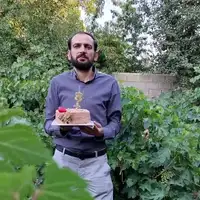
British Iranian activist Vahid Beheshti has revealed that a fatwa calling for his death has been issued by a cleric in the Islamic Republic.

British Iranian activist Vahid Beheshti has revealed that a fatwa calling for his death has been issued by a cleric in the Islamic Republic.
Recovering in hospital from a hunger strike of more than two months, the campaigner posted a video Tuesday saying: “Through my contacts in Iran, I have been given this latest information that the religious platform for my death has been issued by one of the clerics of Islamic Republic of Iran connected to IRGC.”
A defiant Beheshti added: “If you release 10 fatwas for my death. We won't stop our activities. We wouldn't step in this path.”
He has been in hospital since May 5, before which he had survived for 73 days on nothing but water, coffee, salt and sugar cubes.
His hunger strike outside the British Foreign Office in London had been devoted to raising awareness about atrocities committed in his homeland and to pressure UK Prime Minister Rishi Sunak to proscribe the IRGC as a terror group, Beheshti described it as “the most brutal mafia in the world”.
Beheshti said Sunak's government should not wait any longer to proscribe the IRGC but rather move forward now.
The activist warned if ministers refuse to act, IRGC agents will eventually force them to do so: “If they come to the streets of London and do something tragic, then it’s too late to wake up.”
Beheshti is not the only UK citizen under threat from Tehran. MI5, the UK's domestic security agency, revealed last year that at least ten Iranian plots to kill or abduct British citizens had been discovered.

The United States has charged a Chinese national with violating US sanctions by providing to Iran materials used to produce ballistic missiles, federal prosecutors in said Tuesday.
Xiangjiang Qiao works at Sinotech Dalian Carbon and Graphite Manufacturing Corporation, a China-based company which the US Treasury Department placed on a sanctions list in 2014 for helping Iran buy a material that can be used in the nose of intercontinental ballistic missiles. Sanctions bar companies from using the US financial system.
Qiao between 2019 and 2022 helped supply Iran with isostatic graphite, an ultra-fine grain used to make rocket nozzles, and set up a bank account in the name of a front company to receive $15,000 in transfers from a US bank in connection with the transactions, prosecutors said.
Qiao, 39, is in China and has not been arrested, prosecutors said. He faces charges including sanctions evasion, bank fraud and money laundering.
The US has sanctioned dozens of individuals and entities in recent years for involvement in schemes to supply sensitive technology or money laundering for Iran’s military and nuclear programs.
The Justice Department announced a series of criminal cases Tuesday tracing the illegal flow of sensitive technology, including Apple's software code for self-driving cars and materials used for missiles, to foreign adversaries like Russia, China and Iran.
With reporting by Reuters, AP

Iranians abroad are calling for protests over the imminent execution of three political prisoners tortured into confessions by the Islamic Republic.
The families of Majid Kazemi, Saleh Mirhashmi, and Saeed Yaqoubi and human rights campaigners say there is no evidence against them.
The state broadcaster’s local TV channel in Esfahan (Isfahan) – where the three are being held – aired footage of their forced confessions on Monday night, adding to growing fears that they are about to be hanged.
The prisoners’ relatives were reportedly told by the court of appeal not to come back to the judiciary’s office because “the prosecutor of Esfahan wants to execute these three protestors.”
Iranian expatriate communities plan to pour onto streets of their hometowns for demonstrations against the executions by the Islamic Republic on Saturday, May 20.

Canada-based dissident figure Hamed Esmaeilion, whose daughter and wife were killed in the shooting down of Flight PS752 by Iran’s Revolutionary Guard in 2020, is among the organizers of the event, dubbed “Unanimous Against Executions in Iran.”
The three prisoners' families have repeatedly stated that there is no reliable evidence implicating the three in the death of two IRGC’s Basij militia members and a police officer in protests of November last year, in what Persian media have dubbed the ‘Esfahan House’ case.
There are a number of discrepancies in the prosecution case, including the time of the killings and the fact that the murder weapons described by the judiciary do not match the details of the confessions.
According to an audio file released on Sunday of Kazemi talking to his cousin, he was coerced into confession by threats to his family of rape and death.
The prisoners were allowed to meet their families on Sunday night, further fuelling speculations that their execution is imminent. An organized pro-regime Twitter campaign has been launched, urging the authorities to carry out the execution.
Fars news agency, affiliated with the IRGC, ran a piece on its website on Tuesday, claiming that foreign-based media – deemed hostile by the regime – have been trying to stop the justice being meted out to the prisoners.
On Sunday, protesters against the executions gathered overnight outside Esfahan’s prison. Videos posted by activists show dozens chanting slogans in front of the prison, while gunfire was also heard as thick smoke caused by teargas enveloped the area.
Opposition activists say the death penalty is being used against the Esfahan House three as an intimidation tactic to stop further protests.
The United Nations said last week that Iran has executed 209 people so far this year, calling the record "abominable".
Earlier in the month, Amnesty International urged Iran to drop the execution of the three as well as that of six ethnic Arab men who gave “tortured-tainted” confessions.

A secret underground drone base of Iran’s Revolutionary Guards (IRGC) has been uncovered by an Israeli security think tank.
The location in the southwest of Iran was revealed Monday by Alma center, a non-profit research organization which focuses on the security challenges on Israel's northern borders.
The UAV base is carved into the Zagros mountains near Shiraz, Fars province, according to a video released by Alma. The location is about 10km from Shiraz airbase, which also houses the air force's SU-24 jets of the 72nd tactical fighter squadron.
The base’s proximity to the strait of Hormuz in the Persian Gulf “threatens the entire Middle East at any given moment”, Alma warned.
Satellite footage provided by the center shows the drone base consists of a site for a “swarm” – a coordinated unit of multiple drones – and a command-and-control center.
The swarm base has at least five UAV launch silos as well as three access tunnels and a loading dock tunnel.
The UAVs that can be launched from the silos are Shahed, the same kamikaze attack drones the regime is supplying to Russia for its invasion of Ukraine.
The underground base is at least 3km long with an entrance near Shiraz industrial town, where parts are probably made or assembled.
The 2,000km range of Iran’s attack UAVs drones allowed it attack sites beyond Israel as far as Cairo, Alma claimed.

The Iranian authorities have released images of drone bases but never disclosed their locations.
Last year in March, Israeli media reported that an Israeli aerial attack destroyed hundreds of drones at an IRGC airbase in the Iranian province of Kermanshah. Six Israeli drones struck the base in Mahidasht region near the western city of Kermanshah in a covert operation. In response, Tehran pounded Iraq’s Kurdistan region with missiles for week, claiming the targets were bases used by Israel.
In April, Iran released footage of top brass visiting a large underground base housing a large number of drones. Earlier, in February, Iran revealed an underground air force base called

"Eagle 44", saying it is the first of its kind large enough to house fighter jets, with reports that the base is also capable of storing and operating drones. Iran’s lack of a viable modern air force due to long-running sanctions and arms embargoes leaves it mostly relying on missiles and drones.
There has been growing speculation recently over an Israeli air attack on Iran to contain its military program. The US and Israel held large-scale drills in January in possible preparation for such an attack.

Iranian musicians have demonstrated outside the House of Music in Tehran in protest over security forces’ attack on students.
It follows the raid on Saturday on the University of Tehran’s Faculty of Fine Arts on the pretext of women not complying with the mandatory hijab.
Students and teaching staff were beaten up and some had their instruments broken.
On Monday, the board members of Iran House of Music slammed the violent behavior of security guards at the Tehran University faculty.
The Telegram channel of the Students' Union Councils reported that the security officers clashed with some female students. Demonstrators chanted slogans “Woman, Life, Freedom”, “Student Will Die, But Will Not Be Humiliated”, and “Death to the Leader”.
Iran's universities have been one of the main centers of protests during the nationwide uprising against the regime following the death of Mahsa Amini in police custody last year. In an attempt to suppress the demonstrations, the security forces of the Islamic Republic have repeatedly attacked the universities and arrested over 700 students.
The repression of the protesting students in recent months has provoked widespread criticism by human rights organisations and governments around the world.

The UK’s Foreign Secretary says he continues to determine whether to ban Iran’s Revolutionary Guard (IRGC) as a terrorist group.
In an interview with Fox News Digital on Monday, James Cleverly said: "We, of course, keep these decisions under constant review, but the decisions that we make within the UK will always be based on our, you know, the primary commitment, which is to keep British nationals safe, to keep people in the region safe."
The decisions include whether "to curtail the IRGC and the Iranian regime’s malign activities.”
Designating the IRGC as a terrorist group would bring the UK in line with the US.
Cleverly underscored the need for the UK and US to remain united on key issues, including the potential nuclear threats posed by Russia and Iran.
He said: "Preventing Iran from developing a nuclear weapon remains an absolute priority in U.K. foreign policy.
"We’ve worked very, very closely with the members of the Quad, France, Germany, the United States … in imposing sanctions, and obviously we know very closely what we're doing in conjunction with the International Atomic Energy Agency to prevent Iran acquiring a nuclear weapon."
Stopping Iran from acquiring nuclear weapons will always be a priority of UK foreign policy, said Cleverly.
In recent months, a number of members of the British House of Commons have put pressure on Prime Minister Rishi Sunak's government to proscribe the IRGC as a terrorist organization. They include British Home Secretary Suella Braverman.
Prominent political opposition activists, among them Prince Reza Pahlavi, Masih Alinejad, Nazanin Boniadi and Shirin Ebadi, have met British representatives to call for the Revolutionary Guards to be branded terrorists.


Tweet unavailable