Biden Tells Iran, Russia To Release Hostages, Imposing Sanctions

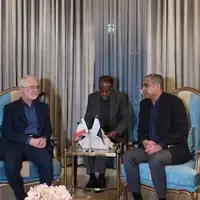
The United States imposed sanctions Thursday on Russian and Iranian security entities and officials accusing them of the wrongful detention of Americans.

The United States imposed sanctions Thursday on Russian and Iranian security entities and officials accusing them of the wrongful detention of Americans.
The sanctions also targeted four senior commanders within IRGC's Intelligence Organization, although among them were at least one individual who had been already subject to previous US sanctions.
President Joe Biden issued a statement taking credit for “first-ever sanctions against actors for engaging in the wrongful detention of Americans.”
Although the sanctions targeting financial activities of the designees are more of a symbolic punishment, it does show Biden’s determination to maintain measured pressure against the Islamic Republic.
The Russian domestic security service, FSB, which was targeted because officials said it was involved in the detention of at least one US citizen whose name was not disclosed, was also subject to previous US sanctions.
Speaking to reporters in a briefing call on the condition of anonymity, senior Biden administration officials said Thursday's move aimed to show that there would be consequences for those who tried to use US citizens for political leverage or seek concessions from Washington.
"Our actions are a clear and direct warning to those around the world who wrongfully detain U.S. nationals of the potential consequences of their actions," US Secretary of State Antony Blinken said in a statement.
The move, the US officials said, aimed to promote accountability, and by doing so prevent and deter further politically motivated detentions of Americans abroad. He added Thursday's sanctions were just the beginning and that there was possibly more to come.
Russia and Iran, two U.S. adversaries, hold a number of American citizens in their prisons, detentions Washington says are wrongful and politically charged.
Iran has been taking Americans hostage since the early days of its Islamic government 44 years ago, with the famous case of extremists occupying the US embassy in 1979 and keeping dozens of American staff hostage for 444 days.
While the Biden administration does not use the word “hostages” to describe Iran’s detention of Americans, international human rights experts and organizations describe Iran’s policy as hostage taking.
However, in his statement Thursday, the President did use the word. “Today – and every day – our message to Russia, Iran, and the world is holding hostage or wrongfully detaining Americans is unacceptable. Release them immediately.”
In one, Washington has secured the release of US basketball star Brittney Griner who was held in Russia on drug charges, by commuting the sentence of Russian arms dealer Viktor Bout.
The plight of Americans detained by foreign governments has moved into the spotlight with Griner's case. Although the US government does not provide figures, there are more than 60 such detainees, according to the James Foley Foundation, named after an American journalist abducted and killed in Syria.
Iranian government media barely made a mention of the US designations on Friday, and so far, no official has reacted.
With reporting by Reuters
Iran’s exiled prince Reza Pahlavi, who is on a visit to Italy to galvanize support for the Iranian uprising, visited the Vatican on the second day of his stay on Thursday.
Earlier in the day, Pahlavi and his wife Yasmine also held a friendly meeting with a group of Iranians residing in Italy before taking a few minutes of their time to meet Elaheh Tavakolian, a PhD student who lost one of her eyes to shotgun pellets fired at protesters by the Islamic Republic’s security forces. She is in Italy to receive treatment for her eye.

Wherever the Pahlavis went during their first two days in Italy, they were welcomed by a large Iranian crowd who had gathered to meet the prince. The moment he arrived at the Italian parliament, he was greeted by Iranians who were chanting slogans in support of “King Reza Pahlavi,” saying that they would bring him back to Iran.
There, he spoke to people about their role in supporting the protests, calling on them to be the voice of the people who are suffering under the regime and do not enjoy the freedom and access to the free world to make their voices heard. “You are the voice of the future,” he told the crowd.

Your unison and unanimity not only invigorate our compatriots inside the country -- the ones in the Evin prison, or the ones who have lost their eyesight to regime’s bullets, or the schoolgirls who are attacked by chemical gas – but also result in the world hearing your voice,” he said.
Pahlavi highlighted that the world countries have realized that they should not limit their interactions to the regime, which does not represent the Iranian people. "If I have come here today to talk to the representatives of the governments, it is to make your voice heard and to say that investing in the people of Iran means guaranteeing democracy and freedom in the future and ending the threats of the Islamic Republic," he said.
During the meeting with the Iranian expatriates Thursday, Pahlavi talked about the transition to the future Iran free of the Islamic Republic, noting that after the collapse of the regime something similar to the South African Truth and Reconciliation Commission would be needed to deal with the crimes committed by regime officials. The commision was established by the new South African government in 1995 to help heal the country and bring about a reconciliation of its people by uncovering the truth about human rights violations that had occurred during the period of apartheid.
On Wednesday, Pahlavi also held a meeting with Senator Stefania Craxi, a member of the Chamber of Deputies, where he also held a presser following his talks with several other Italian parliamentarians.
During the Wednesday press conference, the leading opposition figure reiterated his call on world countries to support the uprising of the Iranians, saying, “We all recognize that sanctions are perhaps to some great extent able to weaken such regimes and limit their means to repress their own citizenry... it is of course necessary but not sufficient because at some point there has to be an element of direct support to the citizens.”
He went on to emphasize that it is of great importance for the people of Iran, especially the victims of the regime, to see and feel “that they are not alone, and the world has finally heard their voice and are taking actual measures to support them and further punish the regime.”
“My political mission in life is to see to a transition,” he said, highlighting that “at the end of the day it's the Iranian people who make the final decision for their future.” He added, “for me that mission ends the day that the Constitutional project is offered to the nation by the Constitutional assembly and ratified by means of a referendum which will then establish the future system in Iran.”
Since the beginning of the "Women, Life, Freedom" movement, ignited by the death in custody of 22-year-old Mahsa Amini in September 2022, well-known figures of the Iranian opposition, such as Pahlavi, have been holding meetings with the government and parliamentary officials of Western countries hoping to further isolate the Islamic Republic in the global community and ensure support for the Iranians.

Iranian political activist and a former political prisoner, Abdollah Momeni, was arrested in his home in Tehran on Thursday.
While searching his house the security agents also seized his telephone and laptop.
Momeni is one of over 400 civil and political activists who, in a statement had said that the only violence-free and democratic solution for transitioning from the Islamic Republic is "appeal to the nation's votes by holding a free referendum.”
The detention of Momeni is part of a recent wave of arrests of political and civil activists, including Qorban Behzadianejad, Keyvan Samimi and Alireza Beheshti Shirazi.
The charges against these people have not been announced yet, but it seems they were arrested after participating in the "Dialogue to Save Iran" conference.
Over 40 political, social and human rights activists from inside and outside Iran for the first time attended a virtual conference called “Dialog To Save Iran” on Friday.
The meeting, which was held on Club House social media platform, also heard from eight detained activists who sent messages from inside prisons in Iran.
In his message, Keyvan Samimi, a journalist and political activist, who was rearrested last week, said Iranians everywhere should form a united national front to get rid of oppression.
Imprisoned human rights activist Narges Mohammadi also said in a message that “To save Iran, we must end the tyrannical, anti-woman regime and make a peaceful and low-cost transition for the people.”

As the Iranian regime closed at least 2,000 businesses since late March for women’s refusal to wear compulsory hijab, tens of thousands have lost their jobs.
Reformist Shargh daily in a report Thursday said statements by the police and other officials about the implementation of a campaign against hijab-lessness indicate that around 2,000 businesses – including restaurants, cafes, tourist accommodations, retail shops and even a counseling clinic and a gym -- have suffered closure in the past month only.
On Tuesday hardline media reported that some businesses, mainly restaurants and cafes, owned by celebrity artists and popular footballers have been shut down or received warnings over defiance of hijab rules by their staff and customers.
Authorities also announced on the same day that they had shut down Opal Mall, a massive modern shopping center with over 450 businesses in Tehran. Shargh said the closure of the mall alone has resulted in the loss of around 2,500 jobs.
Woman has a seizure at a shopping arcade in northern Iran after hijab enforcers fire their guns during a scuffle with business owners.
At the start of the month, Iran’s 83-year-old ruler Ali Khamenei reiterated the regime's stance on hijab, which became mandatory after the establishment of the Islamic Republic in 1979. He said: “Discarding hijab is haram (sinful) based on Sharia and also politically."
His declaration was a clear signal to all state and religious authorities to do anything it takes to re-establish control over women who are increasingly joining the civil disobedience movement against forced hijab rules.
However, legal experts say closure of businesses is unjustified even based on the Islamic Republic’s own laws and the Sharia.
“Has anyone ever heard of a street being banned because of a murder that happened there? Or is it possible to shut down a government office because of corruption? … Businesses cannot be sealed because someone removes their hijab there,” Mohammad Mansouri-Boroujeni, a professor of law at Esfahan University wrote in a commentary on April 20.

Mohsen Borhani, an Islamic law expert and lawyer, argued in a tweet that nowhere in Sharia one can find reasons to justify the ban on selling commodities to hijab-less women or to shut down a shop if a hijab-less woman is spotted there. “You neither abide by the law, nor the Sharia. It’s flustering!” he tweeted April 18.
The police have also said they are prosecuting those who promote defiance of the compulsory hijab on social media and have warned hundreds of imminent prosecutions, placed hundreds of “hijab promoters” on the streets to warn women, and banned entrance of unveiled women to museums and other public venues.
Hijab banner in Tehran says it is mothers’ legacy for their daughters.
Tehran municipality has recently put up hundreds of banners on the streets to promote the hijab. “Hijab is the legacy of mothers,” one such banner which shows a mother donning a black veil on a very young girl says while another equates opposition to the compulsory hijab to destroying “the foundations of families.”
“My mother did not wear the hijab. Neither did my grandmother. I’d like to adhere to my own heritage,” a woman said in a video of one of the hijab banners she sent to Iran International.
In a tweet with a photo of the woman who protested the compulsory hijab, another woman said fighting against the compulsory hijab was “mothers’ legacy”
The recent campaign to enforce hijab rules has caused some violent incidents involving pro-hijab vigilantes and women who defy it. A 60-year-old woman had a cardiac arrest this week when a fight broke out between vigilantes and members of her family over hijab.
A member of the family of Kolsum Oftadehpour told Iran International TV that there was no autopsy and authorities did not allow them to see the body before and during the burial which they carried out without the family’s involvement. The family have been threatened not to talk, he said.

US House of Representatives Foreign Affairs Committee unanimously advanced on Wednesday the MAHSA Act, aimed at imposing more sanctions on top Iranian officials.
The bipartisan legislation, introduced by House Armed Services Committee Member Rep. Jim Banks (R-IN), is intended to add sanctions on Iran's Supreme Leader Ali Khamenei and President Ebrahim Raisi as well as their inner circles for human rights abuses and support for terrorism.
“The Supreme Leader is an institution of the Islamic Republic of Iran...that holds ultimate authority over Iran’s judiciary and security apparatus, including the Ministry of Intelligence and Security, law enforcement forces under the Interior Ministry, the Islamic Revolutionary Guard Corps (IRGC), and the Basij, a nationwide volunteer paramilitary group, subordinate to the IRGC, all of which have engaged in human rights abuses in Iran,” read a paragraph of the MAHSA Act.
Following the unanimous approval at the committee, the MAHSA Act will go to the full House for a vote. The bill requires the executive branch to impose applicable sanctions on Khamenei, his office and his appointees, as well as President Raisi and his cabinet officials, foundations and other entities affiliated with the Supreme Leader under section 105(c) of the Comprehensive Iran Sanctions, Accountability, and Divestment Act of 2010, section 7031 (c) of the Department of State, Foreign Operations, and Related Programs Appropriations Act, 2021, and Executive Orders 13876, 13553, 13224, and 13818.
The MAHSA Act – which has 97 House cosponsors and is supported by the National Union for Democracy in Iran (NUFDI), United Against Nuclear Iran (UANI) and the American Israel Public Affairs Committee (AIPAC) -- was first introduced during the 117th Congress in January, about four months into pro-democracy and anti-regime protests following the death of 22-year-old Iranian-Kurdish woman Mahsa Amini at the hands of Iran's morality police.

Amini’s tragic death in September 2022 led to the boldest revolt against the clerical regime since its establishment in 1979. More than 500 people have been killed in the nationwide rallies, nearly 20,000 were detained, and four were executed on trumped up charges.
"There is broad opposition in Congress to the Iranian regimes' aggression and internal repression. I hope that today's markup convinced the White House that any attempt to appease the Ayatollah and provide Iran with sanctions relief will be met with unanimous condemnation,” Banks said after the markup session.
"I will be monitoring technical changes to the bill and I look forward to voting for its final passage on the House floor in the coming months," he added.
“This bill is intended to hold the most malicious elements of Iran's regime accountable for human rights abuses like the death of Mahsa Amini and the regime's terrorist activity while avoiding collateral damage to ordinary Iranians,” read a statement by Banks.
During the Wednesday session most of the discussions were focused on the technical details of the MAHSA Act and how it would be implemented. One of the amendments discussed was meant to include a paragraph in the text that mentioned Khamenei and Raisi were already sanctioned by the US. Those who spoke against the amendment were apparently of the opinion that such a wording would weaken the effectiveness of the measure but even the proponents of the amendment admitted during the session that they only seek reassurance that the Act would lead to tangible measures.
Rep. Darrell Issa (R-CA) said the MAHSA Act is designed to force the administration’s hand based on a bipartisan measure to ensure that the US uses all available authorities “to compel the Iranian regime to abandon its brutal abuses by applying relevant sanctions”. “This includes both laws passed by Congress and executive orders issued by this and previous presidents,” he added.
The text, according to Issa, will also limit the current and future administrations’ ability to classify information about dealings with Iran in order to facilitate full transparency and accountability. “The administration and future administrations cannot hide behind nebulous rationales for secrecy and noncompliance,” he noted.
Rep. Gregory Meeks (D-NY) said, “Every member on this committee understands the evil nature of Iran’s Supreme Leader, a man who leads a corrupt criminal theocracy that endangers the Iranian people as well as the entire international community.” “The Supreme Leader murders, tortures, and abuses his own people,” he said, adding that “he denies Iranian citizens freedom and democracy; he guides proxy forces meant to destabilize numerous regional countries; he has threatened to wipe Israel off the map; and he is developing a nuclear program that has stockpiled enough highly-enriched uranium for several nuclear warheads; there must be a cost associated with this behavior.”
However, some lobbyists and a few lawmakers sought to dilute the act, describing it as “Islamophobic” or “not leading to any increased sanctions.” NIAC, advocating non-confrontational policies toward the Islamic Republic, said in a statement that “the bill would make it more difficult for a President to lift sanctions on these officials as part of any diplomatic agreement... This bill does not include a sunset and would target the offices themselves, rather than individuals. As a result, it would remain in effect indefinitely and be applied to any future Supreme Leader or President of Iran until its repeal."

After the resignation of Iranian activist Hemed Esmaeilion from an opposition alliance, four remaining members vowed Wednesday to stay in the group and continue their mission.
“Although maintaining solidarity has become difficult, we will still carry on as we stand united,” they said in a statement.
The four members are Nobel Peace Prize laurate Shirin Ebadi, prominent activist and women’s rights defender Masih Alinejad, activist and actress Nazanion Boniadi and a Kurdish-Iranian politician Abdollah Mohtadi.
The fifth member of the group, Prince Reza Pahlavi, who is currently visiting Italy to advocate for the Iranian freedom movement, has not yet expressed his position.
Esmaeilion announced last week that he was leaving the Alliance for Democracy and Freedom in Iran because of what he described as lack of democracy and transparency in the council and the “domination” of one member over the others.
In an interview with Iran International TV April 22, Esmaeilion who had not directly mentioned the exiled Prince as the reason for leaving the alliance a day earlier, named him as the person with whom he had disagreements and left the group.

The alliance announced its existence in a February event at Georgetown University and issued its charter, the Mahsa Charter, in early March and its members said they had agreed on “minimal positions” that could create the most consensus among the opposition.
Since last week, thousands of Iranians have been hotly debating the fate of the Alliance, which was formed earlier this year as a vehicle to support the freedom movement after months of popular anti-regime protests in Iran.
The four members of the Alliance also said in their statement that “We do not have a goal except to help the movement inside Iran…and to be the outreach for the voice of the freedom movement of the people to the world.”

Prince Reza Pahlavi said in an April 4 tweet that he had submitted a letter containing the names of additional prospective members to give a voice to those who were unrepresented in the alliance. In another tweet on April 10 he reported that members of the group had not come to a consensus regarding the said candidates.
Calling this a setback, the Prince had also said that he would work with other individuals and groups “to amplify the voices of all Iranians, adding that he would not limit himself “to one group” and stand behind “all groups who believe in ensuring Iran's territorial integrity, who want human rights for the Iranian people, and who believe the future government of Iran should be a secular democracy, the form of which should be decided by the Iranian people.”
If Prince Reza Pahlavi, who has not announced his withdrawal from the opposition group, actively rejoins the Alliance council, the group can still maintain strong influence and be an effective advocate of the movement.
Some of his supporters, who call themselves “constitutional monarchists,” believe that Prince Pahlavi enjoys a large measure of popularity in Iran and alone he can be an effective voice for the revolutionary movement. However, others still believe that a united front of prominent activists is the best vehicle to foster coordination and more legitimacy for the opposition.
The Iranian regime, badly shaken by the most dangerous challenge to its rule in 44 years since the 1979 revolution, is watching these developments. Government-controlled media in Tehran have been expressing satisfaction at the apparent division among the prominent activists, hoping that their advocacy in Europe and North America would become weaker.