Over 400 Iranian University Students Suspended Or Expelled
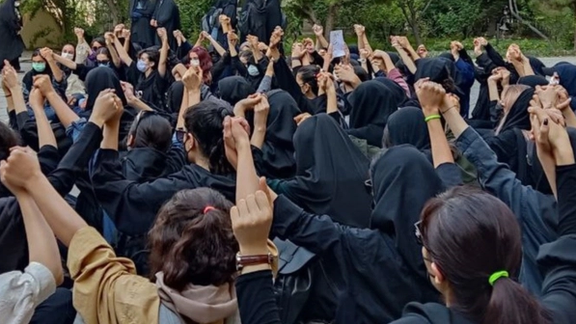
A protest rally by students
Iran’s Student Union Council says 435 students have been suspended or expelled following the recent protests across the country.
In a statement on Tuesday, the Council stated that "A significant number of students have received suspension and expulsion orders through an illegal process."
Iran's student movement gained momentum last year amid the "Woman, Life, Freedom" protests following the death in custody of Mahsa Amini. Universities were the scene of large anti-regime demonstrations.
According to the US-based Human Rights Activists News Agency (HRANA), 637 students from 144 universities have been arrested since mid-September.
Some sources inside Iran have also announced that the number of detained students is more than 700.
“All universities and higher education institutions under the coverage of the ministry of sciences, research and technology will not be obliged to offer educational, welfare and other services to the few students who do not abide by the laws and regulations of the universities in this regard,” the ministry said in the statement Monday.
An ever-increasing number of women and university students have been casting off their compulsory hijab since the beginning of the “Woman, Life, Freedom” movement seven months ago but hardliners are now taking a much more aggressive approach to punish and them and enforce the Islamic dress code.
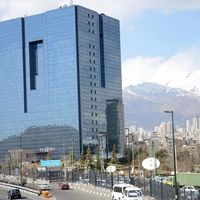
A long exposure photo of a highway in the Iranian capital Tehran
An academic in Iran has accused hardliners of pushing the country toward a civil war and has warned that Iranian should not get used to the smell of blood.
Political scientist Jahanbakhsh Mohebbinia told Rouydad24 website that "Iran is moving in a direction that it would be a surprise if there are no killings in a week or in a month, and this is a dangerous situation for the country."
Speaking about the reasons why the 2022 protests in Iran led to violence, Mohebbinia said Iranian society has been always living with violence in recent decades. For nearly half of a century no one in the government has paid any attention to what the people want and not only those in the government, but everyone else including judges, university lecturers, taxi drivers and so on have always wanted to exercise their authority on the people. This creates an accrued hatred that can lead to an explosion.
The protests showed that the Iranian nation is now reacting to the existing authoritarianism, Mohebbinia argued. The people think the government is playing games with them. The government on the other hand, ignores the world's realities and if we continue this route we are going to end up in a quagmire and collapse. And particularly when the economy collapses, you cannot do anything to save the country.
Political scientist Jahanbakhsh Mohebbinia
Mohebbinia added that when the government suppresses the protests, the wounds and hatred will be accrued, and the society will never see peace again. "I know that some people were even pushing the country toward a civil war." He advised that the government should hesitate when it thinks of another round of suppression because there is a potential for a civil war.
Many have been warning during recent weeks that the government's insistence on enforcing the compulsory hijab will inevitably bring two parts of the society at a dangerous logger head. He further charged that former US National Security Adviser John Bolton came up with the idea of a civil war in Iran when the government failed to handle the protests wisely. However, the accusation could be the academic's tactic to avoid a reaction by the government. As long as a pundit says something negative about the United States, he can secure a measure of protection for criticizing the government.
Mohebbinia said that the government should not approach the protests in Kurdistan or Khuzestan violently while even the capital Tehran has the potential for starting a civil war, similar to what happened in Yemen and Syria. He warned: "When you fan the fire of insecurity, economic crisis and cultural differences, the country could be divided into ten countries."
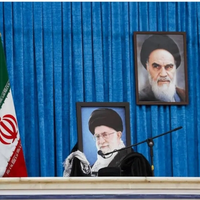
Reformist commentator Abbas Abdi
Meanwhile, reformist commentator Abbas Abdi warned that the regime’s zeal to enforce the hijab cannot succeed. "It is undoubtedly impossible to impose religious values by using force or introducing new laws."
Abdi said it is hard for the religious government in Iran to accept that that the people have turned away from religion during recent decades. Abdi probably did not want to mention that it was the mismanagement and inefficiency of the Islamic Republic as a religious government that has annoyed Iranians.
Abdi said that in the absence of real opinion surveys, the government does not admit that religion has lost its power. However, he said that observations show that fewer people in Iran go to mosques or fast during Ramadan or pay their religious 20 percent tax (Khoms). He added that fewer Iranians nowadays give religious names to their children compared even to 10 years ago.
Several students of Al-Zahra university without mandatory hijab in the capital Tehran
A week after the reopening of universities in the Iranian new year, authorities have once again begun arresting student activists refusing to wear hijab.
Security forces and plainclothes agents have been deployed at the entrance of the universities to prevent uncovered women from entering, including at Tehran University of Arts, where reports claim “veiled women covered them with shawls”.
The student organizations of the University of Arts called these measures "cheap, insulting and intolerable" adding that large numbers of female students were denied entry for refusing the mandatory hijab. Many girls at universities across the country have received warning texts as the country announced new surveillance measures to catch hijab rebels this week.
Students of Noshirvani University of Babol reported that the messages read: "It has been observed that your clothing in the university environment is not in accordance with the norm announced by the ministry of science and university."
In Al-Zahra University of Tehran, in addition to preventing the entry of students who refuse to observe the mandatory hijab, officials notified all students of the "dress code regulations" on the university portal.
Rules specifically stated that the hijab "must cover their hair and neck" and "short, tight, torn, and unbuttoned clothes and pants are not allowed".
While numbers of arrests are hard to verify in the secretive republic, more than 20,000 Iranians have been arrested since unrest began in September, according to rights group Human Rights Activists News Agency (HRANA).
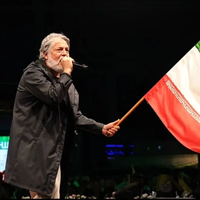
A group of prominent Iranian filmmakers with the family of detained rapper Toomaj Salehi on April 10, 2023
A group of prominent Iranian filmmakers Monday met with the family and lawyer of detained rapper Toomaj Salehi, to express solidarity with him.
According to reports on social media, Fatemeh Motamed-Arya, Jafar Panahi, and Mohammad Rasoulof also inquired about Salehi's health condition during their visit.
The meeting comes as concerns are mounting over the rapper’s condition in prison with human rights organizations demanding his immediate access to medical treatment.
Salehi, 33, an artist mostly known for his protest songs about Iran's social issues and injustice by the government, was arrested in October after joining street protests that had erupted across the country in September after the death in custody of Mahsa Amini.
His arrest came shortly after his interview with the Canadian Broadcasting Corporation, calling the regime “a mafia that is ready to kill the entire nation... in order to keep its power, money and weapons”.
The Center for Human Rights in Iran (CHRI) says the detained rapper needs urgent treatment, which cannot be provided in prison.
On Sunday, Iranian activists living in Montreal, Canada held a rally calling for support for the imprisoned protesters in Iran, including Toomaj Salehi.
The 33-year-old metalworker from Esfahan is one of dozens of members of the artistic and entertainment community who have been arrested since the protests began as the regime struggles to contain widespread discontent in the country.
Nurses and paramedical workers during a rally in the city of Mashhad
A group of nurses in Iran’s city of Qazvin gathered in front of the governor's office on Monday to protest inattention to their demands.
This protest rally was staged two days after a group of medical staff in the northeastern religious city of Mashhad also held a gathering to protest their poor living condition chanting, "We fought against Corona, we didn't get any support".
According to the Free Union of Iranian Workers the staff of Mashhad Medical Emergency also gathered in front of the Razavi Khorasan Governorate.
On the same day, Mashhad taxi drivers also protested outside the Taxi Organization, while news from the central city of Esfahan said farmers held a rally in front of the Water Department due to not receiving their water share.
On April 4, two hospitals in Babol in the north and central city of Arak witnessed a protest gathering of nurses who were angry about unpaid salaries.
Earlier, Secretary General of the Nursing Home announced in an interview with Didehban website that every month about 200 nurses emigrate from Iran.
Rising prices and economic hardship have led to repeated labor strikes and nationwide protests in the past few days.
The national currency has halved in value since September pushing prices for food and other necessities higher on top of 40-50-percent inflation in the past three years.
Parents gather at one of the schools targeted by poisonous gas attack on April 10, 2023.
While gassing continued in Iran’s schools Monday, Iranians want answers as to who is responsible.
Moineddin Saeedi, a member of the Iranian Parliament from Chabahar in Sistan and Baluchistan Province, criticized the police’s move to use traffic cameras to identify women removing hijab. He said, "If these cameras can detect crimes to such an extent, why are we currently facing the poisoning of girls?"
He added that the use of modern technological capabilities should be prioritized on issues such as delinquency, theft, pickpocketing, extortion and poisoning of female students.
Multiple girls’ schools in the capital Tehran, Karaj, Khoy and Orumiyeh (Urmia) in the West Azarbaijan province, and Sanandaj in Kordestan province were attacked by poisonous chemicals Monday, a week after the schools reopened following New Year holidays.
On Sunday, people in the Kurdish majority city of Saqqez -- the hometown of Mahsa Amini whose death in the hands of hijab enforcers ignited the current uprising – held a rally with security forces reportedly opening fire to disperse the protesters.
The demonstrations occurred after at least six girls’ schools in the city were attacked by the mysterious gas. On Monday, shop owners refused to open their businesses in protest against the regime’s inaction or possible involvement in the poisonings.
Closed shops in the city of Saqqez on April 10, 2023
Since last week, scores of schoolgirls have been taken to hospital with symptoms of gas poisoning, such as difficulty in breathing, nausea, headache and muscle cramps.
Shocked by the news of the death of a Kurdish teenager, Karo Pashabadi, who died as a result of an attack on a Tehran school, innumerable social media users have started asking questions about the fate of those who are being hospitalized due to the phenomena.
Sixteen-year-old Karo, from the city of Kamyaran in Kordestan province, was laid to rest in Pashavah village about a month after inhaling poisonous gas in a chemical attack on a school in Tehran, where he was living.
At least one other child, 11-year-old Fatemeh Razaei, has died in the attacks which began on November 30 and have taken place in hundreds of schools nationwide.
Close to 300 schools were targeted in the past Iranian year ending on March 20 without any apparent effort by the government to seriously pursue the perpetrators or explain to terrified parents and students what was happening in so many schools. Thousands of students have been affected, mostly girls, with hundreds more hospitalized with symptoms including respiratory distress, numbness in their limbs, heart palpitations, headaches, nausea, and vomiting.
Ordinary Iranians have been suspicious of the involvement of the regime itself, or religious extremists protected by the regime, calling the attacks “state terrorism,” although the regime has denied responsibility and even staged arrests of suspects after widespread protests. Popular belief is that such large-scale and coordinated attacks cannot happen without the green light of the regime’s authorities.
Rasool Nafisi, a professor of sociology of development at Strayer University in Virginia, told Iran International on Sunday that the hardliners of the regime are the ones who benefit from the spread of such attacks as an intimidation tactic. "The government intends to use chemical attacks in the future to quash the uprising of the people, especially women and girls," he added.
Referring to a burglary case in which the CCTV cameras captured the faces of the thieves, Mahmoud Sadeghi, a reformist politician and former lawmaker, said in a tweet on Sunday that "It’s more than two years that they (police) have taken the complete video of the theft from the apartment, in which the faces of the thieves can be clearly identified from several angles. They have not yet provided any information about the burglars or the lost property. Now they want to use smart equipment to file legal cases for people in the streets and alleys.”