Cleric In Iran Says Lack Of Hijab Is The ‘New Covid’
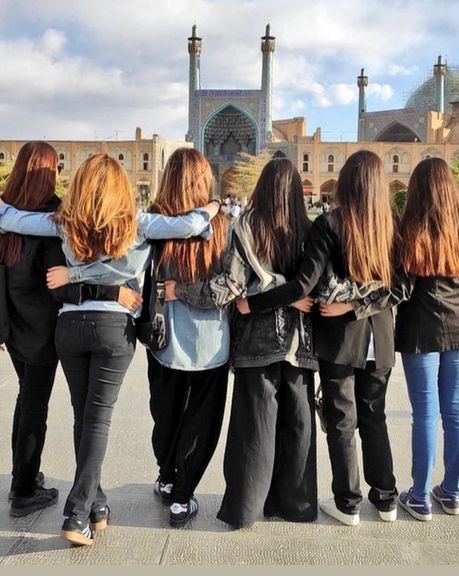
While Iran has been the scene of the protesters' bloody resistance against mandatory hijab in the past six months, religious authorities refuse to back down.
While Iran has been the scene of the protesters' bloody resistance against mandatory hijab in the past six months, religious authorities refuse to back down.
The issue remains a key flashpoint between the revolutionary tide and the regime’s leading clerics.
Mohsen Araki, a member of the Assembly of Experts said on Sunday that the Islamic Republic "will not allow improper hijab to spread in the Islamic society”, calling it a “new Covid” which ruins the society.
He said that in spite of a mass movement fighting against the mandatory Islamic head covering, “the prevalence of removing hijab means corruption”.
Resorting to the regime’s predictable rhetoric of foreign conspiracy theories, he, like all the Iranian spokespeople across government and theocrats, said it was foreign influence which had led to the current problems.
”The goal of the enemies is to destroy the independence of Iranian women, because a woman without hijab will not be independent and free and will be a person who is bound by others’ lust,” he said.
Meanwhile, Mohammad Reza Shahrokhi, the representative of Supreme Leader Ali Khamenei in Lorestan province reiterated the hijab law, inciting yet more violence as he urged the “revolutionary youths and clerics” to deal with the "norm breakers”.
Earlier, Hossein Jalali, one of the most radical parliamentarians in Iran, presented the details of a new plan for mandatory hijab, including fines of up to three billion tomans (nearly $60,000), saying that Ali Khamenei had approved the plan.



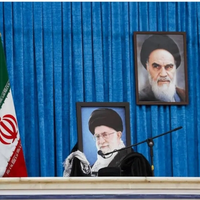
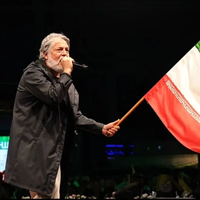

Police have shut down dozens of businesses in Iran for disrespecting fasting rules and issued warnings to many others amid the Iranian New Year (Nowruz) holidays.
A police official in Khuzestan Province said Saturday that fifty-five businesses, were shut down in Ahvaz, the capital of the province, for breaking the rules of fasting.
Colonel Mohammad-Hossein Mohammadvand said 229 businesses were inspected, 55 were shut down and 14 others received warnings that they will be shut down if they do not abide by the rules. Inspection will continue until the end of Ramadhan, he said. Similar inspections are carried out in other cities across the country.
During the fasting month which started March 23, restaurants, cafes and coffee shops, tea houses, ice-cream and juice bars have to remain closed until fasting ends around sunset. In the capital Tehran, this falls at around 18:35 at this time of year.
The rules apply to and are enforced in all public places including gyms, schools, universities and factories where cafeterias are closed throughout the month. Even eating inside cars is not allowed.
The fasting month of Ramadan in the Islamic lunar calendar has coincided with Nowrouz (Nowruz) and its holidays. Authorities have been urging people to report if they witness anyone violates fasting in public or hijab rules, by sending text messages to designated numbers or online.
A government-sponsored billboard in the city of Shiraz urges visitors to the city to report hijab, fasting disrespect to the authorities.
Those taking trips during Ramadan are not required to fast if they travel farther than 45km from home and intend to return at least ten days later, according to Sharia. Restaurants situated inside hotels, on transit roads or airports and train stations can apply for special permits to cater to the needs of travelers but they must completely cover their windows so that patrons eating inside cannot be seen from the outside.
“Serving kebabs and other grilled food is prohibited before iftar,” regulations announced by Tehran police Wednesday said while stressing that the number of permits issued in any given neighborhood or city should be low enough not to blur “the difference between this month and ordinary months”.
The religious establishment and its supporters say people should not eat in public during the fasting month “out of respect for those who fast” but many among the non-fasting citizens believe this is unfair.
“You are fasting, Okay, but why should I not be able to eat?” a tweeter protested. “The [real] reason for keeping restaurants closed is not to allow the huge number of those who don’t fast to be revealed.”
Another tweet protested that food businesses must suffer so that the faith of the religious is not threatened with temptation to eat. “You morons, you are fasting so that you feel and understand what it means [not to be able to eat] to the poor!”
Shiite clerics have even coined a term for the acts of eating, drinking, or smoking in public during the fasting hours, which could very loosely be translated into “showing off in public that one is not fasting”. This ‘crime’ is punishable by ten to sixty days of prison or up to 74 lashes according to article 638 of Iran's Islamic Penal Code.
There are similar rules and cash fines and prison terms for eating in public during Ramadan in most Islamic countries including Qatar, Iraq, Jordan, Saudi Arabia, and the United Arab Emirates.
The Central Bank of Iran announced Sunday the annual inflation rate stands at 46.5 percent but did not mention the point-to-point inflation of the last month of the Iranian year.
Although the official inflation rate announced by the authorities is usually less than what it seems in the market, even a 46.5-percent inflation is among the highest in Iran in more than 30 years.
The bank did not disclose the point-to-point inflation for the last Iranian calendar month, which ended on March 21, but it provided the price index of the month, from which the inflation can be extracted. The price index for the month was 794.3, which means a 64-percent point-to-point inflation rate compared to the corresponding period of the previous year at 484.6. It is the second time Iran recorded such a figure since World War II.
The latest CBI report also lacks the price index changes of different groups of goods and services, unlike the usual procedure. Moreover, the Statistical Center of Iran (SCI) has not published its inflation report for the past month. SCI has been the only government entity regularly announcing the inflation rate in the past four years.
SCI said on Sunday that the reason behind the delay is the process of changing the “base year” from the year 1395 to 1400, which ended on March 20, 2022. A base year is used for comparison in the measure of a business activity or economic or financial index. It can also describe the starting point from a point of growth or a baseline for calculating financial transactions.
"Due to the changes in the content of the market basket over time, according to international recommendations, it is necessary to change the base year at certain time intervals,” the Statistical Center of Iran said.
Considering the devaluation of Iran’s currency rial from 260,000 against one dollar to about 500,000 this month, the inflation rate is expected to hit new highs in coming months.
The inflation rate factors in numerous commodities and services but the one most important for Iranians is increasing food prices, with some categories doubling or tripling in the past 12 months. Official figures show there was a sharp increase in food prices and most items witnessed a more-than 50 price inflation.
The Islamic Republic has been struggling with high inflation since 2019, but the raging inflation in the past Iranian year which ends on March 20, was seriously different from previous years. Last May, the government eliminated an annual food import subsidy of at least $10 billion, which immediately led to steep price increases.
This was followed by a fall in the value of the national currency, making imports more expensive for the population. The government called its decision to scrap the food subsidy “economic surgery,” but it had no other plans to control prices. Immediately following the announcement, food prices jumped, with some items doubling or tripling in a matter of hours. Pasta is 137 percent more expensive than 12 months ago, while meat prices went up by 76 percent and milk by 80 percent. According to SCI, in some months the inflation rate for food and beverages hit 87%.
In his New Year speech on March 21, Supreme Leader Ali Khamenei dubbed the new year as “the year of bringing inflation under control”, a promise also repeated by President Ebrahim Raisi, but reminiscent of similar slogans in previous years.
Several sources have reported the death of a protester after he was released following a short detention by the Islamic Republic security forces.
A twitter account named Dadban, which is active about human right issues, wrote Saturday that Arash Forouzandeh from the southern city of Abadan, was arrested on March 10 in Tehran.
According to Dadban, Forouzandeh was detained by plainclothes agents and was released after several hours of interrogation.
"During the interrogation, they gave him a bottle of water and he drank it, but he suffered severe poisoning after that, which forced him to go to hospital several times. Finally, he died on March 19 due to the same poisoning," tweeted Dadban.
Journalist, Saeed Hafezi, citing several friends of Forouzandeh and the medical staff of Sina and Shariati hospitals called his suspicious death a "murder".
Since protests began, regime agents have arrested nearly 20,000 Iranians during or between rounds of protests. Many have been released but a few died apparently with no certain reason.
In November, Arshia Emamgholizadeh, 16, was arrested in East Azarbaijan province for tossing the turban of a cleric. He was kept in prison for ten days and released on bail. He committed suicide two days later. He had told his friends that prison authorities gave them some pills to swallow every night, as well as torturing them.
Some doctors believe that whatever drug was given to some prisoners addicted them to a degree that after being released they experienced severe depression.
A Twitter account dedicated to news about protests in Iran has published a large batch of harrowing photos and videos of people shot or killed by the regime.
The activist account, '1500 Tasvir' which runs popular Instagram and Twitter accounts, started uploading the images on Saturday, asking its followers to temporarily unfollow or mute notifications of the channel if they cannot tolerate viewing such acts of brutality.
“This page is going to publish 'very painful’ content to be recorded in history," the account said, adding that the photos and videos are gathered from all over the country.
It did not provide names, dates or locations for the photos, which mainly are from injuries that protesters sustained from shotgun pellets as well as bruises and fractures caused after being beaten by the security forces. Most of the photos and videos are so graphic that cannot be republished by Iran International.
Although some of the photos and videos were deleted by twitter, the remaining ones are enough to see a pattern of the regime’s systematic targeting of faces and genitals of the demonstrators.
In addition to photos and videos of the injuries, the batch includes dozens of x-ray images and CT scans of pellets and slugs in the head, neck, chest and legs of the protestors. The Islamic Republic has killed many protesters with rubber bullets and metal pellets and blinded so many others.
The regime’s security forces have been extensively using cartridges of shotshell loaded with numerous small balls or birdshots, or medium-sized buckshots as well as single large solid projectiles known as a slug to quash the nationwide protests, ignited by the death in custody of 22-year-old Mahsa Amini in September 2022.
Late in November 2022, dozens of ophthalmologists issued a joint letter warning against the use of shotgun ‘birdshots’ and other projectiles by Iran’s security forces that have blinded over 500 protesters since mid-September. According to them, a large number of victims were taken to medical centers hit by rubber bullets and metal pellets as well as paintball bullets in their eyes, leading to loss of eyesight in one or both eyes.
In an article on November 19, The New York Times cited ophthalmologists of three hospitals in the capital Tehran – namely Farabi, Rasoul Akram and Labbafinezhad -- and several doctors in Kordestan province, as saying that about 580 protesters suffered serious eye injuries during the regime’s crackdown.
The Islamic Republic, which had been previously condemned for blinding protesters in the streets, intensified the use of guns, including military weapons against unarmed protesters. However, young Iranians who lost one or both eyes say they do not regret having protested against the regime.
Prominent Iranian opposition figures who have joined hands to create a united front against the Islamic Republic held another event reiterating determination to end the regime.
Exiled Prince Reza Pahlavi, Canada-based activist Hamed Esmaeilion, whose daughter and wife were killed in the shooting down of Flight PS752 by Iran’s Revolutionary Guard in 2020, as well as US-based, journalist and women’s rights activist Masih Alinejad, actress and activist Nazanin Boniadi and Secretary General of Komala Iranian Kurdish party Abdullah Mohtadi held a panel in Toronto, Canada, on Saturday to discuss Iran's democracy movement.
They also delivered speeches during the street events held on the sidelines of the meeting, titled “Unity; A Bridge To Freedom.”
The group, which calls itself the Alliance for Democracy and Freedom in Iran, announced its existence in a February event at Georgetown University's Institute for Women, Peace and Security (GIWPS) -- titled ‘The Future of Iran’s Democracy Movement' and issued a Charter of Solidarity and Alliance for Freedom (Mahsa Charter) earlier in March.
Defending the contents of the Mahsa Charter, Mohtadi talked about “the spirit of pluralism” as a necessity to overthrow the Islamic Republic. He pointed out that the charter is based on minimum common grounds to defend the rights of minorities and ethnic groups, which paves the way for a transition from the Islamic Republic. He noted that the united opposition is trying to have a coalition as inclusive as possible.
Prince Pahlavi reiterated his ideas for a democratic Iran, stressing the need for joint efforts to hold a free election in the country. "The first rule of the democratic system is to respect the ballot box,” he said.
"I firmly believe in the power of the people. Let us not underestimate the power of public opinion, because it creates the necessary motivation to feel responsible and accountable," the exiled prince said.
He said the Iranians inside the country as well as the expatriates should prove to the world that the overthrow of the regime would not leave a power vacuum in the country. “Iran will not become Syria, because we have so many capable and efficient experts inside and outside the country."
He also talked about supporting the labor strikes as the most important factor to put pressure on the regime from inside Iran, adding that experts are examining ways to create a fund to support strikes and create channels to transfer money to the striking workers.
During his speech to a crowd of Iranians who had gathered outside the venue, Pahlavi greeted Nowruz – the Persian new year that started on March 21 – expressing hope that the next Nowruz celebrations would be held in Iran, free of the regime. "We hope this will be the last Nowruz in exile and we Iranians can celebrate freedom in our own country."
Alinejad, who is known for her frank and practical views about the regime, also defended the Mahsa Charter, acknowledging that a lot of people criticized its content for some phrases that seemed not to reaffirm the territorial integrity of Iran. Emphasizing that "the most separatist person" in Iran is Supreme Leader Ali Khamenei, she said, "We have gathered together based on the minimums and we are at the beginning of a union to show a more pluralistic face of Iran."
"None of the members of the Alliance for Democracy and Freedom in Iran claim a 100-percent agreement, but we understand the power of solidarity," she said, accusing the Islamic Republic of sowing discord among the opposition to ensure its survival. "Islamic Republic has survived by separating us and turning us into wandering islands,” she added, noting that the regime has labeled Kurds and Baluchis of separatism, but Kordestan and Sistan-Baluchestan provinces have become symbols of unity representing the voice of the Iranian nation.
Esmaeilion talked about mechanisms to contact representatives of other groups and ethnicities in the united opposition front, highlighting that “this revolution will bear fruit with unity and hope.” "There is no room for despair,” he noted.
Boniadi addressed the artists and celebrities who have stood against the regime, saying that “you are our role model; we are with you, and we fight for you."