US Envoy Reiterates Nuclear Talks With Iran Not Priority

The United States has once again signaled that reviving the Iran nuclear deal is no longer a priority, and instead it will focus on Iranian weapons supplies to Russia.
The United States has once again signaled that reviving the Iran nuclear deal is no longer a priority, and instead it will focus on Iranian weapons supplies to Russia.
US Special Envoy for Iran Robert Malley said Saturday that “Iran is not interested in a deal and we’re focused on other things,” and added “Right now we can make a difference in trying to deter and disrupt the provision of weapons to Russia and trying to support the fundamental aspirations of the Iranian people.”
Iran began supplying military drones to Russia that were used against civilian infrastructure in parallel with Russian missiles that brought destruction to the country’s energy network at the onset of winter.
There has been talk of Iran supplying missiles and other weapons to its northern ally, while nuclear talks with the West that lasted 18 months came to an impasse in early September.
The Biden Administration in the talks tried to revive the JCPOA, abandoned by former President Donald Trump in 2018, but the diplomatic effort so far has proven futile as Iran kept shifting its position in the negotiations. Tehran in the meantime is ramping up its uranium enrichment.
“What’s the point?” Malley said about the talks. “Why should we focus on it if Iran comes back with demands that are unacceptable? At this point we’re not going to focus on the nuclear deal because we can’t sort of keep going back and then being played.”
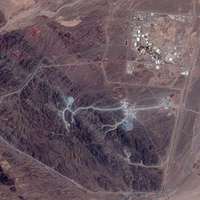

A construction ceremony took place Saturday for the long-promised Darkhovin nuclear power plant, around 70km south of Ahvaz, provincial capital of Khuzestan.
Mohammad Eslami, head of the Atomic Energy Agency of Iran (AEOI) and a vice-president, told journalists the project, known also as the ‘Kanun’ plant due to its proximity to the river, was “important and necessary” for the south west of Iran. He said work was beginning with preparing the site for construction of a 300-megawatt (MW) plant.
Plans for Darkhovin go back to days before the 1979 Revolution, when Shah Reza Pahlavi agreed with France the construction of two 910-MW reactors on the site. In 1992 then president Akbar Hashemi Rafsanjani on a visit to Beijing agreed a plan with China, against United States objections, to sell two 300-MW reactors for Darkhovin, but the Chinese subsequently withdrew, apparently due to continuing pressure from Washington.
Iran did sign up Zurich-based ABB as a consultant, but the Swiss-Swedish robotics and power multinational withdrew more than once before finally quitting in 2018 as the US introduced ‘maximum pressure’ sanctions threatening punitive action against any entity having banking dealings with Iran.
Eslami, making an oblique reference to the apparent failings of “foreigners,” said Saturday Iran would itself construct the $2-billion plant, using a pressurized water reactor (PWR), over eight years on 59 hectares, as part of a wider plan to build “local” plants to power Iran’s industries.
It is not clear if Iran has the technology to independently complete a nuclear reactor. It took Russia decades to finish the Bushehr reactor and Iran was completely dependent on Moscow.
The $2 billion price tag might also be too high and not make sense in comparison to building green renewable sources. For example, Saudi Arabia’s ambitious green energy projects are expected to cost a total of $10 billion with both solar and wind power by 2026 that can provide 50 percent of its electricity needs.
The 300 megawatt that the $2 billion project promises to provide is a tiny contribution to Iran’s ever-increasing consumption of nearly 70,000 megawatts.
The reactor itself has been billed as the country’s first one to be indigenously designed and built. In line with the stress on ‘self-reliance’ beloved of the Supreme Leader Ali Khamenei, the AEOI chief stressed the role of Iranian companies in manufacturing the plant’s equipment, including cooling pumps.
Russia has long been in talks with Tehran over new units for Iran’s sole nuclear power station at Bushehr, southern Iran, which began operating in 2011 but has had a checkered performance, producing only 1.25 percent of the country’s electricity in 2021-22. Iran’s stated aim is to produce 10,000 MW of electricity from atomic plants, which if attained would be around a third of the current output today from nuclear power in Japan and roughly equivalent to that of the United Kingdom.
While PWRs are the most common nuclear power plants across the world, any atomic work by Iran is deemed suspicious by the United States, which has twice this year sponsored resolutions critical of Iran at the governing board of the International Atomic Energy Agency (IAEA), the United Nations agency tasked with verifying the peaceful nature of nuclear programs.
The United Nations nuclear head said Friday his discussions with Tehran over its atomic program lacked “the momentum” needed to get “back to life.”
Speaking to the government-sponsored Mediterranean Dialogues conference in Rome, Rafael Mariano Grossi, director-general of the International Atomic Energy Agency (IAEA), expressed concern at lack of progress in discussions over uranium traces found in ‘non-nuclear’ sites and at Tehran’s recent decision to enrich uranium to 60 percent at a second atomic facility.
The IAEA reported in early November that Iran had agreed to meet during the month to discuss the uranium traces, which the agency discovered in 2021, but the meetings have not taken place. Grossi signaled back in May that he found answers given by Iran unsatisfactory. In June and mid-November, the 35-state IAEA board of governors passed resolutions censoring Tehran. “We don’t seem to be seeing eye-to-eye with Iran over their obligations to the IAEA,” Grossi told the conference.
Tehran has argued that the discovery of uranium traces, which relate to work carried out before 2003, came only after allegations made by Israel in 2018. But Grossi has said that adequate explanations are required under Tehran’s basic ‘safeguards’ commitments under the Nuclear Non-Proliferation Treaty (NPT) particularly to establish what subsequently happened to the uranium.
Iran has also argued that IAEA questioning into the uranium traces should be shelved as part of reviving the 2015 Iran nuclear agreement, the JCPOA (Joint Comprehensive Plan of Action). Talks beginning early 2021 to restore the JCPOA, which the US left in 2018, reached stalemate in the summer.
Grossi said Friday he was “still hopeful” Tehran would satisfy the agency over the uranium traces. “We need to put our relationship back on track,” he argued.
The IAEA has charted in successive reports the expanding Iranian program, which began to exceed JCPOA limits in 2019, the year after the US left the JCPOA, which curbed Iran’s nuclear program in return for easing international sanctions.
‘Tripling capacity’
Grossi said that Iran’s recent announcement over enriching to 60 percent at Fordow, in addition to the 60-percent enrichment that began at the Natanz site in 2021, was “tripling, not doubling…their capacity to enrich uranium at 60 percent.” This brought Iran “very close to military level, which is 90 percent,” Grossi added, referring to the purity usually required for an atomic weapon. Under the JCPOA, Iran enriched only to 3.67 percent, and has also increased the efficiency and speed of enriching by using more advanced centrifuges that were barred under the 2015 agreement.
The IAEA director-general has also expressed consistent concern at Iran limiting agency monitoring to that required by the NPT. Tehran began reducing access in early 2021 in response to the killing of a scientist and attacks on sites, both widely attributed to Israel. “We need to go, we need to verify,” Grossi said Friday.
US Special Envoy for Iran Robert Malley says President Joe Biden is prepared for a military option to prevent Iran from acquiring a nuclear weapon in case sanctions and diplomacy fail.
During an interview with Foreign Policy’s podcast Playlist released on Wednesday, Malley said that the US and Iran came very close to reaching an agreement to revive the 2015 nuclear deal – or the Joint Comprehensive Plan of Action (JCPOA) -- many times in the past two years, the latest of which was in August, but each time Iran stepped back and came up with new demands that often had nothing to do with the nuclear talks.
“We'll have the sanctions, pressure and diplomacy. If none of that works, the President has said, and, as a last resort, he will agree to a military option because if that’s what it takes to stop Iran from acquiring a nuclear weapon, that’s what will happen. But we’re not there," he said.
Defending the Biden administration’s efforts to keep diplomacy as an option and criticizing the Trump administration for its maximum-pressure campaign, he said, “We owe it to ourselves to have an honest examination of how sanctions work and how they don’t work.”
The Iranian system as a whole is divided, and not yet concluded whether they really want to come back to the deal, and so each time Tehran was presented with a deal, even about the deals that were considered fair by other parties such as Russia and China, Iran was the one that walked back.
“Iran has rejected countless opportunities to come back to the deal... We are prepared for a world with the JCPOA and without the JCPOA. We’ve continued to put pressure on Iran... We made sure there are sanctions for their support for terrorism, their human rights violations, for their ballistic missile program and for their nuclear program,” he added. “The JCPOA is not on the agenda because of Iran’s position, and we’re continuing with our policy to respond to all of Iran’s destabilizing activities.”
Malley also said reviving the deal would be dead when the non-proliferation benefits of the deal do not justify or warrant the sanctions relief that the US is ready to offer, emphasizing that the US focus and energy are not on the deal. Currently, the focus is on what is happening in Iran and its support for the Russian invasion of Ukraine.
He also talked about many troubling issues emanating from Iran, saying the US supports aspirations of the Iranian people to achieve the fundamental rights and freedoms that all peoples across the globe should enjoy. “We are mobilizing international attention, putting the spotlight on what’s happening in Iran. It’s very important that the world know at a time when the Iranian regime is trying to hide what’s happening and to distort what’s happening,” he said.
The administration has also put the spotlight on developments in Iran by sanctioning those up and down the chain who are violating the basic rights of the Iranian people, “whether it’s a top leadership or whether it’s an anonymous person in a prison,” Malley noted. “The world should know who is behind that repression.”
He also said Washington is pushing for measures against the Islamic Republic in international bodies, mentioning the resolution at the UN Human Rights Council and the move to kick out Iran from the UN Commission on the Status of Women. “It’s an aberration, a complete anomaly, that Iran would be on the commission that is supposed to defend the rights of women when they are repressing them,” he added.
The US will continue to voice its support for the Iranians who are protesting for their rights, he reiterated, saying that “it's an extraordinary page in Iran’s history that’s being written right now.”
Praising “the courage, the determination, the persistence and the creativity of Iranians, particularly women and girls,” Malley said “we’re not going to be the authors; we can be there to express support for the fundamental rights of Iranians. This page will be written by Iranians themselves. It won’t be written in Washington, in London or anywhere around the globe other than Iran.”
Also on Wednesday, The US secretary of state says that the Islamic Republic has a deeply incorrect understanding of its people and is trying to blame others for the current protests.
Recently re-elected Israeli Prime Minister Benjamin Netanyahu says the nuclear deal with Iran is dead because Tehran has shown its real face to the world by its brutal crackdown on protesters.
Netanyahu, who was speaking to Fox News DigitalWednesday, added that the end of nuclear talks with the regime has been achieved by the people of Iran themselves as they clearly say they do not want clerics.
“That's thanks to the extraordinarily brave Iranian women and men who took to the streets – who take to the streets – against this vicious, murderous, and brutal regime. And I think people ask themselves, ‘Do we want the ayatollahs, who chant death to America, to have the weapons of mass death and the ballistic missiles to deliver them to any part on Earth?’ and the answer is of course not,” explained Likud party chief.
He further added that the protests are exposing the leadership's vulnerability, stressing that “it also highlights the fact that they’re really weak – that they govern only with basically the threat of murder, and the people are showing remarkable resilience.”
Netanyahu went on to say that the political spectrum is more united against Iran now to keep the clerical regime from getting a nuclear weapon.
To do this, he noted, both “crippling sanctions” and a “military threat” are needed, and Israel is ready to act regardless of Washington’s approval, although there is more “forward-leaning American position on this matter.”
The commander of Iran’s Revolutionary Guard says the Supreme Leader wants to reach a point where having a nuclear deal with the West will make no difference for Iran.
Speaking to a large crowd on Thursday, General Hossein Salami also tried to present the IRGC and its paramilitary Basij as “servants of the people,” amid a popular uprising in which security forces have so far killed around 450 civilians since mid-September.
Salami repeated regime slogans about “independence” and “self-sufficiency” and said, Khamenei “has turned a few issues into a matter of pride that America cannot swallow. One of these is his strong stand on the issue of JCPOA, and it has reached a stage when the acceptance or rejection of the JCPOA has no importance for Iran.”
After 18 months of indirect negotiations by the Biden Administration to revive the 2015 nuclear accord known as the JCPOA, talks broke down in early September, when the US rejected excessive demands by Iran.
Salami also praised the 83-year-old authoritarian ruler for spreading the influence of the Islamic Republic to other countries, adding that “enemies” cannot accept “this development.”
The Islamic regime uses the term “enemies” to refer to the US, Israel, Saudi Arabia and lately Western Europe, as many countries have criticized its use of deadly violence against protesters.
Many countries raise the issue of Tehran’s “malign activities” in the Middle East, by financially and militarily building a network of militant groups in Iraq, Syria, Lebanon, Yemen and elsewhere.
The IRGC commander then went on repeating accusations made by Khamenei and other officials in the past two months against “enemies” for plotting to destroy Iran. At the same time, he claimed that Iran has become a “powerful force” and “the enemy is fleeing from the Islamic world.”
For this reason, he claimed, the United States is fomenting unrest in Iran, but the Iranian people “are standing up to America.”
In fact, thousands of Iranians across the country celebrated the defeat of Iran’s team by the US side in the World Cup on Tuesday, seeing the loss as a defeat for the regime that tries to use sports to strengthen its image.
The United States has repeatedly dismissed accusations that it has anything to do with the anti-regime protests. Secretary of State Antony Blinken said Wednesday that one of the “profound mistakes” that the “regime makes is in accusing the United States or any other country” of somehow being “responsible for, instigating what’s happening. That’s not at all the case. And to misunderstand their own people is at the heart of the problem that they’re facing.”
But the Biden Administration has also voiced support for Iranians to have the right to peacefully protest and officials have met with Iranian activists to underline that policy.
Blinken in a separate interview with NBC also reiterated the administration’s policy, saying “the most important thing that we can do is first to speak out very clearly ourselves in support of the people’s right to protest peacefully, to make their views known, and as I said, to take what steps we can take to go after those who are actually oppressing those rights, including through sanctions.”
Iranians mainly blame Khamenei, the Revolutionary Guard and its Basij paramilitaries for deadly use of violence against protesters. Many have reached the point that they will accept nothing short of a complete regime change and the establishment of a secular, democratic political system.