Iran Offers Nothing New In Latest Meeting, IAEA Says
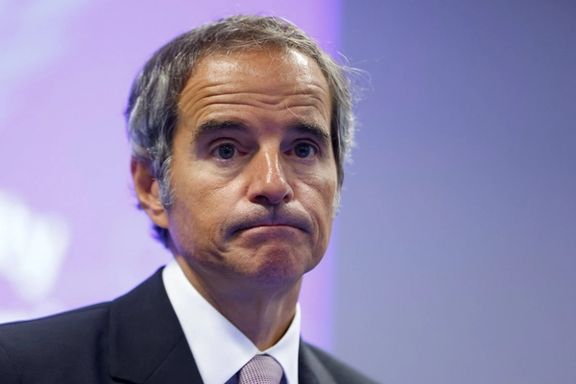
The head of the UN’s nuclear watchdog said Wednesday Iran did not offer anything new during a recent meeting in Vienna about its nuclear program, but added that talks would continue.
The head of the UN’s nuclear watchdog said Wednesday Iran did not offer anything new during a recent meeting in Vienna about its nuclear program, but added that talks would continue.
Tehran had announced on November 2 that it was sending a delegation to Vienna to try to narrow differences with the International Atomic Energy Agency (IAEA), which is trying to keep tabs on Iran’s nuclear activity.
“So, they didn't bring anything new,” IAEA Director General Rafael Mariano Grossi told Reuters on the sidelines of the COP27 climate conference in Egypt. “We are going to meet again at a technical level in Iran in a couple of weeks.”
Iran is seeking closure of the IAEA's investigation of its nuclear activities, among other guarantees, in order to revive the country's 2015 nuclear deal with world powers.
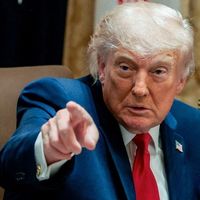
That pact had restrained Iran’s nuclear program in exchange for relief from US, EU and UN economic sanctions, but former US President Donald Trump withdrew from it in 2018, demanding a stronger deal.
Indirect talks between Tehran and President Joe Biden's administration on reviving the largely hollowed-out deal are stalled.
“It is no secret that we haven't been able to register some tangible elements," Grossi said.
"We have an opportunity to re-engage to continue our work, but this is going to be happening after my reports’ release,” he added, referring to the IAEA’s upcoming quarterly reports on Iran due next week.
Reporting by Reuters



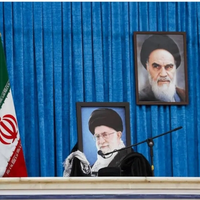
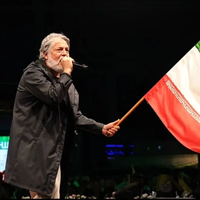

The US State Department has condemned Iran’s celebration of the 1979 embassy hostage taking and its claims that the US is still working on a nuclear deal.
Iran’s foreign minister Hossein Amir-Abdollahian repeated accusations that the United States is encouraging “violence and terror” in popular protests across the country. In a tweet Thursday, he also claimed that Washington is still trying to reach a nuclear agreement.
Iran routinely accuses "enemies" for most of its problems and has presented no evidence of any foreign power being involved in its antigovernment protests.
Since August when a last-ditch effort by the European Union to bridge gaps in 18 months of talks to revive the 2015 nuclear deal, the US has said that Iran is not serious about an agreement, putting forth demands outside the scope of the accord known as JCPOA.
The US official dismissed Amir-Abdollahian’s claim, saying, “We have been clear that by adopting positions inconsistent with a deal, Iran has taken the JCPOA off the agenda, and that we have sent no messages otherwise. Iran can repeat the claim as often as they want. We have no need to comment further on it.”
The official also condemned Iran’s celebration of the anniversary of the kidnapping of American diplomats as repugnant. “That they in the same breath accuse anyone else of terrorism is doubly so,” the official said.
In November 1979, a group of leftist students backed by the new revolutionary government occupied the US embassy in Tehran and took 54 Americans hostage for 444 days. Iran has never condemned the attack that ruptured bilateral relations.
With the reported use of Iranian drones by Russia, the United States and its European allies face the question of reviving international sanctions by ‘snapback’.
What is ‘snapback,’ and why does it matter?
The 2015 Iran nuclear agreement, the JCPOA (Joint Comprehensive Plan of Action), lifted international sanctions against Iran in return for strict limits on the Iranian nuclear program. Under the terms of the JCPOA, the sanctions could ‘snapback’ if Iran violated the agreement.
Is Iran violating the agreement?
Iran began breaching JCPOA limits – for example on the level of uranium enrichment, and with the number and kind of centrifuges in use – in 2019, the year after President Donald Trump withdrew the US from the 2015 agreement and imposed ‘maximum pressure’ sanction.
So why is ‘snapback’ being raised now?
It has come up because France, Germany, the United States and the United Kingdom have told the United Nations that Iran’s reported supply of military drones to Russia for use in Ukraine violates UN Security Council Resolution 2231, by which the council endorsed the JCPOA.
UNSC Resolution 2231 contained a clause that up to October 2023 prior UNSC approval would be needed for the transfer to and from Iran of certain military equipment and weapons. So, the US is arguing that Iran’s supply of drones violates that clause – and this has raised the possibility of snapback, under which multilateral sanctions would come back onto Tehran.
Would the drone supply for sure violate Resolution 2231?
That is yet to be decided. Snapback relates to “significant non-performance of commitments.” Resolution 2231 refers to a 79-page document submitted at the time by the US – S/2015/546 – that listed categories of weapons needing prior UNSC approval. S/2015/546 refers to drones “capable of delivering at least a 50kg payload to a range of at least 300km,” and while Iranian-made Shahed drones can have a range of over 1,000km they carry 40kg of explosives. There would be a clearer violation if Iran transferred Fateh-110 and Zulfiqar missiles, which would meet the criteria.
How would ‘snapback’ work?
Any party to the JCPOA can move snapback. If after 30 days, the issue is not resolved, then UN sanctions would come back into effect. For the issue to be resolved, a UNSC member would need to move that sanctions not come back into play, and this could be vetoed by any other member.
This was the basis for the claims from President Barack Obama and Secretary of State John Kerry at the time the JCPOA was signed that Russia, or China, could not stop snapback. It’s as if the veto power is reversed.
But can the US move ‘snapback’? Didn’t it leave the JCPOA?
When the Trump administration tried to move snapback in 2020, other JCPOA members, including the three European signatories (France, Germany, and the UK) said it couldn’t because it had left the agreement.
But this interpretation has been challenged. Gabriel Noronha, an Iran advisor 2019-21 in the Trump administration, argued in tweets this week that the US could move snapback. Noronha’s tweets cited Obama, Kerry, and then vice-president Biden.
What would be the practical effect of snapback?
Some say the ‘bark’ would be worse than the ‘bite.’ For Europe to reimpose sanctions on Iran would make little difference given its trade has massively decreased under US ‘maximum pressure,’ under which any third party can be sanctioned by the US for any Iran dealings. Iran is already unable to access significant funds frozen around the world. Russia and China might just argue that the US undermined the JCPOA and is in no position to cite it as a justification for any actions.
What are US intentions?
In a press briefing Tuesday, State Department Spokesman Ned Price was unenthusiastic over snapback, although his references to a possible Russian veto were speedily rebutted by Noronha. Price referred to other means of restricting Iran-Russia links, including recent US sanctions on Iranian defense companies and generals.
It may be Washington is not so concerned over Iranian-made drones – which are useful to Russia but less effective in the conflict than the publicity might suggest – and that its greater worry is the possible transfer of missiles. US strategy, as explained by Price, is to run down Russia’s military capacities, in the hope either of Moscow’s defeat or a negotiated settlement. In October US, France, Germany and the UK wrote a letter to the UN secretariat asking for an investigation of the alleged Iranian drone supply – and that’s where things stand at present.
How is the Ukraine war impinging on talks to revive the JCPOA?
Another reason for the US not moving snapback might be the logic, inherent in the JCPOA, that the nuclear file can be kept largely separate from other issues. Given critics of the agreement argue such separation is difficult, if not impossible, the Biden administration is saying it can take stringent measures against Iran – over missiles, or treatment of protests – while continuing its efforts to revive the JCPOA. Only time will tell if they are right.
As chances of reviving the 2015 nuclear deal remain dim, Iran's foreign minister says Tehran will send a delegation to Vienna in the coming days for meetings with IAEA officials.
Hossein Amir-Abdollahian said Wednesday that the aim of the visit is to try to narrow differences with the UN nuclear watchdog. "We will send a delegation from Iran to Vienna in the coming days to start talks with the International Atomic Energy Agency (IAEA) and we hope to resolve remaining issues based on what we have agreed in the past days," he said.
He added that he would speak to the European Union’s foreign policy chief Josep Borrell, to discuss efforts to revive the JCPOA, the Joint Comprehensive Plan of Action.
In an interview published on Wednesday, Bijan Djir-Sarai, the general secretary of Germany’s liberal Free Democrats (FDP) -- a junior partner in the ruling coalition – said the deal with world powers "has no future and is not in line with reality." He noted that continuing talks would mean "negotiating with an inhuman regime that has completely rejected by its own people and has no legitimacy whatsoever".
On October 18, United States’ officials reiterated their support for the ongoing protests in Iran with Special Envoy Robert Malley saying that the talks to revive the nuclear deal are no longer on the agenda. Malley said on October 31, the Biden administration is not going to "waste time" on trying to revive the nuclear deal at this time considering Tehran's crackdown on protesters, Iranian support for Russia's war in Ukraine, and Iran's positions on its nuclear program.
While new British prime minister Rishi Sunak is expected to concentrate on pressing domestic issues, he may change emphasis in Middle East policy.
A member of parliament since only 2015, Sunak has suggested the 2015 Iran nuclear agreement – the JCPOA, Joint Comprehensive Plan of Action – should be strengthened, that Britain should consider moving its Israel embassy to Jerusalem, and that it should strengthen links with Arab monarchies in the Persian Gulf.
Reports of Sunak’s views of Iran come partly from close allies. Former defense secretary Liam Fox told the National newspaper in August said that Sunak was “more hawkish” than the foreign office.
“He would want to see maximum sanctions put on to see whether Iran could be persuaded or forced into a wider agreement that goes beyond just the nuclear program,” Fox said.“He believes the JCPOA doesn’t actually stop Iran's nuclear program, it merely delays it...”
Fox did not explain whether Sunak saw a wider agreement – sometimes called ‘JCPOA+’ and covering security issues like Iran’s ballistic missiles – as a next step from a revived JCPOA or rather as an alternative.
Another ally, Conservative member of parliament Theresa Villiers wrote in the London-based Jewish News in August that Sunak had told her of “his concern that the UK government has not taken the threat posed by Iran seriously enough.”
Sunak has clearly expressed desire for tight relations with the Arab Gulf monarchies and for encouraging more to follow Bahrain and the United Arab Emirates in ‘normalizing’ tries with Israel despite the absence of a Palestinian state. “The UK is in a strong position to leverage its historic relationships with other Gulf states to widen the accords and I would like to see UK diplomats place a greater focus on this,” Sunak told the Jewish Chronicle in August.
Sunak told the Conservative Friends of Israel, also in August, that the UK should consider moving its embassy in recognition of Jerusalem as Israel’s capital. This has been done only by the Guatemala, Honduras, Kosovo, and the United States. Other states, and the European Union, say this pre-empts settlement over Palestinian statehood.
Sunak has also spoken out against rights organizations, including Amnesty International and Human Rights Watch describing Israeli occupation ‘apartheid.’ He has accused the Palestinian Authority of “glorification of terror attacks.”
‘Friends and allies’
Sunak was outspoken over the August 12 attack on author Salman Rushdie in New York state, which he described as a “wake-up call for the west.” But his suggestion as a leadership candidate that those who “vilify Britain” or who were “vocal in their hatred of our country” should be closely monitored proved controversial, at least beyond members of the Conservative Party.
Keeping James Cleverly as foreign secretary, despite a wide reshuffle from the short-lived administration of Liz Truss, may signal Sunak’s desire for continuity in foreign policy at a time of severe domestic challenges and when his government is deeply unpopular.
While Sunak supported Britain leaving the European Union in the 2016 referendum, his early telephone call as prime minister to European Commission president Ursula von der Leyen, when he spoke of “working together as friends and allies,” suggests he may seek a conciliatory relationship.
While the EU has not followed the US over Jerusalem, it has moved closer to the US over Iran policy since Joe Biden became president in January 2021. Rob Malley, the White House Iran envoy, on Monday emphasized the value placed by the Biden administration on the US this improved relationship, both over Iran and the Ukraine crisis, given the divisions of the Trump presidency.
Some suggest that talks to revive the 2015 Iran nuclear deal may revive after the November 8 US mid-term elections. Others feel the talks are at an end. Either way, Sunak’s input may be maintaining close British relationships with both the US and EU.
The hacktivist group Black Reward published a throve of documents from Iran’s nuclear program Saturday after a 24-hour deadline it had given the government expired.
The group said Friday it had hacked the email system of Iran’s Nuclear Power Production and Development company threatening that it will release the documents if the government does not stop its clampdown on protesters. It also said that a total of 50 GB data was obtained.
Black Reward earlier had warned that it will publish the data it has obtained within 24 hours unless the Islamic Republic releases all political prisoners and detained protesters.
“The published documents contain the contracts of Iran Atomic Energy Production and Development Company with domestic and foreign partners, management and operational schedules of Bushehr power plant, identity details and paystub of engineers and employees of the company as well as passports and visas of Iranian and Russian specialists of Bushehr power plant,” stated the group on social media.
The hacktivists have also mentioned that “unlike Westerners, we do not flirt with criminal clerics, and if we promise something, we fulfil it 100%.”
As the published documents are reviewed and analyzed, we will provide an overview in the coming days.
They further called on experts in related fields and the media to publish investigative reports on these documents.
Earlier in the week, the group also announced that it hacked the emails of managers and employees of Press TV, the government’s international English news channel.