UAE Ambassador To Return Soon To Resume Duties In Tehran

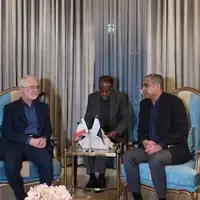
The United Arab Emirates says its ambassador to Iran, Saif Mohammed Al Zaabi, will resume his duties at the embassy in Tehran in the coming days.

The United Arab Emirates says its ambassador to Iran, Saif Mohammed Al Zaabi, will resume his duties at the embassy in Tehran in the coming days.
The UAE's foreign ministry said in a statement on Sunday that the decision was made "in line with UAE efforts to strengthen relations with Iran and as part of a previous decision to increase diplomatic representation to the rank of ambassador.”
Noting that the decision followed a recent phone call between the two countries’ foreign ministers Sheikh Abdullah bin Zayed Al Nahyan and Hossein Amir-Abdollahian held on July 26, 2022, the ministry said the move contributes to “further advancing bilateral relations in cooperation with officials in Iran to achieve the common interests of the two countries and the wider region.”
The UAE had recalled its ambassador from Tehran in 2012 after the then-President Mahmoud Ahmadinejad visited Abu Musa island as part of a tour of Iran’s Persian Gulf coast. Located 60 kilometers off the UAE, the Persian Gulf country claims it as sovereign territory along with the Lesser and Greater Tunb Islands near the Strait of Hormuz. Iran, which claimed control of the islands in 1971, at various points provided documents that indicate the islands were rented out to Arabs during the British colonial period.
Earlier in the month, Kuwait also appointed an ambassador to Iran, more than six years after recalling its top envoy to Tehran in solidarity with Saudi Arabia after it severed ties with the Islamic Republic in 2016. Ambassador Bader Abdullah Al-Munaikh handed his credentials to Amir-Abdollahian on August 13, as Riyadh works to improve ties with the Islamic Republic.
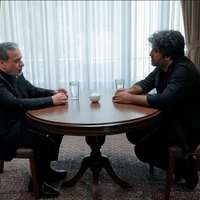
Iran’s president says his administration will not give up on the nation’s rights in any negotiations as agreement to revive the 2015 nuclear deal seems imminent.
During his address at a conference attended by a selection of clergymen on Sunday, Ebrahim Raisi said, “We will not back down on the nation’s rights at any meeting or negotiation” alluding to the ongoing talks on restoring the nuclear accord, known as the Joint Comprehensive Plan of Action (JCPOA).
Claiming that his administration has achieved many of its goals, he said his government “will not tie people’s livelihood to any external factor and will persevere in its effort to solve the problems facing the country and people.”
Raisi made the remarks amid speculations about the fate of the JCPOA after Iran conveyed its response to an EU-proposed draft to conclude the Vienna talks.
However, Nour News, a website affiliated with the secretary of Iran's Supreme National Security Council (SNSC), Ali Shamkhani, said on Sunday that although in recent days many speculations and statements were made about the nature of Iran's response and US views, until parties present in Vienna Talks speak officially, none of this can reflect current realities.
Mohammad Marandi, who acts as de facto spokesman for Iran's nuclear negotiating team, also said on Sunday that final steps remain to be taken to achieve an agreement, but "evidence shows that the US reaction is clear, and they know they should cooperate with Iran and our negotiating team in these final steps."

The head of the Atomic Energy Organization of Iran (AEOI) says "at least 30,000 specialized personnel" should be trained only in the nuclear power plant sector in the next 20 years.
During his address to the Iranian education sector's directors in Tehran on Sunday, Mohammad Eslami said that in accordance with the country’s roadmap for the expansion of its nuclear industry, the AEOI has decided to establish schools in the cities with nuclear facilities, from the elementary school level, to start training nuclear scientists for the next generation of the country’s nuclear program.
Eslami also claimed, “Everyone should know that the nuclear fuel cycle is a power-generating one, and has nothing to do with building a bomb,” adding that the West levels “spurious allegations against Iran and wrongfully accuses us of attempts to produce a nuclear bomb only because they do not want us to acquire nuclear technology.”
“Despite fierce opposition expressed in recent years to Iran’s heavy water production, we have managed to build on our relevant expertise both in the atomic industry and molecular sector,” he added.
Late in July, Eslami said members of parliament are seeking to legislate a 50-year nuclear roadmap so change of administrations cannot influence the program.
Around the same time, two Telegram channels with links to Iran’s Revolutionary Guard suggested that “Iran may build nuclear warheads “in the shortest possible time” if attacked by the US or Israel.
Iran has now enriched enough uranium to 60 percent that if further enriched to 90 percent, the fissile material will be sufficient for a nuclear bomb within a few weeks.

The spokesman for Iran’s Revolutionary Guard (IRGC) has rejected speculations that Israel or any other country has infiltrated the IRGC and its intelligence apparatus.
Referring to several mysterious killings of IRGC officers in recent months, Brigadier General Ramezan Sharif said on Saturday that the assassinations do not indicate the power of Israel, emphasizing that the Islamic Republic has responded and will continue to respond to their hostile acts.
Referring to the May 22 assassination of Hassan Sayyad in Tehran -- who was in charge of some IRGC operations abroad -- he said that the assassination of an officer in Tehran is not an unimportant issue, but it shows that the Revolutionary Guards do not live separated from the ordinary people.
“The Israelis are extremely vulnerable and live in fear all the time. They repeat that they have the Iron Dome (air defense system) or cyber (systems), which shows their weakness,” he added, noting that they have resorted to psychological warfare due to their failures in the field.
"The Zionist regime is experiencing the worst security condition and is under intense pressure," he said, adding that "Their (Israelis) measures have no impact on the Islamic Republic at all because they are unable to confront Iran."
Following repeated incidents indicating widespread Israeli infiltration in its intelligence and security networks, Iran’s IRGC admitted in June that its counter-intelligence was targeted.
Earlier in June, Hossein Ta’eb, the long-serving head of the Revolutionary Guard’s Intelligence organization (SAS in Persian acronym) was replaced followed by other personnel changes at the top.
The change considered to be a pivotal move by Supreme Leader Ali Khamenei came after a series of unexplained deadly attacks against IRGC officers and other breaches of security in Iran’s nuclear and military installations.

The Tehran Stock Exchange (TSE) has suspended Mobarakeh Steel Company following a scathing parliament report about an alleged $3 billion corruption case.
Mahmoud Goudarzi, chief executive of the Tehran Stock Exchange (TSE), said Saturday that trading of the company’s stocks has been suspended and will not resume until further information on the company's financial affairs become clear. With an estimated value of nearly 2,940 trillion rials (around $10 billion in current exchange rate), Mobarakeh Steel is the second largest company in TSE.
The report which was released Thursday has revealed massive corruption and mismanagement in Mobarakeh Steel Company, the largest steel producer in the Middle East and Northern Africa, which is located near the city of Mobarakeh, Esfahan Province. According to the parliament's report, the company's revenues amounted to nearly 15% of the country’s budget last year.
The over 250-page report says Mobarakeh Steel Company paid astronomical sums of money to various government entities including the Revolutionary Guard (IRGC), ministry of intelligence, police, state broadcaster (IRIB), Friday prayer imam’s offices, religious seminaries, and bribed others such as certain media outlets, individuals, and social media influencers.
The company which has a share of around 1% in Iran's GDP employes around 350,000 people directly and indirectly and feeds over 2,800 other large and small enterprises across the country.
Mobarakeh Steel is nominally private, but it is a quasi-governmental company with most of its shares owned by the Mines and Mineral Industries Development and Renovation Organization, various private and public joint stock companies, and quasi-state banks. The company's management is appointed by the government.

“Semi-Prublic” (Khosoulati in Persian) is a term coined by fusing the Persian words for private and public, and refers to companies that are sold to the private sector on the surface, but are owned by the government, IRGC entities, or entities under the control of the supreme Leader in reality.
Iran scored 25 points out of 100 on the 2021 Corruption Perceptions Index (CPI) reported by Transparency International, five points down since 2017. Iran's new ranking put it among very corrupt countries including Guatemala, Guinea, and Tajikistan (26), Pakistan, Miyanmar (28), and Laos and Paraguay (30). The CPI ranks countries and territories based on how corrupt their public sector is perceived to be.
Parliament’s investigative report, covering the period 2018-2021, accuses officials of the administration of former President Hassan Rouhani, including vice-president Es’haq Jahangiri, former Vice-President Mohammad Nahavandian, and others for using their influence in appointing top officials of the company including its board members.
It is worth noting that the current parliament is dominated by hardliners who have repeatedly called for prosecuting members of the former ‘reformist’ government.
The report also claims that during the previous administration, the company granted contracts to family members of government officials and influential politicians.
Tweeting with “systematic corruption” hashtag, Reformist politician and commentator Abbas Abdi said this means the company’s total financial violations was equal to 10 million rials per every Iranian citizen plus a few billions paid to the IRIB state broadcaster (IRIB) and hardliner news agencies to cover up.
In an editorial Saturday, the conservative Resalat newspaper argued that the report isn't the finalstatement and individuals can only be considered guilty of corruption after all the stages of legal prosecution have been completed before which revealing their names and even alleged corruption figures will only “impair the mental sanity of the accused and the people.”

Iran’s Foreign Ministry says all mosques in the world will remain the center of struggle against Israel until the complete liberation of Palestine.
In a tweet on the occasion of the anniversary of the fire at Jerusalem's Al-Aqsa Mosque -- known to Jews as the Temple Mount – 53 years ago, foreign ministry spokesperson Nasser Kanaani said “the Zionists set fire to the Aqsa Mosque... and this was not their first and last crime by occupiers of Palestine.”
"Resistance is the only way to save Palestine, and al-Aqsa Mosque and all mosques in the world will remain the center of anti-Zionist resistance until the complete liberation of Palestine,” he said.
The arson attack on the al-Aqsa Mosque was carried out on August 21, 1969 by Australian citizen Denis Michael Rohan, who initially set fire to the pulpit. Initially, Israelis blamed the fire either on an accident related to ongoing renovations, or to a false flag attack by Palestinian group Fatah. The fire has been described as one of the most destabilizing incidents in the Middle East.
On Saturday, the commander of the Revolutionary Guard (IRGC) Hossein Salami said the war between Israel and Palestinians is not limited to Gaza and has expanded to the West Bank, claiming that many Israelis have been killed in operations by “resistance groups inside the occupied territories,” in the past several months. He added that the number of Israelis killed is significantly higher than the previous year.
The Jerusalem Post also claimed Saturday that Tehran “believes time is on its side” to “erode Israel’s power slowly” by unifying and arming Palestinian groups.