The Brit Tehran Says Arrested Left Iran in December 2021 – UK Envoy

The British Ambassador in Iran, Simon Shercliff, says the man the Islamic Republic claims it has arrested left the country in December 2021 after his term finished.

The British Ambassador in Iran, Simon Shercliff, says the man the Islamic Republic claims it has arrested left the country in December 2021 after his term finished.
Confirming his comments, the UK Foreign Office told Iran International that the "reports of the arrest of a British diplomat in Iran are completely false."
Iran's state television reported Wednesday night that the Revolutionary Guard's Intelligence Organization "identified and arrested" several foreign nationals, including the deputy head of the UK embassy in Tehran, who were taking soil samples in the central Iranian desert.
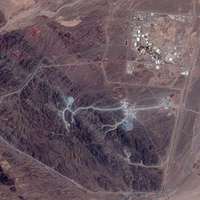
Giles Whitaker, the deputy head of the UK mission, was visiting the Shahdad desert near the city of Kerman along with his family when he was detained and expelled because of "trying to smuggle out samples of soil from a prohibited area close to IRGC’s missile tests.”
Several other researchers and scientists have also been arrested, including Maciej Walczak, a researcher at the Department of Environmental Microbiology and Biotechnology at Nicolaus Copernicus University, as well as Marcin Switoniak and Charzynski Przemysław from the Soil Science Department of the same university.
Poland’s Ministry of Foreign Affairs has confirmed that a Polish national was taken into custody in Iran in September 2021. “Considering the best interests of the highly reputed scientist, the MFA will not disclose any details of the case,” it added.
Iran's top nuclear negotiator Ali Bagheri-Kani has travelled to Oman about a week after Tehran-Washington talks in Qatar failed to produce any results.
Bagheri-Kani, who leads the Iranian team in talks to restore the 2015 deal, formally known as the Joint Comprehensive Plan of Action (JCPOA), set off for Muscat Thursday morning, a few days after he paid an unannounced visit to Russia following the failure of the proximity talks in Doha. Before the Doha talks, Oman had reportedly proposed to host the indirect negotiations.
Earlier in the week, Iran's Foreign Minister Hossein Amir-Abdollahian held a phone conversation with his Oman counterpart Sayyid Badr Albusaidi, in which he reiterated Tehran’s seriousness to achieve an "enduring and strong" agreement, repeating that “constructive negotiations depend on seriousness, initiative and flexibility on the American side.”
On Wednesday, Qatar's Foreign Minister Mohammed bin Abdulrahman Al Thani was also in Iran to follow up on nuclear talks. Addressing a joint press conference with his Qatari counterpart, Amir-Abdollahian rejected claims made by US officials about new demands raised by the Iranian delegation in Doha talks, saying the Islamic Republic’s requests are in line with the 2015 accord.
On Sunday, Al Thani also discussed the latest status of Vienna talks with US Secretary of State Antony Blinken.

The US Treasury has issued sanctions on a new array of individuals and entities that help the Islamic Republic of Iran sell its petroleum and petrochemical products.
The Department of the Treasury’s Office of Foreign Assets Control (OFAC) said on Wednesday that the international network used a web of Persian Gulf-based front companies to facilitate the delivery and sale of hundreds of millions of dollars’ worth of Iranian goods from Iranian companies to East Asia.
Two UAE-based Iranian nationals, Morteza Rajabieslami and Mahdieh Sanchuli, two vessels (BS BRAVO and SUMMER 5) as well as 13 companies including Iran's Persian Gulf Star Oil Company, Jam Petrochemical Company, and several firms in UAE and Hong Kong have been added to OFAC's Specially Designated Nationals list.
“While the United States is committed to achieving an agreement with Iran that seeks a mutual return to compliance with the Joint Comprehensive Plan of Action, we will continue to use all our authorities to enforce sanctions on the sale of Iranian petroleum and petrochemicals,” said Under Secretary of the Treasury for Terrorism and Financial Intelligence Brian E. Nelson.
Secretary of State Antony Blinken also announced the new sanctions on the Iranian petroleum and petrochemical producers, transporters, and front companies in a tweet, saying that “Absent a commitment from Iran to return to the JCPOA, an outcome we continue to pursue, we will keep using our authorities to target Iran's exports of energy products.”
Some of the new sanctions were levied pursuant to Executive Order 13846, which would be lifted in case the US returns to the JCPOA, whose prospects are withering.

Cairo and Tehran have agreed to develop relations, according to a report by the Qatar-affiliated media outlet Al-Arabi Al-Jadeed, quoting Egyptian diplomatic sources.
According to the Wednesday report, Iranian and Egyptian officials sat for talks last week during a visit by Egyptian President Abdel Fattah el-Sisi’s to Oman.
The London-based pan-Arab daily said that the officials agreed on “gradual expansion of Tehran-Cairo relations as well as coordination on the situation in the Gaza Strip and Syria,” noting that the meeting was attended by a high-ranking figure from the delegation accompanying the Egyptian president, with Omani coordination.
The paper claimed that most of the Egyptian military leadership opposes joining any pact directed against Tehran.
The Egyptian delegation accompanying Sisi in the visit included Foreign Minister Sameh Shoukry, Chief of General Intelligence Abbas Kamel, Minister of Planning and Economic Development Hala Al-Saeed.
The sources said that the meeting was focused on security in general, adding that "there were many points of agreement between the two parties” on issues of mutual interest.
They said the Iranian and Egyptian officials also agreed to cooperate in the framework of international forums as long as that was possible in order to gradually increase the level of ties.
Late in June, Egyptian and Iranian intelligence officials also held a meeting, in which Egypt warned Iran not to target Israelis on its territory, Al-Arabi Al-Jadeed reported, without disclosing details about the location and participants of the meet.
Ties between Iran and Egypt turned hostile following the Islamic Revolution in Iran in 1979. Despite some tensions, they share membership in the Organization of Islamic Cooperation and the Developing 8.

Iran has arrested several foreign nationals including the deputy head of the UK embassy in Tehran, Iran's state television reported Wednesday night.
The government media say that the Revolutionary Guard's Intelligence Organization "identified and arrested" the foreigners who were taking soil samples in the central Iranian desert, apparently in separate incidents.
Giles Whitaker, the deputy head of the United Kingdom's mission in Iran, was visiting the Shahdad desert near the Iranian city of Kerman along with his family when he was detained and expelled because of "taking samples of soil from a prohibited area", the Iranian state TV's report said.
The report said the British diplomat was visiting the restricted area during military drills by the IRGC's Aerospace Force in a region nearby, and was spotted by IRGC drones.
While the report by the state TV claims the British diplomat has been expelled "from the city" after apologizing, the IRGC-affiliated Fars News Agency says he is being expelled from the country.
The UK Foreign Office told Iran International that the "reports of the arrest of a British diplomat in Iran are completely false."
In addition to the British diplomat, several other researchers and scientists have also been arrested, according to the state TV report.
The other detainees include Maciej Walczak, a researcher at the Department of Environmental Microbiology and Biotechnology at Nicolaus Copernicus University, Marcin Switoniak, a professor in Department of Soil Science at Nicolaus Copernicus University in Toruń, and Charzynski Przemysław, another professor of Soil Sciences, the report said.
The IRGC also claims it has arrested the spouse of the Austrian cultural attaché to Tehran.
The report aired by Iran’s state TV claims Israel is sending these people to Iran in order to “steal” information from the Islamic Republic and once again open the possible military dimensions (PMD) case of Iran’s nuclear program.
Although it is not yet clear when these foreign nationals have been arrested on charges of espionage, this is the first publicly announced operation by the IRGC Intelligence after its former head Hossein Ta'eb was replaced by Mohammad Kazemi.
There have been a series of changes of top officials in IRGC intelligence in recent weeks after repeated killings and mysterious deaths of some of its officers and staff, that Iran has blamed on Israel.
These events have cast a shadow on the image the IRGC wants to project of efficiance and power to control events. The report about the arrest of a British dipolomat could be an attempt to show the IRGC is still in charge.
These are probably the latest cases of Iran arresting foreign nationals possibly to use them as hostage for leverage in its negotiations with other countries.
The announcement comes amid fierce debates over a prisoner swap treaty being reviewed by the Belgian parliament, whose opponents say it would not only result in the return of an Iranian convicted terrorist, Assadollah Assadi, from Belgium to Iran, but will embolden the regime in Tehran to further use its "hostage policy" as leverage for its malicious activities across the world.

Israeli major general Eyal Zamir, who is one of the leading candidates to take over as the next chief of the military, has called for ramping up assassinations of Iranian military officials.
In a lengthy policy paper, titled ‘Countering Iran’s regional strategy,’ published on Tuesday by the Washington Institute, the candidate to replace IDF Chief of Staff Lt.-Gen. Aviv Kohavi said regional states must weaken IRGC “in every dimension and use every means possible to exert pressure on it,” because Iran’s threat is “the central threat to the national security of these nations and is the glue – the shared interest – holding the Sunni-Israeli camp together.”
“IRGC is the backbone of the regime and the main means by which it seeks to dominate the region,” he said, adding, “The IRGC is responsible for most covert activity, subversion of other governments, terrorist acts, and political assassinations in the Middle East and around the world, as well as maintaining contact with its regional and global partners,” he said.
Soleimani model targeted killings -- like the attack that killed IRGC’s Quds Force commander in 2020, targeting IRGC’s leadership, commanders and key operatives behind the planning and execution of terror attacks, as well as issuing international arrest warrants for designated individuals are among the means Zamir suggested for weakening IRGC.
“Damage the IRGC’s operational center of gravity — its long-range strike capabilities such as rockets, missiles, and drones — by covert action against manufacturing plants and missile and UAV main operating and forward bases, while preparing a plan of action to damage Iran’s defensive system,” he added.