US Lobby Group Asks China To End Banking Links With Iran

The United States lobby group United Against a Nuclear Iran (UANI) has called on six Chinese banks to all end financial transactions with the Iran.

The United States lobby group United Against a Nuclear Iran (UANI) has called on six Chinese banks to all end financial transactions with the Iran.
UANI said in a statement Friday it had contacted the banks “to inquire about the nature of their relationship with the Iranian regime and call upon each to cut ties with Tehran.” The group said each bank had dollar accounts “ultimately controlled by Iranian firms and banking institutions sanctioned by the United States.”
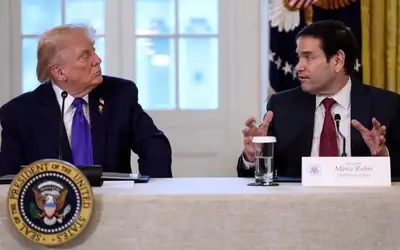
As part of ‘maximum pressure’ sanctions introduced in 2018 on leaving the 2015 Iran nuclear deal, US President Donald Trump signed an executive order threatening punitive US action against any third party dealing with Iran’s financial sector.
China, other world powers, and rights groups all condemned the move, and while Beijing’s bilateral trade fell 34 percent to $23 billion in 2019, China still bought Iranian oil, thwarting Trump’s stated aim of ending Iran’s crude exports.
UANI approached the Zhejiang Mintai Commercial Bank, ICBC, China Guangfa Bank, Shanghai Pudong Development Bank, Zhejiang Tailong Commercial Bank, and Zhejiang Chouzhou Commercial Bank.
UANI’s Chief Executive Officer Mark Wallace, said a lack of firm US action alongside “warm and abiding ties between Tehran and the Chinese Communist Party has given Chinese financial institutions confidence that there is no consequence for aiding the world’s largest state sponsor of terrorism.” Earlier in June, UANI claimed Chinese petrochemical refiners, or "teapots," had bought $22 billion of Iranian crude since President Joe Biden took office.
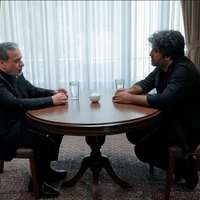
Iranian dissident journalist Mohammad-Bagher Moradi, who took refuge in Turkey nine years ago while he was on trial in Iran for writing critical of the regime, has been abducted in Ankara.
Moradi, who lives in Ankara under international protection, left home on May 30, 2022 to buy bread but did not return. His phone cannot be reached and his car was also found abandoned, Turkish media reported on Sunday.
His family applied to the public prosecutor's office, claiming that their son “was kidnapped by Iranian Intelligence agents.”
Moradi's father, Mohsen Moradi, said, “My son was working as an opposition journalist in Iran. Iranian intelligence was after him.”
An investigation has started regarding Morad's disappearance, but to no avail so far.
In March, Turkish prosecutors sought a 30-year prison sentence for 11 defendants, including at least one Iranian, charged over an alleged scheme to abduct Mehrdad Abdarbashi, an Iranian military pilot who fled to Turkey rather than serve in Syria.
Abdarbashi, a major and air-force helicopter pilot, said he had fled Iran and sought asylum after refusing to go to Syria. He told Türkiye newspaper that a female Iranian intelligence agent had invited him to a house. He alerted Turkish authorities, and after she drugged him and others were preparing to abduct him, Turkish agents swooped in and arrested the agents.
In 2019, Ruhollah Zam, who ran a social-media channel on Telegram, was lured to Iraq where he was abducted. Zam was executed in December 2020 after confessions aired on state television.

Inger Andersen, Executive Director of the United Nations Environment Program (UNEP), called Saturday for the release of environmentalists jailed in Iran.
“We have only one earth and those that seek to protect the planet should not be prosecuted for doing so,” said the Danish environmentalist, ahead of the World Environment Day, June 5. One of those jailed, Niloufar Bayani, who was a consultant for UNEP between 2012 and 2017.
Bayani was arrested along with Morad Tahbaz, Amir Hossein Khaleghi, Taher Ghadirian, Sepideh Kashani, Hooman Jokar, Abdolreza Kouhpayeh, Sam Rajabi, and Kavous Seyed-Emami in 2018 on charges of espionage. All were members of the Persian World Heritage Foundation, an NGO dedicated to conserving wildlife in Iran, and are serving sentences from four to 10 years. Seyed-Emami, the NGO’s founder, was found dead in his cell two weeks after his detention, with the authorities reporting suicide and the family denying the claim.
Human Rights Watch has reported the detainees have been subject to ‘torture’ during incarceration, and that no evidence of any crime has been produced in public, with convictions obtained in special security courts.
The family of Tahbaz, who holds British and United States as well as Iranian citizenship, has criticized the British government over an unfilled expectation he would be released when two other British nationals – Nazanin Zaghari-Ratcliffe and Anoosheh Ashuri – were freed by Iran in March after the British government honored a 40-year debt to Iran of £400 million ($500 million).

The mayor of Iran's southwestern city of Abadan, which was the hotbed of protests after the deadly collapse of a high-rise building on May 22, has resigned.
Hossein Hamidpour, who was reportedly arrested along with five preceding mayors and another five city officials involved in the construction of Metropol Twin Towers project, resigned on Saturday.
The city council appointed Mohammadreza Motavvar, the head of Abadan’s urban development organization, as the new caretaker of the municipality.
Hamidpour, who appeared at the scene of the incident in the early hours after the collapse, was reportedly beaten and booed by the angry residents.
According to reports, the bodies of 40 victims of the collapse have been recovered but an equal number of people are still missing.
Soon after the collapse it became apparent that the owner and builder of the building, Hossein Abdolbaghi, was a powerful and politically well-connected businessman who had disregarded regulations and building codes, being backed by officials, who might have had their own financial interests.
Journalists and social media users accuse authorities of covering up his escape by claiming that he died in the incident.
The collapse of the building led to protests in Abadan as well as in several other cities across Khuzestan who took to the streets to demand accountability. The incident also had national ramifications as an example of government corruption.

An influential Shiite seminary group and senior Ayatollah Hossein Noori Hamedani, have expressed their dissatisfaction over Iran's current political and economic situation.
In a statement issued earlier this week, the Association of Qom Seminary Lecturers and Researchers on the death anniversary of Rouhollah Khomeini, the founder of the Islamic Republic, said that "four decades after the Islamic revolution Iran's political and economic systems are still inconsistent with the ideals and promises of the revolution."
The statement accused Iran's Islamic government of being responsible for widespread poverty, rising inflation, high prices, and financial corruption in the country.
The clerics said it is odd that despite all the promises made to the people, economic and pollical crises have heightened under the current government following the consolidation of hardliners’ control over the state.
Elsewhere in the statement, citing the holy Koran, the Association of Qom Seminary Lecturers and Researchers advised the government to stop oppression and follow a rational approach.
Meanwhile, criticizing the government for what President Ebrahim Raisi and other Iranian officials call "economic surgery," and some other officials label as "a test by God," the statement charged that these are excuses made by a government which has no economic plan. The statement said that allowing naïve officials to do ‘the surgery’ is like giving a sword to a drunken man. Other clerics have asked during the week: "Why the officials think God only needs to test the Iranian people?"
The Raisi government stopped billions of dollars in food import subsidies in early May, which led to an overnight jump in bread and other food prices. Officials insisted that the ‘economic surgery’ was necessary to help the country’s ailing economy.
The statement also harshly criticized the government for its inability to further nuclear talks with the West that could lead to the lifting of sanctions on Iran. It charged that "officials who say the fate of the negotiations should not be tied to the people's livelihood know very well that their financial problems are linked to the nuclear talks."
The seminarians further said that "the current situation has made opportunists and profiteers rich while taking away the bread from the poor people's dinner table." They also charged that "the government's over-reliance on Russia and its support of Moscow dealt a big blow on Iran's economy."
Referring to the government's weakness in dealing with the aftermaths of the collapse of a high-rise building in Abadan, the seminarians blamed the corruption and a lack of accountability for the tragedy that has led to the death of at least 40 people.
The statement charged that "political and economic corruption have spread the ranks of the regime while critics do not feel secure to voice their ideas."
In another development, the Jonhouri Eslami newspaper quoted prominent cleric Hossein Noori Hamedani as saying that the state-run media refuse to broadcast his criticism of rising prices that have imposed hardships on the people.
He said, "the people wonder why top clerics do not say anything to the government in the face of policies that lead to rising prices. The people should know that clerics at the seminary offer their advice but state-run media refuse to broadcast them.
Meanwhile, Aftab News website criticized the government-owned media of adding insult to injury by ignoring the sharp fall of the Iranian currency and publishing and broadcasting strange reports to whitewash the government's shortcomings.

The passport control system at Tehran's Imam Khomeini International Airport was reportedly hacked on Saturday, stranding passengers for a couple of hours.
The spokesman of the airport, Javad Salehi, however, rejected the reports of a cyberattack, saying the incident that created long queues of passengers at the airport’s terminals was caused by a technical glitch.
Emphasizing that penetrating the system was impossible, he said the technical issue was due to a problem between the online and offline servers of the system.
Salehi claimed the airport system is not connected to the Internet so it cannot be attacked or hacked, saying the system is based on a very secure intranet.
Colonel Mohammad Haydari, the manager of the airport’s Aerial Border Control, said the incident caused a brief delay of about 15 minutes in flights.
Also on Saturday, an Iran Air jetliner, which departed from Tehran for the Iraqi city of Najaf, had to make an emergency landing in the central city of Esfahan due to a technical failure. It was the third such incident of the airliner in about a week.
On Thursday, a largescale cyberattack by an Iranian hacktivist group calling itself ‘Uprising till Overthrow' targeted over 5,000 surveillance cameras and 150 websites and online services of Tehran Municipality, deactivating the cameras and putting anti-regime content on the websites.