UN Agency Not Happy With Iran’s Answers On Nuclear Work

A report from the United Nations nuclear watchdog has expressed dissatisfaction in Iran’s answers to questions over its past atomic activities.

A report from the United Nations nuclear watchdog has expressed dissatisfaction in Iran’s answers to questions over its past atomic activities.
Iran agreed March 5 to provide written explanations by March 20 of long-standing issues in its nuclear work before 2003, and to clear up remaining queries by June 21. But a new quarterly report from the International Atomic Energy Agency (IAEA) expresses disquiet with Iran’s response to agency queries over four sites not declared as part of the nuclear program where inspectors detected traces of uranium.
"Iran has not provided explanations that are technically credible in relation to the Agency's findings at those locations," the report says. Mohammad Eslami, the head of the Atomic Energy Organization of Iran, said in April that Tehran had answered all the agency’s questions.
Back in 2015, the IAEA concluded that Iran had operated an “organizational structure” carrying out “feasibility and scientific studies” in nuclear research before 2003, with some aspects continuing until 2009. When Iran agreed in the 2015 Joint Comprehensive Plan of Action (JCPOA) drastically limiting its nuclear program, the agency’s emphasis shifted towards monitoring its compliance with the agreement reached with six world powers.
But the pre-2003 work was revived as an issue by further agency investigations after Israel claimed in 2018 to have stolen a trove of documents from Iran, and by Tehran’s expansion after 2019 of its nuclear program beyond JCPOA limits in response to the United States leaving the deal in 2018 and imposing ‘maximum pressures’ sanction.
A more assertive approach was also taken by Rafael Mariano Grossi, who became IAEA director-general in 2019.
The IAEA quarterly report comes with negotiations paused between Iran and world powers over restoring the JCPOA as US sanctions continue and Iran develops its nuclear program. A separate IAEA report put Iran’s stock of uranium enriched to 60 percent up 9.9kg to 43.1kg, with the agency calling this a “significant quantity,” given it could be further enriched relatively easily to the 90 percent required for a crude nuclear weapon.
Iran in early 2021, following the killing of scientist Mohsen Fakhrizadeh and the continuing of ‘maximum pressure,’ scaled back cooperation with the IAEA almost to that required under the Nuclear Non-Proliferation treaty, and subsequently raised its level of enrichment to 20 percent and then 60 percent, far above the 3.67 percent cap set by the JCPOA.
The IAEA board is due to meet next week, and may face pressure from the United States to in censure Iran. Grossi has managed a series of ad hoc arrangements over access to the Iranian nuclear sites but has consistently argued that the agency’s role would be best performed with “political circumstances” overcome and the JCPOA back in place. The European Union, which alongside Russia and China, criticized the US leaving the JCPOA, has led diplomatic efforts to restart talks.
An Iranian lawmaker who was Tehran’s security commander as an IRGC general, says "We do not insist on delisting the IRGC as a terrorist group. But the United States should behave logically."
Asked during an interview with Didban Iran website whether the US decision not to delist the IRGC means the end of the nuclear deal with Iran, the Joint Comprehensive Plan of Action (JCPOA), Esmail Kowsari said: "We have set a framework for the nuclear negotiations. America jumping up and down will not affect our decision."
Talks to revive the JCPOA in Vienna came to an abrupt stop in March, reportedly for Iran’s insistence that the IRGC be removed for the US list of Foreign Terrorist Organizations (FTO).
Kowsari added, "The time is over for America's jingoism and irrelevant responses. It is now the United States' turn to give us a logical response."
He further said that "We know that it was not Biden who added the IRGC to the FTO list, but we also know that it was Trump, the evil one, who imposed the sanctions on Iran and pulled out of the deal with us."
Kowsari also suggested a solution for the diplomatic impasse: "If Mr. Biden wants the nuclear negotiations to revive the JCPOA to be fruitful, he needs to lift those sanctions and delist the IRGC. It is in that case that we can reach an agreement about our relations."
However, the former Revolutionary Guard general who is now a lawmaker from Tehran reiterated that "Nothing will happen to the Islamic Republic, and we will continue what we are doing if Biden refuses to delist the IRGC. In this case the talks over the revival of the JCPOA will remain inconclusive."
He added, "We have shown our honesty and remained loyal to our commitments. If the United States refuses to fulfil its commitments the whole world will realize that the Americans are criminals."
Elsewhere in his remarks, Kowsari said he was not aware of the attack on the Parchin base southeast of Tehran during which an Iranian officer was killed. He said: "I am not a member of the national security committee of the Majles [parliament] and no one briefs me on developments like that."

Meanwhile, the moderate news website Rouydad24 pointed out in a report on Sunday that the US President's refusal to delist the IRGC is the main obstacle on the way of reviving the nuclear negotiations with Iran and subsequently reaching an agreement between Tehran and Washington.
This comes while in less than ten days, the International Atomic Energy Agency (IAEA) is slated to publish is seasonal report on Iran's nuclear activities. Without further elaborating on the issue Rouydad24 said there are no good news coming from the IAEA about its upcoming report.
In the meantime, according to Wall Street Journal, based on Middle East intelligence officials and documents reviewed by the Journal, "Iran used secret records of the United Nations International Atomic Energy Agency, the IAEA, nearly two decades ago to skirt investigations into its nuclear program and hide suspected work on nuclear weapons."
The resulting pessimism about the future of Iran's nuclear case, has led some media outlets in Iran, including the reformist Mostaghel (Independent) dailyto believe that Iran's nuclear case will be handed over to the UN Security Council.The daily quoted political analyst Jalal Sadatian as saying, "This will be the beginning of a dangerous phase in the course of Iran's nuclear case."

The Biden policy of not enforcing Iran oil sanctions has led to a misperception in Tehran that there is no need for a nuclear agreement, a website in Iran says.
The Iran Diplomacy website (not secure for a link), close to the foreign ministry in an article penned by Mehdi Bazargan, a journalist on Saturday wrote that the Islamic Republic hardliners have concluded that by exporting close to one million barrels of oil per day at prices above $100 a barrel, Iran can generate enough income equal to a full export volume, without a need to agree to the revival of the Joint Comprehensive Plan of Actions, JCPOA.
After former US president Donald Trump pulled out of the Obama-era deal in May 2018 and began imposing oil sanctions on Iran, crude exports dropped from above two million barrels a day to less than 300,000 in 2019. The drop came at a time when oil was much cheaper and left the Islamic Republic with a serious shortage of foreign currency to finance its imports.
This led to an immediate rise in inflation rate and a historic drop in the value of Iran’s currency, with a deep recession gripping the economy for at least two years.
Nevertheless, Tehran refused to negotiate with the Trump administration, which was not bashful to call its sanctions ‘maximum pressure’ and make comprehensive demands for a drastic change in Iran’s behavior.
Things changed in September 2020, when during the US presidential campaign, the Democratic candidate Joe Biden penned an op-ed on CNN’s website announcing that his administration will return to the JCPOA and lift sanctions.

Still Tehran refused to directly negotiate with Washington as multilateral talks began in Vienna in April 2021 to restore the nuclear deal.
Already, in the closing months of 2020 reports began to emerge that Iran’s illicit oil exports to China had increased. Beijing might have concluded that Biden was less likely to penalize third parties for quietly breaking US sanctions.
This was followed by more reports of higher Iranian crude exports in 2021. By early 2022, it was safe to say that Tehran was selling just under one million barrels of oil, most to China but probably also to others such as India.
Bazargan argues that the Iranian leadership perhaps sank deeper in miscalculation as the invasion of Ukraine began and they assumed that with a looming energy shortage they can extract more concessions from Washington – and if not, they could sell enough oil at high prices to survive, given Biden’s unwillingness to enforce Trump’s sanctions.
The talks in Vienna were said to be nearing success in early March when the diplomatic process came to an abrupt pause two weeks after the invasion of Ukraine. Statements by various sources, including Iranian officials showed that one major impediment in the talks was Iran’s demand that its Revolutionary Guard (IRGC) be removed from the US list of terrorist organizations. Subsequently, members of the US Congress began expressing serious objections and blaming the administration of willingness to make too many concessions to Iran. The White House has reportedly decided not to accept Iran’s demand and the nuclear talks remain in a stalemate.
However, the administration still insists negotiations are the best way to force Iran to curtail its nuclear program but has made references to a tougher enforcement of sanctions if the current stalemate continues.
The Iran Diplomacy article says more enforcement of sanctions has already begun and cites the seizure of Iranian oil from a stranded tanker near the Greek coast this week.

An article published Thursday by the Washington Free Beacon continues controversy over meetings in 2018 between former United States officials and Iran.
The Beacon piece is based on a State Department memo apparently unclassified after legal action under the Freedom of Information Act by the American Center for Law and Justice (ACLJ), a conservative Christian group. The memo records views expressed by then Iranian foreign minister Mohammad Javad Zarif in an off-the-record meeting October 2018 at the residence of Iran’s UN ambassador in New York residence with “a group of US former ambassadors and policy analysts.”
Both the Beacon and the ACLJ, which highlighted the memo on its website May 24, see proof of secret dealings between former officials in the Obama administration and Iran to undermine President Donald Trump and Secretary of State Mike Pompeo. Five months earlier, in May 2018, Trump had announced the US would leave the 2015 Iran nuclear deal, the JCPOA (Joint Comprehensive Plan of Action), reached under the Obama administration, and introduce stringent economic sanctions.
“The meeting took place around the same time John Kerry was reported to be working behind-the-scenes with Iranian officials to salvage the 2015 nuclear accord,” the Beacon noted. The memo, the Beacon argued, was “the firmest proof to date that Obama-era officials were engaged in back-channel efforts to keep negotiations with Iran alive.”
Pompeo ‘was not aware’
The controversy over Obama officials’ links with Iran surfaced back in 2018. Kerry, Obama’s secretary of state when the JCPOA was signed, denied accusations from Pompeo and Trump made in September 2018 that he had met Iranian officials subsequent to the May 2018 Trump decision for the US to leave the JCPOA. Kerry said he had met Zarifafter leaving office in January 2017.
The unclassified memo names no Americans present in the meeting, and such off-the-record meetings are common. Given the memo is a State Department document, it seems certain the meeting was approved at some level within the department. The Beacon, which talked to Pompeo after receiving the memo, reported however that Pompeo “was not aware of these meetings [presumably the meeting recorded in the memo] while leading the State Department” (from April 2018 until January 2021).
The memo records views expressed by Zarif over Afghanistan, Syria, Yemen and other regional issues, but nothing of what any of the Americans said. The Iranian foreign minister says he expects Trump to be a two-term president and suggests the US abandoning the JCPOA had shifted Iranian popular opinion towards believing engagement with the US would not work.
‘Back channel pow-wows’
Pompeo, now senior counsel for global affairs at the ACLJ, told the Beacon that the “memo corroborates reports from the time about Kerry's efforts to salvage the 2015 nuclear deal through back-channel pow-wows with Iranian officials.”
Former officials were, Pompeo said, “trying, at every turn, to work with the foreign minister for a terrorist regime, Iran, to undermine the very sanctions put in place by America. It's worse than not knowing when to get off stage. Actively seeking to protect the terrible deal they struck, these former officials – two years after Obama left office – were signaling that Iran should stand firm against America."
The AVLJ says State Department “awareness of or involvement with Obama-era US officials” amounted to “the Deep State.” Its assessment of the memo implies that Kerry, Robert Malley, now the White House special Iran envoy, and Ernest Moniz, energy secretary under Obama, might have been at the meeting, since its release “was only responsive to our FOIA request [request under the Freedom of Information Act] if it involved former high level Obama officials…Kerry…Malley...or…Moniz...”
The story may not be finished. The ACLJ says it will continue litigation to release a 2017 letter from Kerry to Zarif held by the State Department. “We will keep you up to date as this case progresses,” the ACLJ promised Tuesday.

An explosion in one of the research centers at Iran’s Parchin military complex near the capital Tehran has killed one engineer and injured another employee.
Fars news agency, close to Iran’s Revolutionary Guard, cited the Defense Ministry on Thursday that investigations into the cause of the Wednesday evening “industrial accident” were underway.
“On Wednesday evening, in an accident that took place in one of the research units of the Defense Ministry in the Parchin area, engineer Ehsan Ghadbeigi was martyred and one of his colleagues injured,” the ministry said.
The ministry did not elaborate on the accident or provide further details, but identified the engineer who died as Ehsan Ghadbeigi. IntelliTimes blog said that he specialized in mechanical engineering at Sheriff University and worked in materials-related fields, that could integrate with Iran's missile or nuclear programs.
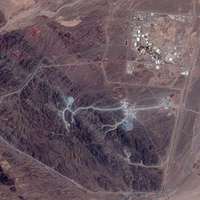
Located 60 kilometers (37 miles) southeast of Tehran, Parchin is a sensitive military site housing several industrial and research units, where Western security services believe Iran carried out tests related to nuclear bomb detonations more than a decade ago. It is also closely linked with the Khojir missile production complex.
The International Atomic Energy Agency previously said it suspected Iran conducted tests of explosive triggers that could be used in nuclear weapons at the site.
In 2015, Tehran allowed the UN nuclear watchdog to take environmental samples at the military site to make an assessment of "possible military dimensions" of the Islamic Republic’s nuclear program.
Iran’s missile and space programs have suffered a series of mysterious explosions in recent years. In 2020, a giant explosion occurred in the area of Parchin at a gas storage facility, rattling the capital and sending a massive fireball into the sky near Tehran.
Iran has accused Israel of carrying out several attacks on facilities linked to its nuclear program and of killing its nuclear scientists over the past years.
Last April, Natanz nuclear facility in the central province of Esfahan was hit by what Iran described as "sabotage" a day after it unveiled feeding gas to several centrifuges. A blackout that seemed to have been caused by a deliberately planned blast hit the nuclear facility, causing damage to the electrical distribution grid.
Iranian officials, including the then-head of the Atomic Energy Organization of Iran, Ali Akbar Salehi, as well as several Israeli media said this operation was a cyber-attack carried out by the Mossad intelligence service.
"Condemning this despicable move, the Islamic Republic of Iran emphasizes the need for the international community and the International Atomic Energy Agency to deal with this nuclear terrorism," Salehi said, adding that "Iran reserves the right to take action against the perpetrators."
Israel publicly rejected to confirm or deny any responsibility for the incident. The attack included a cyber-warfare known as the Olympic Games that involved the use of the Stuxnet computer virus, destroying hundreds of centrifuges.

The director of UN's nuclear watchdog says talks with Iran over the origin of uranium particles found at undeclared sites are at "a very difficult juncture."
"I suppose I should abstain from having a final conclusion at this point since we haven't finished the process yet but let me say that we are at a very difficult juncture at the moment," Rafael Grossi who will report on the issue to the International Atomic Energy Agency (IAEA) Board of Governors on June 6 told a panel at the World Economic Forum in Davos, Switzerland on Wednesday.
During Grossi’s visit to Tehran on March 5, Iran and the IAEA agreed a three-month procedure for a series of exchanges for Tehran to clarify outstanding questions about the unexplained uranium particles found in old, undeclared sites.
Grossi complained earlier in May that Iran was not forthcoming over its past nuclear activities and the origin of traces of enriched uranium in places that had never been declared and said he was “extremely concerned” about Iran’s lack of cooperation.
Tehran's demands for the closure of the IAEA investigation into the issue has remained a source of tension and distrust between Tehran and the West.
Iran has always insisted that it has fully cooperated with the UN nuclear watchdog over the matter while Grossi has said that efforts to restore the 2015 nuclear deal between Iran and world powers, known as the Joint Comprehensive Plan of Action (JCPOA), may not be possible without resolving the issue of undeclared past activities.
The United States withdrew from the JCPOA in May 2018 and imposed ‘maximum pressure’ sanctions on Iran.
Talks which began in Vienna in April 2021 to restore the 2015 nuclear deal have stalled since mid-March. Major issues reportedly include Washington’s refusal to delist Iran’s Revolutionary Guards (IRGC)which the Trump administration designated as a ‘foreign terrorist organization’. Iran also insists on avenging the US killing of IRGC’s Qods Force Commander Ghasem (Qasem) Soleimani who was killed in Baghdad in 2020 in a US targeted drone attack.
Some analysts have linked what the IAEA calls “undeclared nuclear material” to Tehran’s past cooperation over centrifuges with Pakistani scientist AQ Khan.
"I hope that the time ... between now and the issuance of my report [in June] will [be] put to good use to come [up] at least with a start of a credible answer to these things," Grossi told the forum in Davos.
The WSJ reported Wednesday that documents it has reviewed suggest that Iran had acquired some secret IAEA reports nearly two decades ago and provided them to top political, military, and nuclear officials between 2004 and 2006 in a bid to devise answers to IAEA’s questions over its allegedly secret nuclear activities prior to 2003.
Some such IAEA documents that were among over 100,000 documents stolen by the Mossad from a warehouse near Tehran were annotated in Persian by officials who apparently used them to come up with answers that would satisfy the IAEA about undeclared activities. The archives were disclosed in 2018 by then Prime Minister Benjamin Netanyahu.
The interplay between the Vienna talks and IAEA’s monitoring of Iran is a complex one. As a signatory of the Nuclear Non-Proliferation treaty (NPT), Iran is subject to IAEA inspections and monitoring under its NPT ‘safeguards’ agreement.
The agency’s role was enhanced under the JCPOA which limited Iran’s nuclear program in scale and nature. Since 2019, a year after the United States left the JCPOA and began ‘maximum pressure’ sanctions, Iran has both expanded its nuclear program and limited IAEA access almost to the lower level required under safeguards.