Key Democratic Senator Urges Biden Not To Delist IRGC
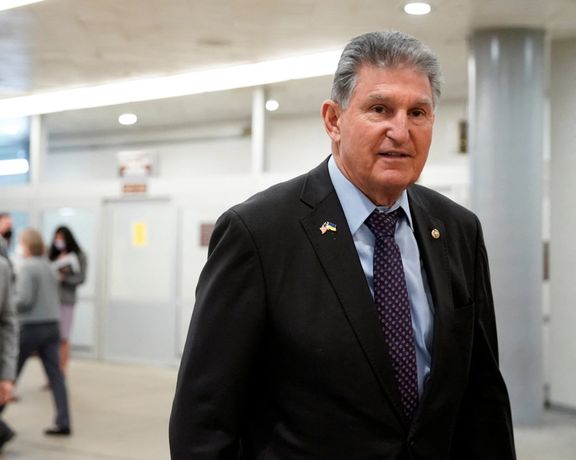
Democrat senator Joe Manchin says removing the Revolutionary Guard (IRGC) from the US terrorism list in hopes of energy supplies from Iran is “short-sighted”.

Democrat senator Joe Manchin says removing the Revolutionary Guard (IRGC) from the US terrorism list in hopes of energy supplies from Iran is “short-sighted”.
Already, 49 Republican Senators have called on Biden not to make concessions to Iran.
Manchin, who also serves as the chairman of the Senate Energy and Natural Resources Committee, said he is particularly worried that the US is removing the IRGC from the Foreign Terrorist Organization (FTO) list “in the hopes that trade relations can be re-established with Iran to assist with our energy crisis”.
“Let me be clear. The IRGC is a terrorist organization,” Manchin noted, adding, “We must not be short-sighted in the use of sanctions relief to mitigate our present energy challenges”.
He called on the administration “to invest in an all-of-the-above domestic energy policy to bolster our national security and our ability to help our allies and partners abroad”.
He said Washington should not reward Iran with sanctions relief before Tehran demonstrates verifiable efforts towards “curbing their malign influence holistically, including their nuclear ambitions, terrorism financing, and dual-use weapons development”.
He also requested a detailed briefing on the status of the Vienna talks to revive the 2015 nuclear deal and called on the administration to consult with Congress on critical foreign policy decisions.


Greece has impounded a Russian oil tanker off the island of Evia, the Greek coastguard said on Tuesday. A US advocacy group said it was carrying Iranian oil.
A Greek shipping ministry official said the 115,500-tonne Russian-flagged Pegas, with 19 Russian crew members, had been seized under European Union sanctions imposed on Russia over the Ukraine crisis.
The vessel was seized near Karystos on Evia’s southern coast, just off the mainland near Athens. Earlier this month, the EU banned Russian-flagged vessels, with exemptions, from its ports.
The US advocacy group United Against Nuclear Iran (UANI), which supports US sanctions against Iran and monitors tanker traffic through satellite tracking, said the Pegas − renamed the Lana in March − had loaded 700,000 barrels of crude oil from Sirri island, Iran, on August 19, 2021. The tanker headed to Greece after trying unsuccessfully to unload the oil at a Turkish port, UANI said.
The Athens News Agency reported that before being seized, Pegas had a breakdown and was being pulled by tugs to Greece's Peloponnese peninsula, where its cargo was to be moved to another vessel, and that during this journey it was forced by rough seas to moor near Karystos, where it was seized by Greek port authorities.
Associated Press reported the seizure was Friday. Reuters cited witnesses Tuesday that the Peags was still moored at Karystos bay, and was told by the Greek coastguard that the tanker’s cargo had not been impounded.

Washington signaled on Monday that it is not willing to remove terrorism-related sanctions demanded by Iran as a pre-condition to reach a new nuclear deal.
At his press briefing Monday, the US State Department Spokesman Ned Price reiterated that the administration of President Joe Biden did not want to "negotiate in public" but also said that Tehran needs to address the concerns of Washington if it wants sanctions-lifting that goes beyond the 2015 nuclear deal, the Joint Comprehensive Plan of Action (JCPOA).
"If they want to negotiate issues that fall outside the purview of the JCPOA, then we’ll do that, but they will need to negotiate those issues in good faith with reciprocity," Price said.
Apparently the two most important demands, unrelated to the JCPOA, that Iran has put on the table, and wants to be met as "signs of goodwill" before a deal is signed, are removing the Revolutionary Guard (IRGC) from a US terror list and the release of Iranian funds frozen under US sanctions in other countries, such as South Korea and Iraq.
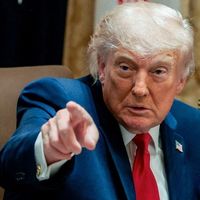
The IRGC, however, was sanctioned in 2019 by the Trump administration as a Foreign Terrorist Organization, and Washington has signaled that if Tehran wants to have this and related sanctions removed, it should provide guarantees that its regional behavior will change.
Moreover, Iranian officials have also threatened revenge against former US officials for the targeted killing of IRGC Qods (Quds) Force commander Qasem Soleimani in 2020, a factor that has made it more difficult to discuss the removal of IRGC terrorist designation.
The Iranian foreign ministry spokesman Saeed Khatibzadeh on Monday indicated that Tehran was not going to offer any guarantees not to take revenge on American officials. "Bringing these individuals to justice is a fundamental principle in Iran's foreign policy," he said in his weekly press briefing.
Price on Monday called the Islamic Republic the "world’s leading state sponsor of terrorism". "We will use every appropriate tool to confront the IRGC’s destabilizing role in the region including working closely with our partners in Israel," he said. This was perhaps a signal that the Biden administration does not intend to remove IRGC sanctions.
Another thorny issue has been Tehran’s insistence to have its frozen funds in third countries released, something that could be linked with freedom for several US citizens held in Iran on trumped-up political charges.
Tehran’s foreign ministry spokesman said Monday that arrangements over repatriating Iran’s funds were “none of Washington’s business." Iranian officials have claimed in recent days that they will repatriate the funds independently of the nuclear talks, but they did not explain how if US banking sanction are not lifted.
Washington wants the releasee of its citizens currently detained in Iran as a sign of goodwill from Tehran. Beyond the nuclear deal itself, Price said Monday, Washington is focused on the release of its citizens.
Tehran has always insisted that the issue of detained foreign nationals and dual citizens is independent from the nuclear talks but is prepared to release the detainees "on humanitarian grounds".

Two Iranian websites have echoed the call by ultraconservative Kayhan newspaper to block the Hormuz Strait to South Korean vessels, demanding the release of Iran’s blocked funds.
The hardliner Mashregh News and Fars news website affiliated with the Revolutionary Guard have republished a social media post by Mohammad Imani, a hardliner who demanded the government adopt a tougher stance toward South Korea.
On Sunday, Kayhan newspaper, financed by Iran’s Supreme Leader Ali Khamenei, in an article suggested closing the Hormuz to ships originating from or destined to South Korea, which holds $7 billion of Iran’s funds blocked by United States’ sanctions.
Seoul summoned Iran’s ambassador on Monday to express dismay at the Kayhan article.
Imani’s post on social media platform Telegram repeated Kayhan’s demand and asked that the foreign ministry declare its position regarding the ambassador being summoned by South Korea. The two hardline websites republished Imani’s post highlighting that they are simply giving coverage to social media posts for the benefit of their readers.
Tehran has been pressuring Seoul to release the funds for more than a year. In January 2021, a South Korean vessel was seized by the Revolutionary Guard and released weeks later. Seoul says it is not opposed to pay the $7 billion accrued in to banks from Iranian oil imports, but it needs Washington’s agreement, not to be in violation of US sanctions.

South Korea summoned Iran’s ambassador after the hardliner Kayhan newspaper suggested Iran block Korean ships at Hormuz to force the release of its frozen funds.
Korean banks have refused to pay around $7 billion owed to Iran due to their fears of punitive United States action against them under US ‘maximum pressure’ sanctions in place since Washington in 2018 left the 2015 Iran nuclear deal.
South Korea's deputy foreign minister, Yeo Seung-bae, summoned the ambassador Saeed Badamchi Shabestari Monday. Kayhan’s editor Hossein Shariatmadari had written: "We can and must close the Strait of Hormuz to South Korean cargo ships and oil tankers and all ships that carry South Korean commodities … and not allow them to navigate through the Hormuz Strait as long as they have not paid their $7 billion debt to our country.”
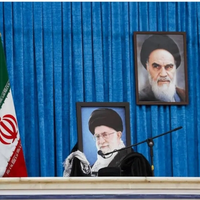
Kayhan is financed by Supreme Leader Ali Khamenei’s office and its editor is appointed by Khamenei.
The Yonhap news agency reported that Shabestari had explained that Kayhan did not speak for the Iranian government. South Korea has said it would like to see the money transferred but given US sanctions it needs Washington’s agreement.
Tehran’s foreign affairs spokesman said Monday that arrangements over repatriating Iran’s funds were “none of Washington’s business.” In January 2021, Iran detained a Korean tanker and in April 2021 banned imports of some Korean home appliances – apparently as a means to bring pressure on Seoul.

Iran said Monday "agreements" during a recent diplomatic visit over releasing blocked Iranian funds by a third country "is not up to Washington to decide."
Commenting on US State Department Spokesman Ned Price’s recent remarks over Iranian frozen funds at his weekly press briefing Monday, foreign ministry spokesman Saeed Khatibzadeh said a "delegation" had visited Tehran last week during which "certain agreements" were made. "This neither has anything to do with the US, nor we would allow the US to interfere in its details," he said defiantly.
Price said Thursday that all reports about Washington having agreed with the release of Iranian funds frozen by third countries were false.
The Iranian foreign ministry spokesman also indicated that Tehran was not going to offer any guarantees not to take revenge on American officials responsible for the Killing of the Revolutionary Guards (IRGC) commander, Ghasem Soleimani, in Baghdad on January 3, 2020, in return for Washington's delisting of the IRGC. "Bringing these individuals to justice is a fundamental principle in Iran's foreign policy," he said.
Negotiations in Vienna over reviving the 2015 nuclear agreement known as JCPOA came to a halt last month over a reported Iranian demand to remove its Revolutionary Guard from the US foreign terrorist designation. Media reports have mentioned that a US counter proposal asked Iran to renounce threats it made against former American officials for Soleimani’s killing.
Iranian officials and media said recently that Iran is set to recover $7 billion of its frozen assets "soon" independent of any outcome to the Vienna nuclear talks.
Khatibzadeh also categorically denied any relationship between unfreezing Iran's frozen assets and a possible Iran-US prisoner swap. "We separate humanitarian issues from debts," he claimed.
Iran has not revealed any details about the alleged diplomatic visit to free the blocked funds.
Iran’s Foreign Minister Hossein Amir-Abdollahian, however, on April 13 said that a foreign visit did take place the previous day and an agreement was made regarding Iranian money blocked in a "foreign bank". He made the announcement in a joint press conference with visiting Iraqi foreign minister Fuad Hussein, but his statement about the agreement did not refer to Baghdad.
Iraq is highly dependent on Iranian gas and electricity which it has continued to purchase thanks to Washington's regularly issued sanctions waivers. Baghdad, however, has not paid Iran for its energy imports due to US third-party sanctions that prohibit other countries to conduct financial transactions with Iran.
Payments for Iran’s gas and electricity imports by Iraq go to a special account in the state-owned Trade Bank of Iraq. Iran can only use the money for humanitarian commodities.
The amount of money frozen in Iraq banks was over $6 billion in September, and given that the amount has grown since then, it is quite possible that the $7 billion officials are promising to get released is money in Iraqi banks rather than South Korea which is also holding $7 billion of frozen Iranian assets.
Khatibzadeh on Monday also said that the 2015 nuclear deal has not been working for Iran for years. "Iran's economic benefits have been neglected for years. We are a responsible country, and we adhere to a commitment once we sign it," he said, adding that Tehran has its Plan B and C, regardless of the Vienna talks.
"Sanctions removal is a key issue in ministry of foreign affairs, but neutralizing sanctions has always been on the agenda too. Iran is continuing to neutralize sanctions according to its B and C plans," he said.