Kurdish Man Said Tortured To Death In Tehran Police Custody
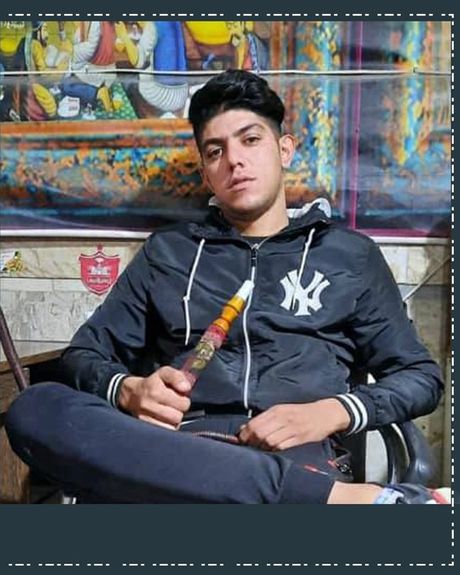
A Kurdish young man living in Tehran has died in a police detention center, with the family claiming he was killed under “torture.”

A Kurdish young man living in Tehran has died in a police detention center, with the family claiming he was killed under “torture.”
The Kurdistan Human Rights Network said on Wednesday that 25-year-old Milad Jafari was arrested on drug-related charges on April 7.
A member of Jafari’s family, which is from the western city of Kermanshah, told the human rights group that the department of forensic medicine in the Kahrizak Detention Center in Tehran Province had contacted the family to pick the dead body of their relative.
The father was shown photos of the body with clear marks of bruises and bleeding on the face, the relative said, with the authorities explaining that Jafari had committed “suicide” and “fell from a height”.
His family was also told that the body was transferred on April 8 to Kahrizak, while police said the young man died on April 11.
The family refused to take the body until autopsy results reveal the cause of the death.
The Kahrizak Detention Center is notorious for its cramped and squalid cells where prisoners have been routinely verbally abused and beaten by guards.
Two inmates, Amir Javadifar and Mohsen Ruholamini, son of a well-known political figure close to Iran’s supreme leader, were allegedly beaten to death there. They had been arrested during unrest triggered by the disputed 2009 disputed presidential elections.
Complaints lodged with Supreme Leader Ayatollah Ali Khamenei led to the closure of the detention center in 2009, but the facility re-opened a year later after being renamed Soroush 111 Detention Center.


A possible lawsuit by a conservative legal group threatens to delay the implementation of a nuclear deal by the Biden Administration, reports said on Thursday.
The Washington Free Beacon reported on Thursday that America First Legal Foundation has notified the White House that it "intends to take legal action to block any Biden-Iran deal that is not submitted to Congress" for approval.
In a litigation notice letter sent to President Joe Biden, Secretary of State Antony Blinken and Attorney General of the United States Merrick Garland, the Foundation says, “Please be advised that AFL intends to take legal action to block any BidenIran deal that is not submitted to Congress in full compliance with the Iran Nuclear Agreement Review Act.”
In the letter the group also argues that President Biden’s call for Iran and the United States to “mutually return” to the 2015 nuclear deal known as the JCPOA does not absolve the administration of its duty to comply with Iran Nuclear Agreement Act. It says that too many things have changed since the deal was signed in 2015, with Iran breaching its terms and sunset clauses either having passed or close to maturation. A new agreement in Vienna would not be simply the continuation of the JCPOA and therefore, it must be submitted to Congress for review and a vote.
The tactic of legal action could be aimed at making the White House think twice before concluding an agreement, although this has become more complicated since early March, when new Russian and Iranian demands brought the talks to a halt. Rep. Scott Perry (Rep-Pa) told the Free Beacon the threat of prolonged litigation "puts the administration on notice so that they think twice before proceeding."
If legal action is taken in the event of a final agreement, the group hopes that it could delay the deal’s implementation by a long litigation process.
Opposition to a new agreement has gained strength since reports indicted that Iran demands its Revolutionary Guard to be removed from the US list of Foreign Terrorist Organizations (FTO). Almost all Republican lawmakers and some Democrats have come out opposing a deal with Iran that would provide billions of dollars in sanctions relief and cash funds currently frozen in various countries.
On Thursday, Rep, Claudia Tenney (Rep-NY) in an opinion piece in Newsweek argued that the Biden administration is avoiding Congress, She said US Special Envoy for Iran, Robert Malley is hiding from Congress.
The role of Russia in Vienna talks is another issue critics highlight, which has gained more traction since the invasion of Ukraine. Moscow appeared to be playing an important role in the talks in Vienna as a broker between Washington and Tehran. They say that Russia and possibly China designed a deal that would benefit them and Iran, which is a sworn enemy of the United States in the Middle East.
The America First Legal Foundation in its letter also warns the administration to preserve and protect all the records of the negotiations.
"You are on notice to cease and desist from deleting or destroying all records, including but not limited to emails, whether under an agency document destruction policy or otherwise," the notice said. It added that the Foundation "considers these records to be valuable and

A seminar organized to discuss the Islamic Republic’s actions and impacts on the Middle East and beyond has been cancelled due to security concerns.
Bryan E. Leib, the executive director of Iranian Americans for Liberty, who was among the panellists of the event told Iran International on Thursday that the seminar was cancelled when organizers found out that two of the participants -- Mark Dubowitz and Victoria Coates -- are on the Islamic Republic’s sanctions list.
The event was scheduled to be held on Tuesday, April 19, at the Albany Club in the Canadian city of Toronto.
“The event organizers were alerted of security concerns and in an abundance of caution, the event was cancelled”, Leib said, adding that “We will be rescheduling this event with proper security precautions because we will never stop speaking out against the malign influence of the Islamic Republic of Iran throughout the world."
Dubowitz is a South African-born Canadian-American attorney and the CEO of the Foundation for Defense of Democracies, a non-profit think-tank and advocacy institute with a critical focus against Iran’s clerical government. He is known as a proponent of sanctions against Iran and was a leading critic of the Iran nuclear agreement.
Coates is an American political consultant who served as the Deputy National Security Advisor for Middle East and North African Affairs in former president Donald Trump’s administration.

An Iranian political prisoner, who was arrested during mass protests in December 2017, has died due to the injection of an unknown substance in prison.
Mehdi Salehi, whose death was announced in social media on Thursday, had a stroke and went into a coma in January because of the injection of an unknown drug by Esfahan prison officials, human rights monitors said at the time.
A source close to Salehi's family told Iran International that he was chained to the bed in hospital. Recently, he had come out of coma but suddenly the family was told that he passed away.
He was among five protesters sentenced to death, with Iran Human Rights Organization warning about the possibility of authorities secretly executing them.
Large nationwide protests in December 2017 were triggered by rising prices and turned into anti-Islamic-Republic unrest in over 100 cities and towns. Hundreds of striking and protesting workers and labor activists have also been arrested since 2017, many spending months in prison. Some are still detained without trial.
In a report released this week, Amnesty International slammed Iran for prisoner deaths resulting from deliberate denial of medical care, turning prisons into "waiting rooms for death".
The global rights organization has documented how prison authorities routinely cause or contribute to deaths in custody, including by blocking or delaying prisoners’ access to emergency hospitalization.
Sixty-four of all these prisoners died inside their prison cells meaning they were not given even basic medical supervision in their final hours.

A group of more than 300 Iranian university professors, scholars, and environmentalists has written to Iran’s Supreme Leader opposing a petrochemical project scheduled for northern Iran.
In a letter published Thursday, they asked Ali Khamenei to intervene and stop the petrochemical plant near the Miankaleh wetland, Mazandaran province, which they say will have adverse environmental impacts on the coastal region. Politicians supporting the plant − which will convert natural gas to propylene, which has a range of uses in manufacturing − say it would create 75,000 jobs, but offer no evidence.
The environmentalists’ letter argued Iran already had sufficient propylene, and that a similar project in northern Iran begun by the Golestan Petrochemical company 17 years ago was in limbo although local ranches had been destroyed. The letter alleged there were around 90 abandoned petrochemical projects across the country, for which 40 construction permits had been issued under the previous government of President Hassan Rouhani.
They added that the area earmarked for the petrochemical unit in Miankaleh was high-quality agricultural land and was near to an international Unesco biosphere reserve. The environmentalists said that some work on the site – opponents of the development Tuesday cited welding for fencing and other preparations – was going on despite this week’s orders from President Ebrahim Raisi and the supreme court to pause or halt construction.

Iran will support all those who fight against “the Zionist regime” and speed up its destruction, the commander of the IRGC's Qods (Quds) Force said Thursday.
Esmail Ghaani (Qaani) also issued a threat that Iran will harshly confront Israel "wherever it feels necessary", local media reported.
"Wherever we identify a Zionist threat, we will harshly confront them, they are too small to confront us," he said.
He was speaking at a memorial service for the Revolutionary Guard (IRGC) general, Mohammad Hejazi who passed away last April, in what was said to be injuries he sustained in a chemical attack during the Iran-Iraq war. However, reports after his death mentioned Covid-19 as a possible cause.
Ghaani praised recent terror attacks against Israeli civilians that has killed 14 people. “The youth of the resistance [front] with their operation have disrupted the whole system of the Zionist regime. One Palestinian youth shakes the foundations of the Zionists, who make noise that they want to fight Islamic Iran,” the commander of IRGC’s extraterritorial force said.
Ghaani assumed the command of the Qods Force after Qasem Soleimani was killed in a US drone strike in Baghdad in January 2020. Former US president Donald Trump had approved the targeted killing, for which Tehran has vowed revenge against former US officials.