Blinken Says ‘Not Very Optimistic’ Over Iran Nuclear Deal

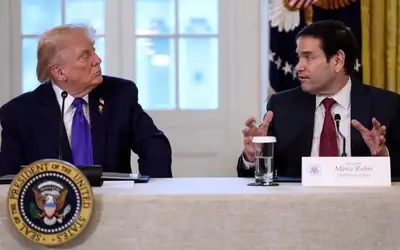
US Secretary of State Antony Blinken told NBC News Wednesday in Brussels he is “not overly optimistic about actually getting an agreement,” in Iran nuclear talks.

US Secretary of State Antony Blinken told NBC News Wednesday in Brussels he is “not overly optimistic about actually getting an agreement,” in Iran nuclear talks.
Blinken added he believes “it would be in the best interests of our country if we can get back into compliance” with the 2015 Iran nuclear deal “if Iran will do the same.”
Efforts to revive the agreement, which former president Donald Trump abandoned in 2018 prompting Iran to expand its nuclear program, are currently paused. Talks in Vienna have struggled to agree which US sanctions, vastly extended by Trump, violated the agreement and exactly how Iran’s nuclear program, expanded since 2019, should be returned to the limits of the deal, the JCPOA (Joint Comprehensive Plan of Action).
Blinken stressed Washington’s cooperation with France, Germany, and the United Kingdom, without mentioning China and Russia, also JCPOA signatories and part of the Vienna process.
Asked if Iran’s Revolutionary Guards were a “terrorist organization,” Blinken replied “they are,” but then added he was “not going to get into the details of where we are in the negotiations.” One point reportedly at issue in the Vienna talks is whether the IRGC should be removed from the US list of ‘foreign terrorist organizations,’ where they were placed by Trump in 2019 after introducing ‘maximum pressure’ sanctions. The IRGC are the only example of any state’s armed forces designated in this way and are subject to other US sanctions.
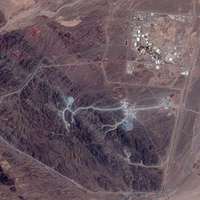
Iran has moved equipment used to make components for enriching uranium from the workshop at Karaj, just west of Tehran, to Natanz, the IAEA said Wednesday.
The IAEA reported that the equipment − used to make parts for centrifuges, which enrich uranium − “remained under Agency seal at this location in Natanz and, therefore, were not operating.” Six weeks ago, Iran set up a plant to make parts at Esfahan, another nuclear facility, a move reported to the IAEA in January.
The IAEA (International Atomic Energy Agency), the United Nations nuclear watchdog, had its access to Iran’s atomic program reduced in early 2021. Iran in December agreed to the installation of new cameras at Karaj, after an apparent attack June 2021 widely attributed to Israel. Iran’s security review at the site had threatened a temporary arrangement over monitoring equipment agreed by Iran and the agency in February.
In another area closely followed by the agency, Iran’s nuclear chief Mohammed Eslami said Wednesday that Iran had passed documents to the IAEA related to uranium traces in three sites used before 2003.
Iran and the agency in March agreed a plan to resolve controversy over the traces, which many analysts believe resulted from equipment supplied by Pakistani nuclear scientist AQ Khan. Iran was due to supply answers and evidence by late March, with outstanding questions resolved by June 20.

"We have handed over the documents on March 20 to the agency,” Eslami told a televised news conference. “They are reviewing those documents and probably the agency's representatives will travel to Iran for further talks, and then the IAEA will present its conclusion.”
While the IAEA is not directly involved in Vienna talks between Iran and world powers aimed at reviving the 2015 Iran nuclear deal, it would monitor a revived deal and IAEA chief Rafael Mariano Grossi has made clear the agency would be better placed to access Iran’s nuclear program under powers conferred by the 2015 agreement, the JCPOA (Joint Comprehensive Plan of Action). Grossi said last month he would report on Iran’s answers over the pre-2003 nuclear work to a Board of Governors' meeting beginning June 6.
New complications
With delays in the nuclear talks, both with new complications over with sanctions against Russia and disagreements between the US and Iran, JCPOA opponents in both Washington and Tehran have stepped up their efforts.
Tasnim news agency reported Tuesday that 190 Iran parliamentarians had written to President Ebrahim Raisi urging Iran’s “red lines” and national interest to be upheld. In Washington, Democrat Congressman Josh Gottheimer, among 15 Democrats holding a press conference Wednesday criticizing the Vienna talks, tweeted: “are we seriously going to let a war criminal– Vladimir Putin – be the guarantor of this deal?”
Russia was one of six world powers that signed the JCPOA in 2015. Former president Donald Trump withdrew from the agreement in 2018 and imposed ‘maximum pressure’ sanctions on Iran, which a year later began expanding its nuclear program beyond JCPOA limits. President Biden has expressed commitment to revive the JCPOA but has continued ‘maximum pressure.’

Israeli Defense Minister Benny Gantz has said Iran had increased its stock of 60-percent enriched uranium from 10 kilogram to 50 kilogram since August 2021.
In an address to dozens of foreign ambassadors on Wednesday, Gantz called for the implementation of a robust “plan B” that would include using force as well as economic and diplomatic pressure against Iran to rein in its nuclear program.
According to the minister, Tehran continues to “bury its [nuclear] means in underground hiding places and installed another cascade in Fordow”, Iran’s second most important uranium-enrichment site.
“We are in a race against time”, Gantz warned, adding that a good nuclear agreement between Tehran and world powers isn’t the one that is currently being cooked up by negotiators in Vienna.
“We want an agreement that doesn’t have an expiration date that gives Iran legitimacy to advance its nuclear program when it ends, with extensive monitoring everywhere at any time and monitoring the ballistic missiles Iran is developing”, he said.
In a Wednesday statement summarizing a confidential report to member states seen by Reuters, the UN nuclear watchdog said that Iran moved all its equipment to make centrifuge parts from its mothballed workshop at Karaj to its sprawling Natanz site. The International Atomic Energy Agency (IAEA) said its monitors had verified that “these machines remained under agency seal at this location in Natanz and, therefore, were not operating".
Earlier in the day, Iranian nuclear chief Mohammad Eslami said Iran had sent documents related to outstanding issues to the IAEA.

Iranian media has quoted an unnamed official as saying that a big portion of Iran’s frozen funds will be released in a deal "independent" of the nuclear talks.
An informed but unnamed source spoke about the new agreement to Iran's official news agency IRNA on Wednesday without providing further detail or any timeframe.
He said the amount is several times more than the €470-million debt recently paid by the UK in exchange for releasing two British Iranians -- Nazanon Zaghari-Ratcliffe and Anoosheh Ashuri. His reference to the hostage release deal could be an indication of a similar agreement with the US on a larger scale.
This is not the first time that “informed sources” in Iran claim that release of frozen assets is imminent.
In January, a member of the board of directors of the Iran-Iraq chamber of commerce, Hamid Hosseini, denied reports by the Iranian state-run media that Iraq had released Iran’s funds.
In December, Iran’s Foreign Ministry confirmed similar reports about Tehran accessing some of its frozen funds abroad, but no transfers took place.
The semi-official Iranian Students News Agency (ISNA) reported November 13 that Iran's assets frozen abroad -- largely for money owed for oil and energy shipments -- totaled $50 billion, with $8 billion in South Korea, $3 billion in Japan, and $6 billion in Iraq.

Iran has sent documents related to outstanding issues to the International Atomic Energy Agency (IAEA), Iranian nuclear chief Mohammad Eslami Said Wednesday.
Iran and the International Atomic Energy Agency (IAEA) last month agreed a three-month plan to try to resolve a long-stalled issue over uranium particles found at old but undeclared sites in the country. Resolving the issue would remove an obstacle to the revival of a 2015 nuclear deal between Iran and world powers.
"We have handed over the documents on March 20 to the agency. They are reviewing those documents and probably the agency's representatives will travel to Iran for further talks and then the IAEA will present its conclusion," Eslami told a televised news conference.
The agency has long said Iran had not given satisfactory answers on those issues, but in early March they announced a plan for a series of exchanges.
IAEA chief Rafael Grossi said last month he will aim to report his conclusion by the June 2022 (IAEA) Board of Governors' meeting, which begins on June 6.
The joint plan will help to secure the nuclear deal, which Washington exited in 2018 and reimposed crippling sanctions on Iran.
Eleven months of indirect talks between Iran and the United States in Vienna on salvaging the 2015 deal have stalled as both sides say political decisions are required by Tehran and Washington to settle the remaining issues.
Report by Reuters

US Democratic Congressman Ritchie Torres says he believes there would be “bipartisan opposition” to the renewed nuclear deal with Iran.
In a brief conversation with the American Israeli Public Affairs Committee broadcast Tuesday, the first-term representative said “a majority in both the House and the Senate” would oppose an agreement if brought to a vote.
Torres added that he is against the sanctions relief because the agreement under discussion would slow but not dismantle Iran’s nuclear program, noting that a deal between Washington and Tehran without bipartisan support would undermine the credibility of the United States.
“I worry about an endless cycle of a Democratic president renegotiating the Iran deal, followed by a Republican president who withdraws from it. We should have an agreement that can stand the test of time”, Torres said.
The original deal was rejected by the Congress in 2015 -- in the House by a 269-162 margin and in the Senate by a 56-42 majority — but it wasn’t enough to override a promised veto by former President Barack Obama.
Democrats are alarmed by reports that the Biden administration is considering removing Iran’s Revolutionary Guard (IRGC) from the State Department’s Foreign Terrorist Organization list.
Fifteen Democratic House members are expected to speak out against the potential agreement later on Wednesday, raising “concerns about the looming Iran deal” in a news conference outside the Capitol.