Tehran Says Improving Iran-Saudi Ties Benefits All Regional Countries

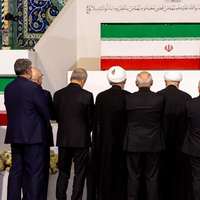
Iran’s Foreign Ministry spokesman attending an Islamic gathering on Tuesday has said improving Tehran-Riyadh relations would benefit all regional countries.

Iran’s Foreign Ministry spokesman attending an Islamic gathering on Tuesday has said improving Tehran-Riyadh relations would benefit all regional countries.
In an interview with IRNA Tuesday in Pakistan’s capital Islamabad at the 48th session of the Council of Foreign Ministers of the Organization of Islamic Cooperation (OIC), Saeed Khatibzadeh said that the OIC was one platform that could facilitate Iran-Saudi relations within the context of unity among Muslim nations.
Iranian President Ebrahim Raisi (Raeesi), who took office last August, has stressed the importance of improving relations with neighbors, and Tehran has conducted four rounds of talks with Riyadh facilitated by Iraq. Diplomatic relations were severed in 2016 after Tehran protestors attacked the Saudi embassy following the execution of Shia cleric Nimr al-Nimr.
Earlier this month Iran suspended the talks a day after Saudi Arabia announced it had beheaded 81 men, including seven Yemenis and a Syrian, for “heinous crimes.” Forty one were Saudi Shiites, Human Rights Watch reported, apparently convicted over protests.
Khatibzadeh welcomed Iran’s renewed participation in OIC since it reopened its representative office in Jeddah, the OIC base, in February. With 57 member states, the OIC represents around a quarter of the world’s population. Iran’s trade with OIC countries was reportedly $42 billion in the first ten months of the last Iranian year, ending January 20.
"From Yemen to Afghanistan, the Islamic world's unity is the key to address the crises,” Khatibzadeh tweeted.
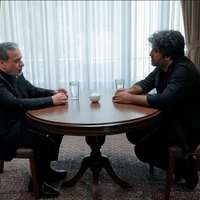
Leaders of Egypt, Israel and the United Arab Emirates met Tuesday for talks focused on economic fallout from the Ukraine crisis, while Iran was also discussed.
Egypt said discussions covered energy markets and food security. Both Russia and Ukraine are major exporters of agricultural products to the Middle East and North Africa.
Analysts said Iran’s regional policies were also brought up, but rising food and oil prices were more on the mind of Egyptian President Abdel Fattah al-Sisi in hosting Sheikh Mohammed bin Zayed al-Nahyan, Crown Prince of Abu Dhabi and de facto UAE leader, and Israel's Prime Minister Naftali Bennett. This was the first three-way summit since Israel and the UAE ‘normalized’ relations in 2020.
Egypt, the world’s largest wheat importer takes half of its imports from Russia and another 30 percent from Ukraine. Cairo Monday devalued its currency by 14 percent, and its Red Sea resorts are losing tourist income from wealthy Russian and Ukrainian visitors. The Egyptian military government that seized power in 2013 has strengthened links to Israel but despite over $1 billion aid from the US in 2021 may now seek financial assistance from the UAE.
Inadequate food
Egypt’s apparent priorities at Sharm el-Sheikh summit reflect increasing international concern over food supplies. Human Rights Watch reported Monday that regional governments needed urgently to find ways to protect their populations from the consequences of losing imports from Ukraine and Russia. Nearly one in three people in the Middle East and North Africa did not have access to adequate food in 2020, the HRW watch report said, an increase of 10 million people in just one year.
Israel, despite its links to Russia and Russian-speakers making up around 15 percent of its population, has broadly supported the US over Ukraine, while UAE has remained neutral and along with Saudi Arabia has resisted calls from Washington to increase oil exports to meet shortfall in Russian exports.
The Saudi government Tuesday stressed the “essential role” of the ‘Opec+’ agreement (production deals agreed by the Organization of Petroleum Exporting Countries with Russia) in balancing global oil supplies. The statement was taken as a sign it was unlikely the grouping would agree at its March 31 meeting to raise output as the US and some European states have requested in the face of rising prices. Benchmark Brent was at $111 a barrel Tuesday.
Iran Nuclear Deal
While the Gulf Arab states and Israel remain critical of efforts to revive Iran’s 2015 nuclear deal with world powers, the JCPOA (Joint Comprehensive Plan of Action), Iran is not topping the agenda in Sharm el-Sheikh. Bennett has moderated his past attacks on the JCPOA as some former Israel intelligence officials have cautiously supported the deal’s revival.
After the Gulf Arab states’ close relationship with the previous US administration of President Donald Trump, when they stepped up arms deals, their links had cooled under President Joe Biden.
But while the Biden administration has expressed concern over the humanitarian crisis in Yemen, where 4 million have been displaced, it has also lately increased military support for Saudi Arabia, including reportedly Patriot missiles, after Ansar Allah – the Houthis – have brought the war from Yemen, where Saudi Arabia has been involved since 2015, to missile strikes on the kingdom.

Iran’s problem with the “enemy” is fundamental and will never be resolved with negotiations, Vice President Mohammad Mokhber told reporters on Tuesday.
Without naming the United States, Mokhber said, “Some think [the problem with the enemy] will be resolved through talks, but it is not so, although we should negotiate to lift the sanctions.”
Praising what he called the people’s readiness to sacrifice, the vice president added, “In negotiating with the West we need to be in a position of power and the enemy should accept that it cannot eradicate us. This crucial need cannot be addressed with ballistic missiles, but with people’s support and their high spirits.”
He compared the current situation with the 8-year war between Iran and Iraq in the 1980s, to highlight the importance of sacrifices by the people.
Mokhber’s comments come as Iran’s decade-old economic crisis has led to repeated protests and labor strikes since 2017 and the weakening of regime’s legitimacy. The June 2021 presidential elections also saw the lowest turnout in the 43-year history of the Islamic Republic.
Mokhber was a top business manager in the office of Supreme Leader Ali Khamenei before becoming President Ebrahim Raisi’s first vice president. He was the director of the Execution of Imam Khomein’s Order, an entity meant to be a charitable organization, which has become a business conglomerate by controlling companies, banks and businesses.

Iran says its embassy in Ukraine will temporarily relocate to Moldova due to the Russian invasion of the country.
The Embassy of the Islamic Republic in Kyiv issued a statement on Tuesday, announcing the temporary transfer of the embassy to the Moldovan capital.
The statement said that “due to the ongoing war in Ukraine and the impossibility of continuing the embassy’s operations” the embassy moves to Chișinău “until the situation normalizes”.
About a month into the invasion, Russia continues its bombardment of several Ukrainian cities while its troops and artillery remain on the outskirts of Kyiv.
Dozens of Iranian students stranded in the first week of invasion in Ukraine later left the country via land corridors to Romania and other Eastern European countries.
Tehran has backed Moscow in the invasion baling the United States and Nato for the crisis. However, clear media divide has emerged in Iran over the war in Ukraine, with some hardliner media repeating Moscow’s propaganda and others trying to reflect reality.
Russia's ambassador in Iran has said that Moscow will continue its "special military operation" in Ukraine until its objectives are attained.
However, former senior Iranian lawmaker Heshmatollah Falahatpisheh has said that the crisis in Ukraine provides a golden opportunity for Iran to get a foothold in international energy markets.

A Republican Congresswoman has criticized the Biden administration for considering removing Iran’s Revolutionary Guards from the US foreign terrorist blacklist.
Representative Claudia Tenney said in a tweet on Monday that “the IRGC is actively plotting to kill Americans in the United States and has already killed Americans abroad”.
“Why is the Biden Administration even considering removing the group’s terrorist designation?” she asked.
The talk of removing the IRGC from the list has drawn sharp criticism from Republicans as well as Democrats since sources told Axios and Reuters last week that Washington is weighing the option in return for unspecified Iranian assurances.
Democratic congresswoman Elaine Luria, a naval veteran, said last week that reviving the JCPOA would “put Iran and Israel on a collision course,” echoing remarks by Israel’s ambassador to the United States Michael Herzog.
In addition to American officials, Israel’s prime minister and foreign minister have called on Washington to keep IRGC on the list, saying “The Revolutionary Guards are a terrorist organization that has murdered thousands of people, including Americans”.
Iranian officials have been publicly raising the issue since at least November, saying a ‘good deal’ would mean lifting sanctions on the Revolutionary Guard.
Such a step would reverse former President Donald Trump's 2019 blacklisting of the group, the first time the US had formally labeled part of another sovereign government as a terrorist group.

Egypt hosted Israel's prime minister and the de facto leader of the United Arab Emirates Monday, sources said, as talks to revive the Iran deal remain in limbo.
Although there was no official announcement about the presence of Israel’s Naftali Bennett, two Egyptian security sources told Reuters that President Abdel Fattah al-Sisi his guests held discussions that covered the consequences of the war in Ukraine.
Persian Gulf states were excluded from talks to revive the 2015 nuclear deal with Iran that they have criticized for not addressing Iran's missiles program and regional proxies, including in Yemen.
Egypt's presidency said Sisi and the UAE's Sheikh Mohammed bin Zayed al-Nahyan held expanded bilateral talks on issues including economic investment, in the Red Sea Resort of Sharm el-Sheikh.
Sisi stressed Egypt's commitment to security in the Persian Gulf and "rejection of any practices that seek to destabilize it," the presidency said in a statement.
The UAE along with Saudi Arabia has resisted Western calls to hike oil output and contain a jump in crude prices caused by the conflict in Ukraine.
Egypt faces new economic pressures due to the war that saw it devalue its currency by 14% on Monday. It has called on financial support from wealthy Gulf states in the past.
Bennett visited Egypt last September, the first official trip by an Israeli head of government to the country in a decade.