Iran, South Korea To Start Discussions To Free Tehran’s Frozen Assets

Iran and South Korea have planned to start negotiations next month in Seoul to devise a mechanism as to how to release Iranian funds frozen due to US sanctions.

Iran and South Korea have planned to start negotiations next month in Seoul to devise a mechanism as to how to release Iranian funds frozen due to US sanctions.
An informed source told Yonhap on Saturday that working-level consultations to untangle the disputes will take place next month.
Seoul officials say the proposed working groups will go over details of a potential money transfer once sanctions are lifted in case the Vienna talks manage to revive the 2015 nuclear deal, adding that they are also expected to discuss other aspects in the event of a no deal.
"The working groups are expected to mainly discuss details of the payment method of the Iranian assets if the US grants sanctions relief," they said.
The source told Yonhap on the condition of anonymity that the working groups “could talk further on the possibility of resuming oil imports from Iran once sanctions are lifted."
According to the Korea International Trade Association, Seoul stopped purchase of Iranian oil since 2019 due to sanctions that ban the Islamic republic's oil exports.
Two South Korea banks hold $7-9 billion of Iranian money, owed for oil imports, but the funds are locked under US sanctions, which were reimposed after former President Donald Trump in 2018 withdrew from the deal.
Earlier this month South Korea got the green light from the US to pay over $18 million of Iran’s dues to the UN from the blocked assets so that Iran can get back its power to vote.
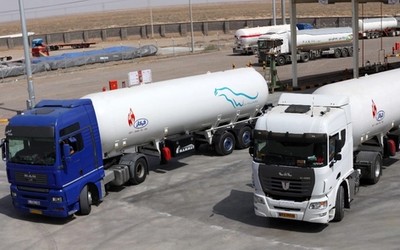
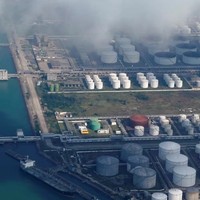
Ten Republican Senators have written to President Joe Biden telling him he is endangering US national security by not enforcing Iranian oil export sanctions.
The Senators, including Tom Cotton (R-Arkansas) and Ted Cruz in their letter dated January 28 told Biden that a growing fleet of non-Iranian oil tankers and buyers such as China are not afraid of US retaliation any longer and are trading in hundreds of thousands of barrels of crude oil a day.
“The vessel owners and their customers in China are taking greater risks because they believe that your administration is too weak and indecisive to punish them for their crimes,” the letter says and accuses Biden of unwillingness to enforce sanctions to keep nuclear talks alive in Vienna.
For the first time in a year, China officially reported in January that it is importing Iranian oil, with US making no public demarche.
The United States imposed partial sanctions on Iran’s oil exports in 2018 when former president Donald Trump withdrew from the Obama-era nuclear agreement known as JCPOA. Full sanctions followed in May 2019, bringing Iranian shipments down to around 200,000 bpd from a high of more than 2 million barrels before the sanctions.
The Republican Senators charged that currently Iran is shipping well over one million barrels per day because, “the boom in oil sales has refilled the Iranian regime’s once-empty coffers, removed crucial American leverage over Iran, and encouraged the Iranians to stall negotiations in Vienna and irreversibly advance their pursuit of a nuclear weapon. It is long past time to stop your dithering. You are putting U.S. national security at risk.”
Arguing that the proceeds from additional oil sales will go to finance the Revolutionary Guard, which is listed as a terrorist organization by the United States, the Senators said, “enforcing oil sanctions against Iran is also enforcing terrorism sanctions against Iran. Bipartisan laws enacted by Congress in 2011 and 2012 targeting Iran’s oil exports and energy sector require the President to enforce these sanctions.”
The Biden Administration has not officially acknowledged that Iran is exporting more oil or that it is not enforcing the sanctions vigorously. If the negotiations in Vienna succeed in restoring the JCPOA, it is expected that oil sanctions will be lifted. Republicans say the talks, which started almost ten months ago are doomed to end either in an impasse or substantial US concessions.
The Biden Administration says its priority and focus is on reviving the 2015 nuclear deal to stop Iran from building nuclear weapons and argues that Trump’s withdrawal from the agreement and its ‘maximum pressure’ sanctions have not stopped the Islamic Republic’s nuclear program or regional aggression.
Earlier in January more than 100 Republican members of Congress wrote to Biden asking him to stop the negotiations and get tough with Iran, which is fast enriching uranium to higher levels.
Iran’s enrichment picket up in early 2021, after Biden said he wants to restore the JCPOA and moved toward opening talks with Iran.
The ten Republican Senators urged Biden to enforce US sanctions, saying, “Each day you delay gives Iran more money to finance their terrorist activity and more time to develop a nuclear weapon. We would also remind you that sanctions against Iran’s oil exports are mandatory and passed Congress with bipartisan majorities. You are not above the law and must stop violating it.”

An Iranian lawmaker says there is no good news from the Vienna nuclear talks because technical issues that are obstacles to revive the nuclear deal are not resolved yet.
Ali Alizadeh, the secretary of the National Security and Foreign Policy Committee at Iran's parliament, said in an interview published on Friday that it is not likely that the negotiations lead to any results in the near future.
Despite numerous reports about Tehran not considering an interim deal with the world powers, Alizadeh said Iran has not yet announced any formal position on whether to approve or reject the plan, which proposed partial steps in sanction removal and halts in the Islamic Republic’s nuclear program.
The suggestion of an interim agreement came first from a European state with the idea focused on releasing Iranian money frozen in Asia. Iran's assets frozen abroad are said to be $50 billion, including $8 billion in South Korea, $3 billion in Japan, and $6 billion in Iraq.
Commenting about the release of Iran's blocked assets, Alizadeh said that with the green light of the Western side and without a media hype, it is happening through Chinese channels instead of the EU-Iran Instrument in Support of Trade Exchanges (INSTEX).
“In other words, the sale of Iranian oil and the return of its money to the country is taking place with no trouble, which can be considered a positive step in motivating the parties to conclude the negotiations”, he said.

There are more than 30,000 idle production plants across Iran that are completely closed or semi-active due to economic and legal issues.
The Iranian president’s deputy for rural development said on Tuesday that many of these units cannot be revived but some 20 to 25 percent can be brought back to production and the supply chain.
Amir-Hossein Madani added that most of these units are from sectors of mining, agriculture and small industries.
He said the priority of the current administration is to activate the stagnant sectors in rural areas.
Madani pointed out that some of these units were closed or underperforming due to the consequences of sanctions, but many of them are not operational because of other financial and legal problems.
According to reports by Iran’s Ministry of Industry, Mine and Trade, during the last Iranian year (from March 20, 2020 to 2021) over 1,500 inactive units returned to the production cycle through various methods such as providing liquidity and facilities, modifications in the production line and management changes.
Iran suffers from a lack of investments and a centralized economy. Pundits say Iran’s economy is at its most dangerous historical pointin the past four decades with rising inflation, lack of liquidity and international sanctions that would not allow Western companies to have any business dealings with Iran.

Advocacy group United Against Nuclear Iran (UANI) has released a satellite photo of two oil tankers during ship-to-ship transfer of Iranian crude reiterating calls for sanctioning them.
UANI Chief of Staff Claire Jungman said on Saturday that after clouds cleared in the South China Sea they managed to spot the vessels that were transferring Iran’s crude oil east of Singapore.
“TIFANI and VORAS, two vessels we've repeatedly called for sanctions on, are feeding vessels that are spoofing their automatic identification system (AIS) transponders”, she said in a tweet with the image.
TIFANI is currently sailing under the flag of Tanzania and VORAS is Guyana-flagged and owned by Malaysia International Shipping Corporation Berhad.
The news came just a day after Reuters reported that a US safety firm has cancelled environmental and safety classification of two tankers after UANI alerted the classification company that they had carried cargoes of Iranian oil.
Without the certification -- the so-called class cover that includes vessel safety inspections -- vessels are unable to secure insurance cover or call at most international ports.
UANI that tracks Iran-related tanker traffic through ship and satellite data, informed the American Bureau of Shipping, the company that provides such certifications services, about the breach of US sanctions in December.

South Korea has paid part of Iran’s delinquent dues to the United Nations from funds frozen at its banks because of American sanctions, Seoul announced Sunday.
Seoul "on Friday completed the payment of Iran's UN dues of about $18 million through the Iranian frozen funds in South Korea, in active cooperation with related agencies such as US Treasury's Office of Foreign Assets Control and the United Nations Secretariat," the finance ministry said in a statement.
This was the second time South Korea, with approval of the United States has paid Iran’s debts to the UN. A similar payment was made last June but Tehran lost its right to vote once again according to membership rules demanding a minimum amount of arrears to be paid.
Questions were raised in the first week of January when South Korean Vice Foreign Minister Choi Jong-Kun visited Vienna where Iran and world powers are negotiating over the revival of the 2015 nuclear deal. The Korean diplomat met all sides and observers expected that Seoul was negotiating to find an acceptable process to begin releasing around $7 billion it holds as frozen Iranian funds.
The case might still prove to be a much wider deal with Seoul than to just pay the UN dues, but at this stage there appears to be very limited progress in the talks for the US to agree to the release of a larger amount.
Tehran is demanding that South Korea must release all the money regardless of the outcome of the Vienna negotiations. Iran’s chief negotiator Ali Bagheri-Kani met the Korean diplomat in Vienna on January 5 and demanded the unconditional release of the funds, but Washington said it would waive third-party banking sanctions for South Korea only with “everything” agreed. Meaning a final deal on the nuclear issue.
Nevertheless, many critics say that the Biden Administration is too eager to accommodate Iran’s demands as it has already reduced sanctions’ pressure on Tehran. Richard Nephew, a key member of the US negotiating team and an expert on sanctions reportedly was in disagreement with US chief negotiator Robert Malley and left the negotiations for another job at the state department.
The news about the payment of the UN dues by US agreement came just two days after Iran was the only country to reject a General Assembly vote approving a definition of the Holocaust. Critics were quick to highlight the point, saying Tehran deserves no good-faith gestures.
The funds held by two Seoul banks are Iran’s proceeds from oil exports before the Trump administration imposed sanctions on Iran after it withdrew from the 2015 Joint Comprehensive Plan of Action (JCPOA) in May 2018.
Negotiations in Vienna are progressing far too slowly according to the Biden Administration and US allies, the United Kingdom, France and Germany who are participants in the JCPOA talks as signatories of the agreement in 2015. They have told Iran it has weeks, not months, to close a deal. The reason is Iran’s high-level enrichment of uranium in violation of the JCPOA that bring it ever closer to amount of fissile material it would need to make a nuclear bomb.