US Special Envoy For Iran Asks Ex-Hostage To End Hunger Strike

In a meeting with a former American hostage in Iran who is on a hunger strike, a senior US diplomat urged him to end his protest action to protect his health.
In a meeting with a former American hostage in Iran who is on a hunger strike, a senior US diplomat urged him to end his protest action to protect his health.
US Special Envoy for Iran Robert Malley met with Barry Rosen, a survivor of the Iran Hostage Crisis, who has started a hunger strike at the venue of nuclear talks in Vienna between Tehran and world powers.
During their talk on Wednesday, Malley urged Rosen to end his hunger strike to protect his health, saying the crisis of dual citizens held hostage by the Islamic Republic “has our full attention”.
“He (Rosen) and the other Embassy hostages are heroes. We are moved by his commitment to wrongfully detained foreign/dual nationals in Iran”, Malley said in a tweet.
Rosen, who is campaigning for the release of hostages imprisoned by Iran, appreciated the “very productive conversation” with Malley, adding that “we discussed the plight of the foreign nationals and dual nationals currently imprisoned in Iran” without disclosing further details about their one-hour talk.
Rosen hopes his move can stop the United States from reaching a deal with Iran until the hostages are freed.
UK-based Iranian journalist and activist Jamshid Barzegar has joined Rosen’s sit-in in Vienna to draw attention to hostages and all political prisoners held by Tehran.

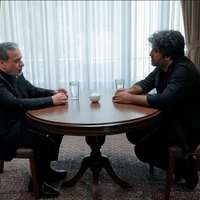
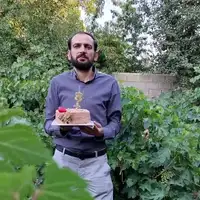
Barry Rosen, a survivor of the Iran Hostage Crisis, has started a hunger strike in Vienna where diplomats from Iran and world powers are negotiating to salvage the 2015 nuclear deal.
Rosen, who arrived in Vienna on Wednesday, says he will hold his protestfor the freedom of the dozens of hostages held unjustly by the Iranian regime, asking the world to “prioritize their release”. He spend 444 days in captivity in the US embassy in Tehran from November 1878 to January 1980.
Rosen has expressed hope his move can stop other countries from reaching a deal with Iran until the hostages are released.
Another journalist and rights activist Jamshid Barzegar says he’s going to join Rosen’s sit-in in Vienna to draw attention to hostages and all political prisoners held by Tehran.
Barzegar said in a tweet that he is joining the hunger strike also to protest the Islamic Republic's “murder of poet Baktash Abtin,”who died of Covid-19 complications following days of medically induced coma after he was denied timely treatment by officials at Tehran’s notorious Evin prison.
The poet and writer was sentenced to six years in prison in May 2019 for his writings.
Since the 1979 revolution the Islamic Republic has arrested and jailed many foreigners on vague and trumped-up charges to use them as bargaining chips against Western countries.
OPINION- While 2022 has just begun, the extent of human rights crimes against political prisoners by the Islamic regime in Iran is highly painful and bloody.
In January 2022, Adel Kianpoor died after a week of hunger strike in prison. Boxing champion Mohammad Javad Vafaei was sentenced to death. Mehdi Salehi, who was arrested after the mass protests of December 2017, had a stroke and went into a coma after being injected with an unknown substance in prison. Mohsen Ghasemi, a former World and Asia wrestling champion, died on January 14 after being in a coma for two years. Baktash Abtin, a poet, writer, and documentary filmmaker, died in hospital after contracting Covid in jail. Political prisoners Sadegh Omidi, Mehdi Darini, Hamid Kashani, Ali Asghar Hassani Rad, Mahmoud Ali Nejad, Peyman Pourdad, and Moin Hajizadeh have gone on a hunger strike in protest to the "premeditated murder" of Baktash Abtin and are in critical condition. Also, Dozens of political prisoners have been sent to exile to remote and non-standard prisons.
Unfortunately, despite all the efforts of the opposition and human rights activists, Iran’s prisons are still full of young men and women who dare to think differently than this brutal regime. There are prisoners who have been behind bars for 5, 10, 15, or even 22 years, in terrible conditions and without proper medical care. For the lucky ones who get a chance of conditional release, the Islamic Regime demands heavy bail. With these high figures, the opposition has gone bankrupt financially.
The Iranian people have been coming out to protest periodically and get shot dead on the streets, get arrested and put in jails, and receive unfair sentences for bogus accusations of "insulting the Prophet, insulting the Supreme Leader, or spreading propaganda against national security." One of the reasons that Iranians cannot get rid of this brutal regime is the support they receive from the West. Despite the far-right, xenophobic, racist, and sexist nature of the Islamic regime in Iran, the liberal progressive left in the West, especially in the United States, has welcomed them in the media, in the academia, in the sports arenas, and even as advisors in the White House. Many leading universities and mainstream media in the United States hire apologists and proxies of the Islamic Republic, people such as Farnaz Fassihi at New York Times, or former Tehran officials Hossein Mousavian at Princeton, and Mohammad Jafar Mahallati at Oberlin College, and allow them to whitewash the Islamic Republic’s record.
The former officials enjoying stature in America are not only dangerous ideologically, but they also have the blood of Iranians on their hands. Mousavian is implicated in Mykonos restaurant assassinations in Berlin, Germany, in 1992, where three Iranian-Kurdish opposition leaders and their translator were killed in cold blood. Mahallati is accused of crimes against humanity by Amnesty International for his role in the 1988 Massacre of political prisoners in Iran. Cozying up to former diplomats of the Islamic regime in the past 40 years not only has helped system to oppress its people and extend its reach in the region through its proxies, but it also has put the America’s and Europe's national security in danger.
Iran, like many other oil exporters, suffers from the “OIL CURSE”. Iran's oppressive, gender-Apartheid regime sells oil and buys arms, spyware for Telecommunication Technology, surveillance cameras, and more. The nonviolent protest techniques Iranians have been using in the past have been crushed using these new forms of technology that have made it easy for the brutal governments worldwide to spy on their citizens, find the activists, and arrest them. We live in the 1984 world that George Orwell has described in his novel.
At this point, Iranians have no alternative except to prepare for direct action. As Dr. Martin Luther king explained, Nonviolent direct action seeks to create such a crisis and foster such tension that a person with power which has constantly refused to negotiate is forced to confront the issue. Direct action seeks to dramatize the issue that it can no longer be ignored. We can't do this alone. We need help and support. Scholarly research shows that the anti-Apartheid movement in South Africa benefited from sanctions. On balance, the South African experience demonstrates that international sanctions can play a constructive role in domestic political change. Sanctions in South Africa strengthened the anti-apartheid movement and added political and economic incentives for the ruling National Party (NP) to repeal apartheid laws and negotiate with the extra-parliamentary opposition. Numerous strategic, economic, and social sanctions also weakened the regime's ability to maintain apartheid, even undermining its ideological foundations.
We must isolate Iran’s Islamic regime financially, economically, and culturally. We must lobby to put more sanctions on the regime. The clerical regime Iran is the father of the Taliban and the grandfather of ISIS. This gender-Apartheid regime has no legitimacy and does not represent the Iranian people. Let us boycott them in the worlds of sports, arts, cinema, scholarship. Let us boycott their musicians, their artists, and their writers, the same way that the United Nations had appealed to writers, athletes, artists, and musicians to boycott South Africa and urged academic and arts institutions to sever links.
As Moses Mayekiso, General Secretary of the National Union of South Africa's Metalworkers, had said, "Sanctions Hurt but Apartheid Kills!"
Opinions expressed by the author are not necessarily the views of Iran International
Barry Rosen, a survivor of the Iran Hostage Crisis, will start a hunger strike at the venue of Iran nuclear talks in Vienna to draw attention to hostages held by Tehran.
Rosen, one of the American diplomats who were held hostage in Iran for 444 days (from November 1979 to January 1981) told Fox News on Sunday that the international community should make sure that no deals are struck unless all the hostages held by the Islamic Republic are free.
“I'm going to Vienna next week and to stage a hunger strike on behalf of these hostages. The hostages should not be forgotten, and they shouldn't be an afterthought in anybody's mind” the ex-hostage said, emphasizing that they and their families “have suffered woefully”.
He said there are at least four American hostages as well as a dozen more Europeans and British citizens currently held in Iran, stating that “they are human beings, not bargaining chips”.
He expressed hope that he will meet the Iranian delegation as well as US special envoy for Iran Robert Malley in Vienna.
While the negotiations in Vienna are centered on reviving the 2015 nuclear agreement, the JCPOA, many have raised the issue of Iran’s human rights record and its support for militant organizations in the Middle East. There is no indication that any of these concerns are dealt with at the talks.
Rosen, who was the press attaché in the embassy in 1979, said the nuclear deal is a political agreement that relies on trust between the two parties, stressing that no one can trust the Iranian government because of its hostage diplomacy as “it’s been taking hostages for more than 41 years… and is taking hostages right now”.
Rosen added that “these are gross violations of human rights that transcend any political engagement”, stating that his message is very simple: “Human beings over and above politics”.
He also called on the administration of Joe Biden to set preconditions about the release of hostages in Iran, describing the Vienna talks as an opportunity for Biden to bring back human rights to the center of US foreign policy as Secretary of State Antony Blinken has promised.
Late in 2021, Richard Ratcliffe, the husband of a British-Iranian woman held in Iran, staged a 21-day hunger strike outside the UK Foreign Office for the release of his wife Nazanin Zagheri-Ratcliffe, who was arrested in Tehran when she visited her family in April 2016.
Earlier in January, Nizar Zakka, a Lebanese who spent about four years in prison in Iran on political charges, announced the establishment of a non-profit NGO, Hostage Aid Worldwide, to support and help the release of people held hostage for unjust reasons.
Last week, Malley, along with UK Foreign Secretary Liz Truss, called on the Islamic Republic to release US and UK citizens who are imprisoned in Iran.
On fourth of November 1979, a group of radical students who were followers of Ayatollah Ruhollah Khomeini stormed the US Embassy in Tehran and took 52 US diplomats and citizens hostage, marking the moment as the start of Iran’s hostage diplomacy.
Since then, Iran has detained many dual nationals visiting the country and has used them as bargaining chips against Western countries, human rights organizations have said.
Gross violations of human rights and mounting repression show no signs of abating in Iran, Human Rights Watch said in its 2022 report, blaming impunity.
While Iranian security and intelligence organs continued intimidating, arresting and harassing dissidents, judicial authorities also continued their crackdown and the parliament debated and adopted more laws that further violate human rights, the report said.
The hardliner Iranian parliament elected in 2020 in a low-turnout election, after widespread bans on many other candidates, became emboldened as Ebrahim Raisi won the presidency in June 2021 and hardliners established unchecked power in the country.
HRW said that “Over the past three years, security forces have responded to widespread protests stemming largely from economic rights issues with excessive and unlawful force, including lethal force, and arrested thousands of protestors while using prosecution and imprisonment as the main tool to silence the voices of prominent dissidents and human rights defenders.”
The bloodiest instance of state violence was in November 2019, when nationwide protests broke out as a response to the government raising gasoline prices. Security forces immediately resorted to extreme violence, using military weapons against unarmed protesters killing hundreds. The fate of many among 8,000 arrested remains unknown.
“Iranian authorities repressing popular demands for civil and political as well as economic, social, and cultural rights is causing an entire nation irreplaceable harm,” said Michael Page, deputy Middle East director for HRW.
The report says that deteriorating economic conditions lead to more protests. Government mismanagement, US sanctions and the Covid pandemic have led to more hardships.
The government has mismanaged and politicized the response to the pandemic. A vivid example that HRW highlights is the arrest of three prominent human rights defenders, Mehdi Mahmoudian, Mostafa Nili, and Arash Keykhosravi, who were planning to file a complaint against the government’s mismanagement.
Iran’s Supreme Leader Ali Khamenei banned the purchase of American and British Covid vaccine in January 2021 that set Iran’s vaccination program back for months, leading to tens of thousands of more deaths when a severe wave of infections hit Iran from June to August.
Human Rights Watch notes lack of transparency in many critical areas, including the investigation in the shooting down of a Ukrainian airliner in January 2020 that killed all 176 passengers on board.
The report also noted proposals and legislation in parliament restricting women’s accessto contraception and abortion, putting public health at risk. The hardliner parliament is also mulling over a plan to further restrict internet access, especially access to international social media platforms that allow Iranian to receive and share information.
“Iran continues to be one of the world’s leading implementers of the death penalty. According to rights groups, in 2021 Iran had executed at least 254 people as of November 8, including at least seven people on alleged terrorism-related charges,” HRW said.
In a move seen more as a public relations effort, the chief of Iran's judiciary has called on judges and prison wardens to respect the inmates' human dignity.
Gholam-Hossein Ejei made the call after Iranians as well as the international community saw pictures of Iranian poet and filmmaker Baktash Abtin with his feet chained to his hospital bed as he was dying of Covid-19. Abtin passed away on January 8 because prison wardens operating under Ejei’s command had delayed his medical treatment for at least 10 days.
Many other Iranian political prisoners have also ended up chained to hospital beds, but they were luckier than Abtin. Nonetheless, some of them developed problems such as kidney failure. Alireza Rajaei, a well-known intellectual and journalist lost part of his face because of neglect in prison.
Ejei particularly warned his colleagues not to use shackles on non-violent prisoners as if it was a new practice and he did not know about that before. Ejei has been holding top positions at the Iranian Judiciary throughout the past four decades, including Prosecutor of Tehran, and Prosecutor General at ordinary and revolutionary courts. Meanwhile, he is known for his hardliner positions regarding how to treat prisoners.
On Tuesday, the Iranian Prisons Organizations, which is a part of the Iranian Judiciary issued a long directive about how to handle matters relating to prisoners. Iranian media outlets such as moderate Aftab News have characterized the directive as a positive change.
A video broadcast by the Iran International TV last year showed prison wardens beating prisoners and dragging them on the floor in Evin prison's corridors. The Judiciary at the time removed the chief prison warden at Evin, but what happened to Abtin revealed that more changes were needed.
The new directive which includes 8 paragraphs, first defines the rights of inmates upon their arrival and then calls for respecting inmates' human dignity. It also calls for a medical and psychological assessment of the inmates upon their arrival. It also defines prisoners' rights in solitary confinement, which is a notorious method of torture against political prisoners in Iran.
In the new directive, solitary confinement is limited to 10 days for the first time and 15 days for the second time and applies only to violent inmates or those who break the law. Many Iranian political prisoners including former deputy interior minister Mostafa Tajzadeh have spent several months in solitary confinement.
The directive bans checking in inmates with acute illness and calls for free round-the-clock access to telephone within the first 48 hours of imprisonment so that the inmates could notify their lawyer and family of their situation.
Chief wardens are told to frequently visit new prisoners to make sure that they are familiar with their rights, and to put hygienic items, proper outfit, blankets and bank cards at the inmates' disposal. The cards allow inmates to shop their essential requirements at the prison shop.
The chief wardens also should facilitate contact with individuals who would bail out the prisoner or help them access the right kind of medical care they might need. Meanwhile they should record cases of assault and battery of the inmates by prison guards.
The directive particularly bans torture and discrimination based on sex, nature of accusations, and the inmates' financial status.
If the directive means that wardens were not committed to these principles until now, this could be the most incriminating document against the treatment of prisoners in Iran so far. It was the lack of such rules that led to many deaths in custody in Iranian prisons such as that of environmentalist Kavous Seyed Emami in 2018 and Iranian Canadian journalist Zahra Kazemi in 2003.