Iranian Greco-Roman Wrestler Defects To Serbia

Iran’s Greco-Roman national team wrestler Ali Arsalan has defected and will represent Serbia in future competitions, including the upcoming European championship.

Iran’s Greco-Roman national team wrestler Ali Arsalan has defected and will represent Serbia in future competitions, including the upcoming European championship.
In addition to his many national titles, Arsalan has earned four gold medals and two bronzes in Asian tournaments during his career. He has not commented on reasons for his defection.
Arsalan, who left U23 World Wrestling Championships in Romania emptyhanded in 2018, is set to be competing as a member of the Serbian national team in the 72-kilogram category.
The news of Arsalan’s defection comes only days after a member of the Iranian women’s handball team, Shaqayeq Bapiri, confirmed after a tournament in Spain that she broke away from the team and would not return due to forced hijab rules in Iran and other restrictions. Last year, Iran's only female Olympic medalist Kimia Alizadeh changed her nationality.
Around 30 Iranian athletes have defected in recent years, seeking asylum in other countries. Some took part in this year’s Olympics in Tokyo as non-state athletes.
In addition to dress code restrictions, another issue forcing Iranian athletes to defect is Tehran’s policy of not allowing them to compete against Israelis, as was the case for Iranian judoka Olympian, and 2018 world champion Saeid Mollaei.

An Iranian health official said Sunday it has detected its first case of infection by the Omicron variant of the coronavirus in the country.
Director of Iran’s Center for Disease Control Mohammad Mehdi Gouya told state TV that the first case was verified and there might be two other possible cases whose tests are yet to be confirmed. He added that the first case was a traveler who had returned from the United Arab Emirates.
The new variant has been spreading fast around the globe less than a month after scientists warned the World Health Organization of the new threat.
Iran has reportedly vaccinated about 60 percent of its 84-million population with two doses of Covid vaccines, mainly the Chinese-made Sinopharm while the Russian Sputnik-V and the British-Swedish AstraZeneca have also been used.
Although fatal cases have been decreasing during the past few weeks due to vaccination, the Omicron may push the death rate to a new peak in the upcoming cold winter months. A new study has indicated that Sinopharm and Sputnik vaccines are weaker against Omicron.
With over 130,000 officially announced deaths, Iran has the worst fatality rate among the countries of the Middle East, mostly because the attempts in lockdowns were haphazardly managed and vaccination was delayed due to a ban by Supreme Leader Ali Khamenei in January against purchasing British and American vaccines.

Iran's ambassador with Houthi rebels has left Yemen amid controversy whether he was sent back by his hosts or he contracted coronavirus and needed treatment.
Iranian and Houthi official have denied a Wall Street Journal report about Houthis sending the ambassador back due to disputes with Tehran.
Foreign Ministry Spokesman Saeed Khatibzadeh said in a tweet Saturday that the Iranian envoy to Sanaa, Hassan Irloo (Irlu), was brought back home for Covid treatment "with the assistance of some regional countries" and thanked "the countries that contributed to this humanitarian measure."
Muhammad Abdul Salam, the Houthi group's chief negotiator and spokesman, said in tweet Saturday also said that the Iranian ambassador was repatriated due to his health circumstances. "The accounts and speculations reported in the media are untrue," he wrote. Abdul Salam said an "Iranian-Saudi understanding mediated by Baghdad" resulted in Irloo's repatriation on an Iraqi plane.
Abdul Malik al-Ajri, another Houthi official, also said in a tweet that the Iranian ambassador's repatriation was "purely for health reasons" and had nothing to do with "disputes with our Iranian friends as foreign media claimed."
A high-ranking Saudi official told AFP Saturday that the Iranian ambassador had left on an Iraqi plane and was probably in Baghdad. He said following mediation by Iraq and Oman, the Saudi authorities permitted the flight at the request of the Houthis.
Iraq had to get involved in the repatriation of the Iranian ambassador as Saudi Arabia would not allow Iran to fly a plane to the Yemeni capital Sanaa which is controlled by the Houthis.
"The Houthi forces have asked Saudi Arabia, which maintains a sweeping air blockade of Yemen’s capital, to let the top Iranian diplomat in the country immediately fly back to Iran, a request seen by Saudi officials as a sign of strains between Tehran and the militant group," the Wall Street Journal said in a report Saturday.
The Wall Street Journal quoted an unnamed regional official as saying that Irloo had become "a burden" and a "political problem" for the Houthis.Irloo has been deeply involved in helping the Houthis with battlefield planning, but his influence in Yemen has bolstered a negative perception in the country that the militant force answers to Tehran, according to regional officials, the newspaper wrote.
Iran said in October that its new ambassador, Hassan Irloo, had arrived in Sanaa and would present his credentials to the Houthi government. Iran's previous ambassador left Sanaa in 2015.
The manner of Irloo's arrival in Sanaa despite the Saudi blockade was not disclosed. Irloo is a member of Iran's Revolutionary Guards (IRGC) with close ties to Lebanese Hezbollah. He was sanctioned by the US Treasury Department in December 2020 due to his connections with the IRGC's Qods Force.
Houthis had dispatched Ibrahim al-Dulaimi, a former director general of the Houthi Al Masirah TV, To Tehran in 2019. The internationally recognized Yemeni government condemned the appointment as a breach of “international laws and said it contravened UN Security Council resolutions related to the Yemen crisis.
Iran is the only country that has diplomatic relations with the rebel Houthi government which controls Sanaa and much of the north of Yemen.
The Saudi-led coalition which supports Yemen's internationally recognized government and has fought alongside it since 2015 has repeatedly accused Iran of arming the Houthi rebels. Tehran has always denied Iran's involvement in Yemen or providing weapons including missiles to the Houthis.

Two Katyusha rockets hit Baghdad's fortified Green Zone early on Sunday as Saudi Arabia said it destroed two drones launched by Iran-backed Yemeni Houthis.
One rocket was destroyed in the air by the C-RAM defense system and the other landed near the zone's festivals arena damaging two cars, the report added.
Security forces started an investigation to detect the launch site, the agency reported.
Saudi Arabia also reported that its air defences on Sunday destroyed two drones launched by Yemen's Houthis toward the Abha international airport in the southwest of the kingdom.
A US military official told Reuters that the C-RAM system brought down one of the rounds and none of them landed on the US embassy. The official said there were no American casualties.
The Green Zone hosts foreign embassies, including the US embassy, and government buildings and is regularly the target of rockets fired by groups that US and Iraqi officials say are backed by Iran.
US officials have said Iranian-backed militia could increase attacks on US troops in Iraq and Syria in coming weeks, in part to mark the anniversary of the killing of top Iranian general Qasem Soleimani and Iraqi militia commander Abu Mahdi al-Muhandis.
The two were killed by a US drone strike in Baghdad on January 3, 2020.
Reporting by Reuters

Supreme Leader Ali Khamenei has warned Sunni religious leaders in Iran against any protests to the dismissal of a popular Imam who had made controversial remarks.
Khamenei’s representative in Golestan province, with a large Sunni population, earlier this week dismissed Mowlavi Hossein Gorgij, an outspoken and popular religious leader revered by his followers.
The dismissal led to public outrage and protests in the northeastern region in the city of Azadshahr, where Gorgij was the Friday Prayer Imam.
The decision to fire the Sunni cleric was announced as a reaction to some of his remarks that were deemed insulting to Shia sanctities. Gorgij, however, issued a statement afterwards to apologize, clarifying that his speech was misinterpreted, and he meant no disrespect towards the Shias.
Gorgij was sacked by Ali Khamenei’s representative in the province, Kazem Nour-Mofidi, a member of the Assembly of Experts and the oldest Friday Prayer leader in the country.
Nour-Mofidi then appointed a new Imam for Sunni Muslims in Azadshahr. Such interventions by a Shiite official in the Sunni community are rare.
The move against the Sunni Imam, who had earlier condemned the Islamic Republic's police brutality against citizens, has prompted several protests Khamenei's decision across the province.

Current and former Israeli military officials have said that Israel does not have the ability to inflict significant damage on Iran’s nuclear infrastructure.
In recent months Israeli officials, nervous about a new agreement between the United States and Iran, have repeatedly said they will take action to defend their nation if Iran is believed to be close to producing a nuclear bomb.
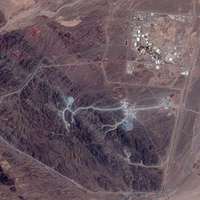
But The New York Times reported Saturday that current and former Israeli military figures and experts doubt Israel has the capability to destroy or significantly delay Iran’s nuclear program, which is dispersed throughout the large country and some hidden underground.
Experts and officials said that a small-scale attack damaging parts of Iran’s infrastructure might be possible in months while a large attack would take two years to prepare and are currently beyond Israel’s capabilities. One former Israeli general said the only air force capable of a sustained attack is the US Air Force.
Since July 2020, many mysterious sabotage attacks have hit Iran’s sensitive installations, including two devastating explosions at Natanz uranium enrichment site, widely attributed to Israel. These have caused some slowdown, but Iran continues to enrich uranium at higher levels, getting closer to having enough fissile material for a bomb.