Defense Minister Praises Iran's Aviation Companies For Military Role

Iran’s defense minister visiting Aerospace Industries Organization (AIO) praised its efforts in boosting the military capabilities by supporting the air force.
Iran’s defense minister visiting Aerospace Industries Organization (AIO) praised its efforts in boosting the military capabilities by supporting the air force.
General Mohammad-Reza Gharaei Ashtiani said the defense ministry’s role is strengthening strategic industries and production to provide hardware to the armed forces. He was speaking to the senior management of the AIO, which is officially a state organization to develop civil aviation.
He stressed the importance of setting priorities in the quest to become self-sufficient in industry and military capabilities.
Iran has been under various kinds of arms embargoes, including a UN Security Council embargo that ended in October 2020, since the inception of the Islamic Republic in 1979. But it has managed to develop a strong missile force and lately lethal drones that have led to concerns in the region and in the West.
Deputy Defense Minister General Seyed Mehdi Farahi also spoke at the event, emphasizing that 280 private companies in Iran are involved in aviation industry. He added that this potential could satisfy the needs of the armed forces in terms of quality, quantity and price of hardware.




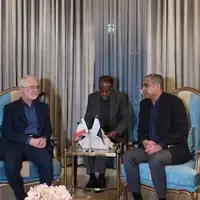

Iran’s defense ministry is creating an “economic headquarters” to coordinate and marshal its capabilities for more effective business and commercial operations.
In a meeting of the ministry’s Strategic Council on Monday chaired by Defense Minister Mohammad-Reza Gharaei Ashtiani, a host of other officials were present, including directors of “ideological-political” offices, intelligence and counterintelligence, and managers of the ministry’s business subsidiaries, official government news website IRNA reported.
Iran’s defense ministry operates within the framework of the presidential administration, but the chief commander of all armed forces is Supreme Leader Ali Khamenei. The armed forces are divided to two separate armies, the Islamic Revolution Guard Corps (IRGC) and the traditional army, the Artesh. The IRGC carries tremendous political and economic power in the country, in effect controlling the traditional army.
The main tasks of the defense ministry is development of weapons and equipment for the armed forces. Most of the Islamic Republic’s homegrown military and dual-use technologies, such as drones, are developed by the ministry. This role was highlighted in the meeting of the Strategic Council, where the defense minister praised Mohsen Fakhrizadeh, the nuclear-military scientist who was assassinated near Tehran in November 2020, most likely by Israel.
The defense minister said that Fakhrizadeh was “a source of great services to the holy Islamic regime and he was able to make great strides in developing military industries.”
It is not clear what the exact plans for an economic coordination taskforce would be and the state-controlled media did not elaborate. But from the brief announcement made it seems that the defense ministry wants to marshal its capabilities to play a larger role in helping the economy in an environment of tough United States sanctions.
It is also possible that in a tough economic environment the ministry wants to establish more control over companies it controls. Various people or interest groups are benefitting from the ministry's resources, businesses and factories. Creating an economic task force could allow the leadership to channel all economic activities to benefit the ministry in a more meaningful way.
Ashtiani, mentioned the keyword “centralization” of economic activities as a necessity.
Since the early 1990s, after the end of the Iran-Iraq war, the IRGC was allowed to set up businesses and get involved in the economy. Then-president Akbar Hashemi Rafsanjani who made the decision thought that it could benefit both the country and the tens of thousands of veterans who had fought for years in the battlefield. But IRGC’s business ventures turned into a quest of building an economic empire that today dominates the country. The military force has become the biggest public works contractor in Iran, sweeping aside private businesses.
The same was emulated by the defense ministry to a lesser extent. Fakhrizadeh, who was a top defense ministry official had set up businesses, an Iran International report revealed last year after his assassination. His family indirectly respondedin an interview with the state TV in early December 2020, in which they acknowledged that he did indeed owned “knowledge-based” companies.
Occasionally, the president of the country and even Khamenei have urged to military to curtail their economic activities, but these calls have been met with IRGC’s pushback. In July 2017, President Hassan Rouhani had to retreat after speaking of a “government with guns”, referring to IRGC’s political and economic power.
On Monday, Ashtiani referred to the president and Khamenei when he said the new economic headquarters is meant to help meet their “expectations”.
He also mentioned, “Monitoring both domestic and foreign economic environment, identifying corresponding opportunities, economic policy-making,” and a host of coordinating tasks for the economic headquarters.
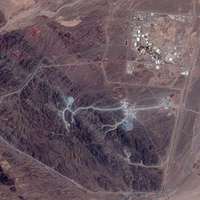
The chief of air defense at Iran's nuclear facility in Natanz says they tested a missile to check preparedness in the region, after a loud explosion was heard.
Iranian air defenses fired a missile as part of an exercise on Saturday over the central town of Natanz, which houses nuclear installations, state TV reported, after local residents reported hearing a large blast.
The TV said air defense units fired the missile to test a rapid reaction force over Natanz.
Iranian news agencies earlier reported a large explosion in the sky above Natanz, but said there was no official explanation of the incident.
The semi-official Fars news agency quoted its reporter in nearby Badroud as saying a short blast was heard which was accompanied by an intense light in the sky.
Natanz was twice the target of highly destructive sabotage attacks in July 2020 and April 2021, widely attributed to Israel. Amid nuclear talks with Iran, Israel has repeatedly warned that it will not tolerate a nuclear Iran and will take action to stop Tehran from acquiring nuclear weapons.
In a fiery speech Thursday, the commander of Iran’s Quds Force told the United States in case of the slightest move, “your teeth will be crushed in your mouth.”
Esmail Ghaani (Qaani) who was speaking in a gathering to honor those killed in Iran’s operations in the region, said, “We are telling the Americans you have still time to leave the region in humiliation, or you will be expelled in a manner worse than in Afghanistan.”
The Quds (Qods) Force is Iran's extraterritorial military and intelligence army, controlling its proxies in regional countries, distributing weapons cash and military technology to militant groups. Its previous commander Qasem Soleimani was killed in a US drone attack in Baghdad in January 2020.
Praising Afghan militiamen and Iranian forces killed in the region, mainly in the Syrian civil war, Ghaani told “the resistance front” to continue their fight under the banner of Iran’s Supreme Leader Ali Khamenei.
The ‘resistance front’ or ‘resistance forces’ are terms the Islamic Republic uses to refer to its proxy forces, including the Lebanese Hezbollah, Shiite militia it backs in Iraq, forces fighting under its command in Syria, militant Palestinian groups and Yemen’s Houthis.
Ghaani declared that since the time Palestinians followed the “martyrdom” path of Iranians they became more and more powerful. He cited the missile war earlier this year and praised Palestinian militants for firing 3,000 missiles at Israel. He ridiculed Israel that it cannot respond against Iran, claiming that a threat during the 2006 Israeli war against Hezbollah in Lebanon was not carried out.
What sounded as potentially provocative for the region’s Sunni Arab states, Ghaani said that current conditions in the Islamic world are right for the spread of Shiite rule.
He addressed the United States saying, “The time when you did whatever you wished, and no one could say anything is over. The time of hit and run is over. Now if you hit you will be hit back all the way to the end.” He again brought up the US withdrawal from Afghanistan and said, “You fought in Afghanistan for 20 years and what did you accomplish?”. He added that Americans escaped from Afghanistan and could not even evacuate their own people.
Ghanni declared that the US withdrawal from the region has been partly achieved and the ‘resistance front’ will continue its fight.
He concluded by saying, “For years America spoke of overt and covert sanctions, but Iran’s power in hardware and software has reached a level that you know if you make a move “your teeth will be crushed in your mouth.”
According to eyewitnesses, Iranian forces clashed with the Taliban on the border in Nimruz region of Afghanistan, Afghan International reported on Wednesday.
The report quoting local residents in southwestern Afghanistan said that Iranian forces crossed into Afghan territory.
Amaj News based in Kabul also quoted local sources as saying that Iranian forces used heavy weapons and the Taliban dispatched armored American Humvees to confront Iran’s border troops.
The Taliban seized a large quantity of light and heavy American weaponry when they overran the country in August.
Later, Tasnim News affiliated with the Revolutionary Guard reported that a "misunderstanding" led Taliban forces to open fire at some Iranian civilians who very close to the border line, and Iranian troops replied. The website stressed that the clashes have ended.
The Islamic Republic first welcomed the Taliban victory, presenting it as a defeat for the United States, but later terror attacks against Shiite Afghans led to protests in Iran and warnings from Tehran that the Taliban must protect minorities. Iran has also been demanding an inclusive government in Afghanistan, while the Taliban have kept their tight control.
A group of Republican and Democratic lawmakers in the US House of Representatives presented a bill Tuesday to restrict proliferation of Iran's military drone.
The lawmakers behind the proposed legislation, the Stop Iranian Drones Act (SIDA), say it clarifies that US sanctions on Iran’s conventional weapons program under CAATSA (The Countering America’s Adversaries Through Sanctions Act) include the supply, sale or transfer to or from Iran of drones.
The draft legislation was presented to the House of Representatives by House Foreign Affairs Committee Chairman Gregory Meeks (D-NY), Michael McCaul (R-TX), Ted Deutch (D-FL), and Joe Wilson (R-SC) Tuesday.
Iran’s military drone program has expanded in recent years and UAV’s have been more frequently used in attacks in recent months both on land and at sea.
The legislation also states that it is US policy to "prevent Iran and Iranian-aligned groups from acquiring unmanned Aerial Vehicles (drones)" that can be used in attacks against the United States or its partners and stipulates that those who cooperate with Iran in the field of drone activities should be punished.
“Deadly drones in the hands of the world’s greatest exporter of terrorism, Iran, jeopardizes the security of the United States and regional peace. Recent Iranian drone attacks on U.S. troops, commercial shipping vessels, and against regional partners, along with the export of drone technology to conflict zones, pose a dire threat,” Meeks said, adding that the legislation will send "a strong signal to the international community" that supporting the Iranian drone program will not be tolerated by the US.
"Whether the [drone] attack is launched by Iran, the Houthis, Iran-backed militia groups or any other Iran-sponsored entities, these attacks are intolerable,” McCaul, one of the two Republican lawmakers behind the proposed legislation said.
Admiral Mohammad Mousavi said earlier this month, after claiming a confrontation with the US navy in October, that Iran's drones some of which, including a suicide drone named Arash, were used in Zolfaghar 1400 wargames are capable of reaching even farther than its missiles which have a range of 2,000km.
"In fact, there is nothing such as iron domes to deter our drones. These drones can easily escape these [air defense systems] and hit their targets," Mousavi told Sobh-e No daily apparently in reference to Israel's Iron Dome air defense system.
US and allied officials say that Iran's proxies and allies in Yemen, Iraq, Syria, and Lebanon use Iranian-made drones against the US and its allied targets and argue that Iranian drones pose a threat to commercial navigation. Israel has also repeatedly warned about Iran's drone activities. Last week Israel’s defense minister, Benny Gantz, accused Iran of carrying out drone attacks on maritime targets from bases in Chabahar port and Qeshm island.
Iran has widely been accused of attacking tankers in the Persian Gulf region since 2019 when several vessels were hit by what was described as limpet mines. Iranian naval forces have also seized tankers, most recently in late October, when they forced a Vietnamese-flagged tanker into Iranian waters. In January the Revolutionary Guards (IRGC) seized a South Korean Tanker in the Persian Gulf.