Pentagon Confirms Iranian Helicopter Came Within 25 Yards Of Navy Ship

The Pentagon has said that an Iranian military helicopter came as close as 25 yards to USS Essex Navy ship in the Gulf of Oman, in a “reckless” move last week.

The Pentagon has said that an Iranian military helicopter came as close as 25 yards to USS Essex Navy ship in the Gulf of Oman, in a “reckless” move last week.
Iran’s Islamic revolution Guard Corp has released a video on November 13 showing the flight of the helicopter very close to the US Navy vessel. They said the incident took place on November 11.
Pentagon spokesman John Kirby was pressed by reporters during his briefing on Monday about why the Essex did not take any defensive measure. Kirby refused to elaborate saying that he would not comment on engagement rules enforced by Navy commanders in charge.
"The ship's commander did what he believed was in the best interest of the ship and its crew. They have necessary means to protect themselves," Kirby maintained.
Iranian forces have harassed US forces on many occasions before in the Persian Gulf region but the Essex incident in one of the closest approaches they have made to a US vessel.
Earlier last week the US military announced that USS Essex amphibious assault warship and a Marine expeditionary force had joined the Fifth Fleet in the Sea of Oman and had conducted exercises with the British Navy.

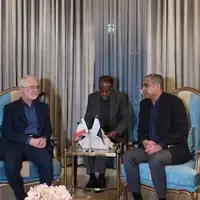
Tehran and Ankara are set to agree a plan for long-term cooperation, Mevlut Cavusoglu, Turkey’s Foreign Minister told a joint press conference in Tehran Monday.
Tehran signed a 25-year cooperation deal with China in March and is discussing a similar strategic agreement with Russia. Cavusoglu was speaking alongside Iranian counterpart Hossein Amir-Abdollahian.
"Our delegations will work to determine a roadmap for a long-term comprehensive cooperation upon Iran's proposal,” said Cavusoglu, who arrived in Tehran Monday. The minister expressed hope this could be signed during Turkish President Recep Tayyip Erdogan's visit to Tehran later this year for the seventh meeting of the two countries’ High-Level Cooperation Council.
"With the President of the Republic, we discussed our bilateral relations, including trade, investments, and the fight against terrorism, and the latest developments in our region,” the Turkish foreign minister tweeted after meeting with Iran's President Ebrahim Raisi (Raeesi) in his first visit since Raisi took office in August.
Cavusoglu described United States sanctions against Iran as "wrong,” and urged all parties to revive Iran’s 2015 nuclear deal with world powers, the Joint Comprehensive Plan of Action (JCPOA), from which former US president Donald Trump withdrew in 2018, slapping ‘maximum pressure’ sanctions on Iran.
"Those who withdrew from this agreement in particular need to take the necessary steps," Cavusoglu said, adding that a positive outcome to the Vienna nuclear talks aimed at reviving the JCPOA was important for regional stability. Unlike Israel and Saudi Arabia, Turkey has supported the agreement.
Cavusoglu welcomed as promising increasing trade between Tehran and Ankara − up 71 percent in volume this year − but said it was "very far from our goals.” Bilateral trade stands at around $4 billion. Amir-Abdollahian told the press that obstacles in the way of trade between the two neighboring countries, presumably a reference to US ‘maximum pressure,’ required countermeasures to clear the way for more trade.
Cavusoglu said he had discussed security issues such as terrorism, migration, and human smuggling with his Iranian counterpart. Turkey has been a conduit for refugees from Afghanistan, Syria and Iraq, while Ankara and Tehran have intermittently cooperated against Kurdish groups, especially those linked to the PKK (Kurdistan Workers Party).
Among regional issues where Ankara and Tehran saw eye to eye, Cavusoglu told the press conference, was Syria, where a political solution was needed, and over the humanitarian crisis in Afghanistan. "Our leaders and ministers of foreign affairs will get together in the near future," the minister said. Some analysts have argued Turkey’s priorities in Syria have long shifted from supporting the Sunni opposition to President Bashar al-Assad, an Iranian ally, towards containing the Syrian Kurds.
The visit comes despite tensions in bilateral relations over Azerbaijan and Turkey's recent announcement of an alleged Iranian plot to kidnap a former Iranian officer seeking asylum in Turkey.

The Saudi-led coalition in Yemen said on Monday a redeployment of its forces from the western coast was meant to back Yemeni government forces on other fronts.
Yemeni forces under a Saudi-led coalition said on Friday they had withdrawn from around the main Red Sea port of Hodeidah held by their foes the Houthis to help deter the Iran-aligned group's advances in other parts of Yemen.
A UN monitoring mission on Monday called on Yemen's warring parties to hold new talks over Hodeidah as the Saudi-led coalition strafed areas south of the port city, where Houthi fighters advanced in the wake of withdrawing coalition forces.
The air strikes, which began on Sunday, were the first since late 2018 when the Saudi-backed government and the Iran-aligned Houthis agreed a U.N.-sponsored pact for a truce in Hodeidah and a troop redeployment by both sides that never materialized.
The coalition said on Monday it carried out 11 operations "outside the areas covered under the Stockholm pact" to support west coast forces, Saudi state media reported.

A magnitude 5 aftershock shook Iran’s southern Bandar Abbas region on the Hormuz Straits Monday at 17:06 local time following two strong tremors on Sunday.
The Sunday earthquakes within a minute of each other was described as strong at around 6.4 magnitude and was felt across the Persian Gulf in Dubai, but surprisingly did not have a high human toll.
One person was reported killed and more than hundred injured.
Damage to residential buildings was reported to be around $20 million, but in Iranian currency it is a relatively large sum of money. Initial reports say 2,100 building units were damaged.
Vice President Mohammad Mokhber visited the region on Monday to assess damage and supervise plans for a government response and reconstruction. Most people spent the night outdoors, but the region has a warm climate compared with northern parts of the country.
Landslides in surrounding mountains closed off roads that rescue teams are working to reopen.
According to Mansur Arami, a member of parliament representing the region, most villages suffer from poverty due to a severe drought. He requested more government aid for the population.

Iran’s special representative for Afghanistan arrived in Kabul on Monday on his first visit to hold talks with the Taliban on economic and political issues.
Hassan Kazemi-Qomi was appointed by President Ebrahim Raisi (Raeesi) as special envoy in the aftermath of the Taliban victory in Afghanistan in August.
The Iranian embassy in Kabul had announced that Kazemi-Qomi would visit to negotiate with the Taliban over “regional issues, migrants, humanitarian assistance and the formation of an all-inclusive government.”
Iran initially welcomed the Taliban victory as a sign of US weakness and defeat but later it adopted a more cautious approach as attacks increased against Shiites in Afghanistan. Tehran has demanded that the Taliban ensure security for all citizens.
The Iranian envoy after arriving in Kabul said he would hold discussions about how to advance “constructive relations” between Afghanistan, Iran and regional countries. Other Iranian officials have been in contact with the Taliban since August.
Kazemi-Qomi, who is said to have been an officer in the Quds Force of Iran’s Revolutionary Guard, served as the first Iranian ambassador to Iraq after the fall of Saddam Hussein.

A hardline member of Iran's parliament has tried to deny a report that he had bragged about killing protesters in 2019 and saying no one would arrest him.
Lawmaker Hassan Norouzi told the parliamentary news service Monday he had not made remarks attributed to him Sunday by Didban-e Iran website over the 2019 protests when hunreds were killed by security forces.
Norouzi said a “fake reporter” had called him and asked about the ‘Iran Atrocities Tribunal’ held in London last week. But Didban-e Iran defended its report, insisting it had taped the conversation and might sue the deputy.
Norouzi allegedly told the website: "I was one of those who shot people. [Yes,] we killed people… They had set fire to banks and we killed them. Who is going to put us on trial for it?" He then allegedly said was "joking" and hung up.
The comments, as reported, drew swift condemnation. The conservative newspaper Jomhouri Eslami wrote that “such a joke” was “deplorable by anyone, but even more by you who are a cleric wearing the cloak of the Prophet of Mercy [Muhammad].” The newspaper argued that Islamic values required those setting fire to banks to face justice and a proportionate punishment rather than being killed before a crime was proved.
Human rights lawyer Ali Mojtahedzadeh, in a commentary published by Didban-e Iran Monday, noted that Norouzi was a member of the parliament's Legal and Judiciary Committee, making his statements "even more deplorable.”
"What kind of a joke can this be when according to official figures nearly 300 people died in this incident, many more were wounded or detained, and so many lives were ruined?" Mojtahedzadeh asked. He criticized parliament and judiciary for not carrying out "a minimum level of investigation" after two years. "Which legal system in the world doesn't charge even one person for the murder of at least 300 citizens in the streets in broad daylight?” he asked.
Iran has not officially announced figures for deaths or arrests, nor put anyone on trial for killing protesters, but has prosecuted and passed heavy sentences including the death penalty on protesters on charges including “assembly and collusion against the regime.” Officials have put the number at over 200. Independent reports have put the number of protesters killed between 300-1,500.
Mojtahedzadeh claimed Iran had laws forbidding security forces shooting suspects above the waist in any situations and that shooting anyone, even if they were setting fire to banks, needed strong justification: "The real tragedy is that not only justice, based on Sharia and the law, has not been served in the case of these events but also some truths are being distorted and even mocked."
A video posted on social media by ‘mothers of victims’ challenged Norouzi to “stop hiding in your lair with 30 bodyguards” and to “come out and face us.”
The ‘Iran Atrocities Tribunal’ claimed in a Tweet Saturday that Iran’s deputy foreign minister Ali Bagheri-Kani had threatened to “stop part” of Iran’s discussions with world powers if London did not stop the tribunal meeting. The tweet claimed the tribunal, which purports to be quasi-judicial investigation into the November 2019 protests, learnt this from “European sources.”
Didban-e Iran's report Saturday also claimed its “informed sources” had said the foreign ministry had protested to the British government for allowing the tribunal be held in the UK.

Tweet unavailable


