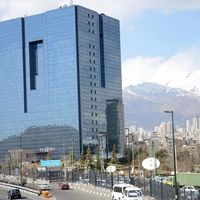
Iran’s government is pledging not to dip into the pockets of the central bank or print more money to balance its budget, but skeptics doubt there are any magic solutions to lack of income.
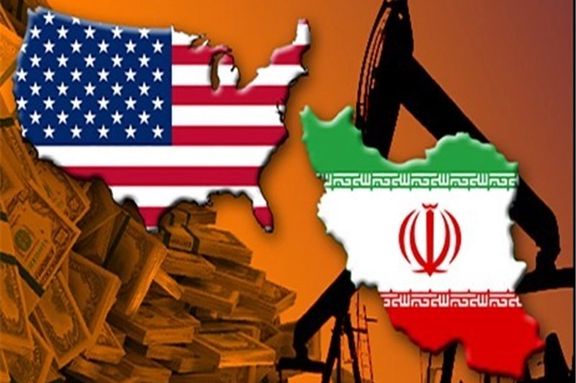
Iran’s budget deficit in the current fiscal year is 40-50 percent or around 5,000 trillion rials. If we convert the devalued rial amount to the highly appreciated dollar, it is around $20 billion. This would be a manageable amount if Iran could export 1.5 million barrels of crude oil daily, but currently it sells a few hundred thousand barrels at discounted prices.
According to estimates published by the parliament’s research center, only 15-20 percent of the projected oil revenues have been realized. The projection in the budget was to export 1.5 million barrels a day, which certainly was a gross overestimation, as US sanctions remained in place.
President Ebrahim Raisi’s ‘revolutionary’ government took office in August with pledges of solving the economic crisis, with his hardline supporters blaming the former administration for ineptitude. But it is common knowledge in Iran that the main cause for the steep economic decline since 2018 has been US sanctions, especially on its oil exports.
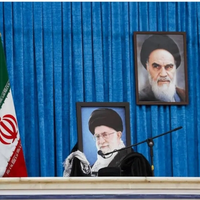
Then, why are the hardliners blaming Rouhani? The ruling elite headed by Supreme Leader Ali Khamenei does not want to admit that sanctions have caused misery. If they admit that, it means they must also admit that their confrontational foreign policy has led to economic disaster.
The Raisi government is now saying that they have found ways to generate income without borrowing from the central bank or printing money – although both mean the same thing, since the central bank has no extra foreign reserves. Former president Rouhani’s administration was printing money and fueling inflation that has reached close to 50 Percent. Absent a deal with the United States it had no other choice.
But few economists outside the government believe Raisi can magically generate revenues. Maysam Radpour, a well-known analyst in Iran was quoted by local media on Tuesday as expressing surprise that the government can find additional revenues without borrowing from the central bank or printing money. He said that neither expenditures have been cut nor tax collection increased, and US sanctions remain in place. He added that the government is muddling through amid a lack of real information about its actions.
The conservative website, Alef, published an analysis on the role of both sanctions and structural problems in generating Iran’s economic crisis. The article said that lifting sanctions is necessary for dealing with economic challenges but not sufficient without structural reforms.
Iran’s economy has many structural shortcomings and there is no choice but to do a “deep and painful surgery”, Alef said. It is an economy that has survived with injecting petrodollars to keep it going temporarily and when oil sanctions hit, it has no legs to stand on. If sanctions are lifted, economic conditions will somewhat improve the article said, but on the long-run “the reality of a sick economy will again impose its harsh impact on the country and on the people.”
Iran’s foreign minister has criticized the United States for its posture in JCPOA nuclear talks, demanding lifting of all US sanctions imposed since 2018.
Hossein Amir-Abdollahian tweeted Tuesday that “The White House calls for negotiations with Iran…Yet it simultaneously imposes new sanctions on Iranian individuals & entities”.
The US Treasury Department on October 29 announced new sanctions on a few Iranian officials and companies for their role in the Unmanned Aerial Vehicle (UAV) program of the IRGC and its Qods (Quds) Force. Days earlier, drones suspected to have been supplied by Iran hit a US base in southern Syria.
The Iranian foreign minister fired off a second tweet saying that the goal of the nuclear talks should be “tangible results on the basis of respect for mutual interests”. He added that the remaining members of the Joint Comprehensive Plan of Action (JCPOA) should be ready for talks.
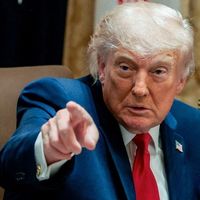
Iran has been hardening its posture in recent days, demanding the full removal of all US sanctions imposed since 2018, when former president Donald Trump withdrew from the JCPOA. It is has also said it will not have any contacts with the US until all sanctions are lifted.
Amir-Abdollahian has tested positive for Covid-19 and is in quarantine.
Iran's former president Hassan Rouhani. FILE PHOTO
Iranian lawmakers agreed on Tuesday to send a report to the Judiciary on “Covid mismanagement” by former president Hassan Rouhani for possible legal action.
The parliament packed with hardliners was always critical of Rouhani in all aspects of governance and blamed him for the economic crisis gripping the country.
Rouhani’s defenders in the media have argued that United States sanctions are the main cause of the economic crisis and the country needed to resolve its differences over the nuclear issue with the West to be able to reduce inflation, raise wages and stimulate employment.
However, Iran’s major policy issues are decided by Supreme Leader Ali Khamenei and the president of the republic simply manages government operations.
The same applied to the Covid-19 pandemic when Khamenei banned the government from purchasing American and British vaccines in January, setting back the national vaccination plan for months.
Iran experienced a severe wave of the pandemic in July and August, with around 40,000 new deaths from June to mid-September. An increase in vaccinations since August has reduced the rate of new infections and deaths.
Iran’s Foreign Minister Hossein Amir-Abdollahian has tested positive for Covid-19, the foreign ministry's spokesman said late Monday.
"His general condition is good, and he continues working from quarantine," Saeed Khatibzadeh told state media late on Monday, adding that the minister's agenda of visits had changed.
The foreign minister of Iran does not take a direct part in negotiations over the resumption of the 2015 nuclear deal (JCPOA), which should resume by the end of this month, but Amir-Abdollahian has been active in shaping Iran’s negotiating position and has frequently commented on sensitive issues. It is not clear if his health can impact the resumption of talks.
Earlier on Monday, the foreign ministry announced that Amir-Abdollahian was going to India by the end of November to attend a meeting at the Indo-Iranian Joint Economic Commission.
No further indication was made by Khatibzadeh on whether the foreign minister would be able to go to New Delhi this month.
Iran needs $160 billion of investments in its oil and natural gas industries in the coming years, to avoid becoming a net importer, the oil minister has said.
Javad Owji told a budget planning meeting on Sunday that because of lack of investments in the past, the country is now faced with a stark choice – invest $160 billion in its oil and gas sector or face declining output and eventually imports of fossil fuels.
Iran’s government is in the process of drafting the budget for the next Iranian year that starts on March 21, 2022, amid a serious shortfall of revenues. In the current year the budget had a 50-percent deficit or the approximate equivalent of one year's full oil export revenues. But because of US sanctions, Iran sells much less oil and has little cash income for what it can ship in illicit ways.
The oil minster cannot hope to receive any major financing from the government given the dire financial and economic conditions. In fact, Iran failed to make the needed investments to modernize exploration and production even during the years of very high oil prices from 2005-2014,when it is estimated the country netted more than $700 billion dollars in oil revenues.
Iran's oil minister Javad Owji. FILE PHOTO
The main reason for Iran falling behind is its closed political and economic system, which is not conducive to foreign investments, cooperation and technology transfers. Iran’s constant confrontation with the West and disputes over its nuclear program that had secret elements prompting alarm, left the oil industry in isolation.
Mohsen Khojastepur, general director of the Iranian national oil company said last week that if investments in the gas industry are not secured Iran will become a net importer in the coming years.
Iranian officials have been warning of inadequate natural gas production that cannot keep pace with consumption this winter and have warned people of widespread blackouts.
Fararu news website in Tehran has confirmed that the natural gas crisis is the result of insufficient investments and lack of technology that only a handful of Western energy giants can provide. Just to maintain current production, Iran needs to invest up to $50 billion in its gas fields, especially in the Persian Gulf offshore South Pars reserves shared with Qatar.
It will not be easy for Iran to make up for the lost time. Even if there is an agreement in nuclear talks, US sanctions are lifted and Iran’s oil exports reach 2.5 million barrels a day, with current prices it can hope to have gross export revenues of around $65 billion annually. But lack of efficient planning and management in addition to years of sanctions have left a very big economic hole in the country, which would takes years to fill.
One more factor can also contribute to Iran becoming a net energy importer – rampant consumption because of huge energy subsidies the government provides, estimated to be around $45 billion a year. Both electricity and fossil fuels are heavily subsidized, which encourage wasteful consumption. Gasoline is now sold at around 20-40 US cents a gallon, to give an example.
This has gone on for decades and it is a risky political proposition for the government to eliminate the subsidies. When it raised prices to the current level from even a lower price two years ago, nationwide unrest broke out and security forces using military ammunition killed hundreds of protesters, destroying the last vestiges of the regime’s legitimacy.
A Kurdish NGO has described widespread torture carried out in Revolutionary Guards and intelligence ministry secret detention centers in Kurdish areas of Iran.
In its report last week based on interviews with former detainees, France-based Kurdistan Human Rights Network (KHRN), a non-governmental organization (NGO) focused on Iran's Kurdish areas, alleged that torture like attaching weights to testicles, hanging detainees from the ceiling, and beating them with hoses and cables was “prevalent.”
The KHRN cited an intelligence ministry detention center in Orumiyeh, West Azarbaijan province, and two IRGC centers in Orumiyeh and Sanandaj, both in Kurdistan province. It said one detention center had very small cells known as graves.
The ex-detainees told KHRN that interrogators had used threats − including raping the detainees' families − to extract confessions. One detainee, who said he had been held at the IRGC detention center in Sanandaj, told KHRN that he was not taken to hospital for 29 days despite having been shot in the leg. Detainees also said interrogators also staged fake executions to encourage confessions.
Former Kurdish political prisoner Mohammad-Hossein Rezaei, who spent time at the intelligence ministry's Sanandaj detention center, told KHRN that he had been tied to a table and beaten with cables, damaging his nose and ribs.
Roya Toloui, a Kurdish journalist and civil rights activist now living in the US has claimed that after her arrest in 2006 she was tortured and raped in at intelligence ministry detention center of Sanandaj for refusing to put her signature on confessions that had been written by her interrogators.
The report said the IRGC intelligence in West Azerbaijan province had the capacity to detain several hundred.
Several illegal Kurdish parties seeking either Kurdish autonomy within a federal Iran or an independent state are active in Iran’s Kurdish regions. Iranian military commanders have issued repeated warning in recent months they will strike the bases of these groups in Kurdish-held northern Iraq.
While conditions in jails in Kurdish regions are generally harsher than elsewhere, there has been some international interest in Iranian prison conditions since the release in August by hackers of footage from security cameras that had been installed in Evin prison, Tehran, at the instruction of parliament. Mohammad-Mehdi Haj-Mohammadi, the head of Iran's Prisons Organization, apologized and said action would be taken against staff mistreating prisoners.
In a series of tweets in September, activist-cum-citizens’ journalist Sepideh Gholian (Qolian), out on parole from Bushehr prison, southern Iran, alleged abuse of female prisoners in the prison. She wrote that she had reported 20 cases to the authorities, including five described in her tweets, but had received no response.