Lawyer Urges Leave For Jailed Iranian American If Father Has Surgery
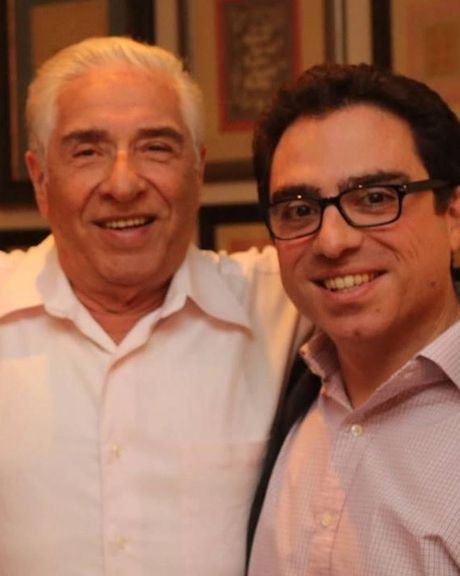
The lawyer for an Iranian American jailed in Iran urged Tehran to allow him to leave jail temporarily if his elderly father undergoes surgery in the country.

The lawyer for an Iranian American jailed in Iran urged Tehran to allow him to leave jail temporarily if his elderly father undergoes surgery in the country.
His son, Siamak Namazi, 49, remains in prison. Both son and father have been accused of security offences and convicted in an unfair trial. The US government has described the charges against both as baseless.
"Siamak Namazi has served six years of his 10-year prison term without a single day of furlough ... From a human and emotional point of view, in these difficult conditions (he) wants to be with his elderly father, who has no other children in Iran," attorney Hojjat Kermani told the Emtedad website.
US-based lawyers urged Tehran last week to let him leave the country for medical care, saying he needed immediate surgery for an arterial blockage.
Kermani urged Iranian authorities to allow Baquer Namazi to leave Iran for medical treatment or at least temporarily release his son if he is to undergo surgery in Iran. This was required by "the law and the principles of Islamic and humanitarian compassion", Kermani told Emtedad.
Iranian Americans, whose US citizenship is not recognized by Tehran, are often jailed in what human rights organizations say is in effect hostage taking.
With Reporting by Reuters


The brother of Iranian activist-cum-citizens’ journalist Sepideh Gholian reported Monday that his sister, on prison furlough, had been arrested at her home.
"A few minutes ago over thirty female and male agents attacked Sepideh Gholian's house, abducted her and took her to an unknown place, ”Mehdi Gholian wrote on Insatgram. “They also confiscated the mobile phones of all other family members."
An hour later Mehdi Gholian wrote in another social-media post that the Prisons Organization was responsible for the arrest.
In a series of tweets in September, Sepideh Gholian (Qolian), who was on parole from Bushehr prison, southern Iran, alleged abuse of female prisoners in the prison. She wrote that she had reported 20 cases to the authorities, including five described in her tweets, but had received no response.
"I knew I would face a godforsaken hell when I was banished to this prison last year," wrote Gholian, who had been sent to Bushehr prison in early March from Evin prison, Tehran. "But I couldn't even imagine the brutality reigning in this prison."
In March 2021, Gholian was taken "in handcuffs and chains," according to labor activist Esmail Bakhshi, from Evin to Bushehr, 1000km from Tehran. Bakhshi said Gholian had been told she was being taken to Ahvaz prison in her native Khuzestan province and only later realized she was in Bushehr, 430km from Ahvaz.
Gholian was sentenced to five years’ jail for 'disrupting public order' and‘assembly and collusion against national security' after arrest in 2018 following her role in publicizing labor protests in Khuzestan. Gholian’s memoir from time in Sepidar prison, Khuzestan, was published by Iran Wirein June 2020. She has gone on hunger strike several times.
Gholian made a confession that was aired by state television (IRIB) in January 2019. In the program she was described as an agent provocateur with ties to Marxist groups abroad who had encouraged a strike at the Haft Tappeh Agro-Industrial Complex in Khuzestan.
Gholian later alleged that Ameneh-Sadat Zabihpour, an IRIB journalist involved in filming the confession, had been involved as an interrogator and had tortured her to her to confess before the camera. Confessions, often full of claims of links to foreign conspiracies, have long played a significant role in Iranian political trials.

Three activists jailed since August 14 in Iran have said that they have refused to sign a pledge not to sue the country’s Supreme Leader in order to be freed.
Attorneys Mostafa Nili and Arash Kaykhosravi, along with activist Mehdi Mahmoudian had announced their intention in August to sue Supreme Leader Ali Khamenei for having banned the purchase of American and British Covid vaccines in January. They also accused top officials of gross mismanagement of the covid pandemic. Authorities immediately arrested them, and they have spent nearly two months in prison.
In a letter sent to an Islamic Republic civil rights watchdog, they said that authorities asked them to sign a pledge not to sue Khamenei, but they refused, and their detention continued.
With a fifth wave of the pandemic starting in July, tens of thousands of more Iranians have perished with public sentiment turning against Khamenei for having banned the importation of Western vaccines, setting back Iran’s vaccination program.
The three detainees also said they had intended to sue officials for diverting millions of dollars to organizations with no medical expertise that promised to produce home-grown vaccines.

A human rights group and activists say that several political prisoners were attacked and injured in their ward by violent inmates in a Tehran prison on Friday.
The Human Rights Activists’ News Agency (HRANA) reported that violent inmates attacked the political prisoners in ward 2 of the Greater Tehran Penitentiary injuring several. A few were taken to the prison’s infirmary for their injuries.
Ahmad-Reza Haeri, a former political prisoner tweeted that the guards did not intervene and left the gates locked as the attack was taking place, despite pleas of help from the political prisoners.
Many male and female political prisoners have complained in the past that interrogators or prison officials had threatened them with having violent inmates attack them.
Haeri also reported that the political inmates have been moved to an unknown location and have no contact with the outside world.
Hrana said that political prisoners in the Greater Tehran Penitentiary had complained before of being kept with violent inmates despite laws to separate the prisoners.

A group of plaintiffs have made a formal request for the arrest of Iran's President Ebrahim Raisi if he travels to Scotland to attend a climate conference.
The Cop26 climate summit in Glasgow will take place in November and some reports from Tehran indicate Raisi might attend the gathering. President Joe Biden and Pope Francis are scheduled to take part.
Raisi is accused of being part of a group in 1988 that executed thousands of Iranian political prisoners serving time. Before becoming president in June, Raisi spent decades in Iran’s notorious judicial system as a judge and prosecutor.
Human rights organizations and UN experts have demanded accountability fro the Iranian president and international investigation of his role in the killings.
Human rights activists, victims of torture and their relatives have asked the police in Scotland to investigate Raisi using the legal concept of universal jurisdiction, whereby any country can charge an individual suspected of crimes against humanity.
Another Iranian citizen is now on trial in Sweden for his role in the 1988 killings based on the same legal principle.

PEN America has bestowed its 2021 PEN/Barbey Freedom to Write Award to three imprisoned Iranian writers in a ceremony in New York on Tuesday.
The award that was announced in September was officially presented in a gala with the attendance of 800 guests representing New York’s cultural elite.
The three writers received more than a 15 years of prison sentences together in May 2019 for “crimes against national security”, a typical charge the Islamic Republic routinely makes against activists, writers and journalists to stifle criticism.
Reza Khandan Mahabadi, Baktash Abtin and Kayvan Bajan, were convicted of "propaganda against the state" and "acting against national security”, each receiving a more than five-year sentence. The three are members of the Iranian Writers Association, which has been banned and its members persecuted by threats and jail sentences.
At the time the Writers Association issued a statement saying, "This trial is not just the condemnation of three writers. This was not a trial against the Writers Association alone. It’s a condemnation of all writers and others who want to enjoy the right to free expression.”
PEN America, a non-profit defending freedom of expression and human rights, held its 2020 annual event virtually due to Covid-19, but this year resumed its traditional gala, where the award for the Iranian writers was the most prominent event.
"They are writers who are called not only to offer prose and ideas on a page, but to live fearlessly—and sacrifice immensely in service of the liberties that underpin free thought, art, culture, and creativity," PEN CEO Suzanne Nossel said in a press release before the event.
PEN America followed the case of the three writers from the very beginning of their arrest and trial. In May 2019, the organization expressed its concern.
"PEN International is alarmed about the large number of writers and activists in Iran who have been detained or imprisoned solely for exercising their right to freedom of expression," the group said.